Biggest Stadiums in the UK: Why Every List Disagrees
On this page7
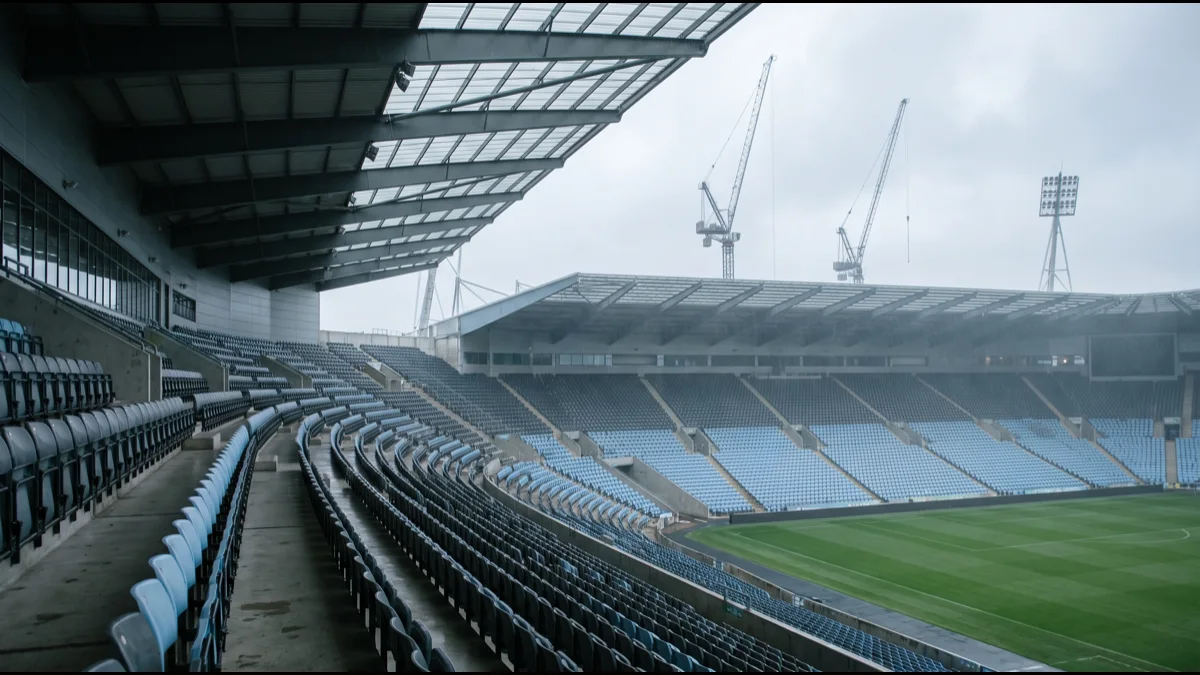
Wembley Stadium is the largest stadium in the UK at about 90,000. That much every list agrees on. Below the top five, published capacities for the same grounds differ by as much as 1,500 seats depending on which page you read — and the lists are not simply wrong. British stadiums are in the middle of a rebuilding wave, and most of the disagreement is a snapshot problem.
This page states its definition before its numbers, and says where the evidence genuinely does not settle the order. Figures were checked in August 2026.
How we have ranked these
Capacity means the certified number of spectators permitted in the venue’s standard configuration. That is a safety-certificate figure set by the local authority, not a marketing number set by the club, and it is the same basis our guides to the largest stadiums in the world and the biggest stadiums in the US use.
Three exclusions follow from that:
- No temporary or expanded configurations. Concert and special-event capacities are higher and are not comparable.
- No proposed or under-construction stadiums in the ranking. They are covered separately below.
- No Republic of Ireland venues. Croke Park in Dublin holds about 82,300, which would place it second, but it is not in the UK. Mixing the two is the most common error in lists titled “UK”.
Where two credible sources disagree, we give the range rather than pick.
The biggest stadiums in the UK
| Rank | Stadium | City | Nation | Published capacity |
|---|---|---|---|---|
| 1 | Wembley Stadium | London | England | ~90,000 |
| 2 | Twickenham (Allianz Stadium) | London | England | 82,000 |
| 3 | Old Trafford | Manchester | England | ~74,310 |
| 4 | Principality Stadium | Cardiff | Wales | 73,931 |
| 5 | Scottish Gas Murrayfield | Edinburgh | Scotland | 67,144 |
| 6 | Tottenham Hotspur Stadium † | London | England | ~62,850 |
| 7 | London Stadium † | London | England | ~62,500 |
| 8 | Anfield † | Liverpool | England | ~61,000 |
| 9 | Etihad Stadium † | Manchester | England | 61,000+ (rising) |
| 10 | Emirates Stadium | London | England | ~60,700 |
| 11 | Celtic Park | Glasgow | Scotland | ~60,400 |
| 12 | St James’ Park | Newcastle | England | ~52,300 |
| 13 | Hampden Park | Glasgow | Scotland | ~51,900 |
| 14 | Ibrox Stadium | Glasgow | Scotland | ~50,800 |
† Positions 6 to 9 are not settled. These four grounds sit within roughly 2,000 seats of one another, the Etihad is actively growing, and published figures for Tottenham Hotspur Stadium alone range from 62,062 to 62,850 across reputable sources. They are ranked here in descending order of their best-supported published figure, but the order inside this group should be treated as provisional rather than measured.
The top three each have their own composite page: Wembley Stadium capacity, Twickenham capacity and the £100m rename, and Old Trafford capacity.
For the next tier, see the venue profiles for Tottenham Hotspur Stadium, Emirates Stadium, Etihad Stadium, London Stadium, St James’ Park, Stamford Bridge, Elland Road, Bramall Lane, Craven Cottage, Selhurst Park, the Amex, St Mary’s Stadium, Goodison Park, and Everton Stadium. The UK list also needs a Scotland and Ireland comparison, so we have separate pages for Aviva Stadium, Hampden Park, and Murrayfield.
Positions 1 to 5 are settled. The gaps are large enough that no plausible revision reorders them, and only two of the five are football grounds — Twickenham and Murrayfield are rugby union stadiums and the Principality hosts both codes.
For comparison outside Europe, the Melbourne Cricket Ground’s 100,024 would top this list outright — see our ranking of the biggest stadiums in Australia and New Zealand.
Anyone presenting positions 6 to 9 as a confident, stable order is giving you false precision — which is why those four rows carry a dagger above. The next section explains what is actually moving.
Why the numbers disagree
Three separate causes, and they explain almost every discrepancy you will find.
1. Expansion in progress. The Etihad has been growing from 53,400 to more than 61,000 via the new Pep Guardiola Stand, which opened for the final match of 2025/26 with full completion due before the end of 2026. A list written in 2024 and a list written now are both accurate for their moment. Anfield is the settled version of the same story: the Anfield Road Stand added 7,000 seats, taking it to about 61,000.
Anfield is the settled version: two stand rebuilds took it from 45,000 to 61,000 without the club moving — see Anfield capacity.
2. Safe-standing conversions. Converting seated areas to licensed standing changes the certified capacity without any building work. A stadium can gain or lose a few hundred places between seasons and no photograph would show it.
3. Operator rounding. Wembley is published as 90,000 and also cited as 90,652. Old Trafford appears as 74,197, 74,310, 74,879 and 75,765 across the first page of Google. These are not all errors — several are the same stadium counted on different bases or at different dates. We rank on 74,310 as the best-supported current figure; see Old Trafford capacity.
The practical test when you see a capacity figure: ask what date it belongs to. A capacity without a date is close to meaningless in Britain in 2026.
The rebuilding wave, and Euro 2028
The reason so much is moving at once is a deadline. UEFA Euro 2028 is hosted by the UK and Ireland, and grounds are being upgraded to meet it — see our guide to the Euro 2028 venues, which explains why four of the largest grounds in the host nations were left out.
Ireland’s own table is dominated by a single amateur body — see our ranking of the biggest stadiums in Ireland.
Villa Park is the clearest case. Construction began in March 2026, the north stand is closed through 2026/27 — temporarily cutting capacity to around 37,000 — and the stand grows from 5,000 to 12,000 seats, taking the ground beyond 50,000 before the start of 2027/28, in time for the tournament. For one season Villa Park will be smaller than a dozen grounds it will finish above.
That is worth pausing on, because it breaks the assumption behind every capacity list: a stadium’s number can fall for a year and then jump. Ranking by a single snapshot misses it entirely.
New Trafford: the stadium that would top the list
Manchester United have confirmed a proposed location for a 100,000-seat stadium — about 350 metres north-west of Old Trafford, in Stretford, on 25 acres secured in June 2026, at an estimated £2 billion. Briefing material calls it New Trafford, it is expected to take around five years to build, and United would continue playing at Old Trafford until it opened.
If built, it becomes the largest stadium in the UK outright, displacing Wembley, and the largest club football ground in Europe. It is not in the table above because it does not exist, which is the same rule we apply to every proposed venue.
Old Trafford itself has been United’s home for 115 years, which makes the proposal one of the largest single venue moves in the history of European football.
What this list is not measuring
Capacity is one attribute and it is the least interesting one, which is why the composite matters more than the ranking.
Wembley and the Principality are national stadiums with roofs and hosting deals — and Cardiff’s is the only fully retractable roof of its kind in Britain, which is why its boxing configuration reaches about 78,000. Old Trafford is a 115-year-old club ground. The London Stadium is a converted Olympic athletics venue whose football sightlines remain compromised by its original bowl. Celtic Park, at 60,400, is routinely described as a more intimidating environment than grounds 10,000 larger.
Two of the top five are rugby stadiums, which is the fact most football-focused lists quietly drop. And access to any of them varies enormously — Twickenham internationals are not sold to the public at all, as our guide to Six Nations tickets explains.
Wembley is also the largest stadium currently in use anywhere in Europe, though not the largest by design — see Europe’s biggest grounds. Our rankings of the largest NFL stadiums and the biggest stadiums in the world apply the same standard-configuration rule, and the full set sits in our stadiums hub.
How we checked these numbers
Capacities are published figures cross-referenced across Wikipedia’s UK capacity list, Football Ground Guide and StadiumDB, with expansion detail from StadiumDB’s construction records and Liverpool FC’s own Anfield Road pages. The Manchester United proposal is from ESPN and Stadia Magazine reporting of the July 2026 announcement, and the land purchase and cost from the same coverage.
Figures marked with a tilde are approximate on purpose. Where reputable sources differ we have said so rather than choosing the number that made a cleaner table, and positions 6 to 9 are flagged because the evidence does not reliably separate them.
Review class: event-driven. This page needs rechecking when the Etihad completes, when Villa Park’s north stand reopens, on any Euro 2028 venue confirmation, and if the Manchester United proposal receives planning consent.
Frequently asked questions
What is the biggest stadium in the UK?+
Wembley Stadium, with a capacity of about 90,000. It is the second largest stadium in Europe behind Camp Nou and the largest in the UK by a margin of roughly 8,000 seats over Twickenham. Some sources give 90,652, which is the figure occasionally published for specific configurations.
Why do different lists give different stadium capacities?+
Three reasons. Several grounds are mid-expansion, so a figure is right for one season and wrong for the next. Safe-standing conversions change the certified number without any building work. And operators round differently — Wembley publishes 90,000, others cite 90,652 for the same stadium.
What is the biggest football stadium in the UK?+
Old Trafford, at roughly 74,310, is the largest club football stadium. Wembley is larger but is a national stadium rather than a club ground. If Manchester United's proposed 100,000-seat stadium is built, it would become the largest football stadium in the UK and the largest stadium of any kind.
Is Manchester United building a new stadium?+
They have confirmed a proposed location. The 100,000-seat ground would sit about 350 metres north-west of Old Trafford in Stretford, on 25 acres secured in June 2026, at an estimated cost of around £2 billion. Briefing material refers to it as New Trafford, and it is expected to take about five years to build.
What is the biggest stadium in Scotland and Wales?+
In Wales, the Principality Stadium in Cardiff at 73,931, which is the fourth largest in the UK. In Scotland, Scottish Gas Murrayfield in Edinburgh at 67,144, ahead of Celtic Park at about 60,400 and Hampden Park at about 51,900.
Which UK stadiums are being expanded?+
Manchester City's Etihad Stadium has been rising from 53,400 to more than 61,000 through the Pep Guardiola Stand, with completion due before the end of 2026. Villa Park is expanding to over 50,000 for Euro 2028, and its north stand is closed through 2026/27, temporarily cutting capacity to around 37,000.
How is stadium capacity actually measured?+
By the certified number of spectators permitted in the standard configuration, set by the local authority safety certificate rather than by the club. That is why safe-standing conversions can change a capacity without construction, and why the figure a club markets and the figure on the certificate are not always the same.
Sources
- Wikipedia: list of stadiums in the United Kingdom by capacity
- ESPN: Manchester United reveal location for new 100,000-seater stadium
- Stadia Magazine: more detail revealed on Man Utd's planned 100,000 stadium
- StadiumDB: Etihad Stadium construction and capacity increase
- StadiumDB: Anfield expansion officially completed
- StadiumDB: Villa Park construction
- Liverpool FC: Anfield Road Stand expansion
- Football Ground Guide: biggest stadiums in England by capacity
Related stadiums & arenas guides
View all →
Euro 2028 Venues: All Nine Stadiums Ranked
Euro 2028 uses nine stadiums across eight UK and Irish cities. Capacities, why UEFA renames them, and the big grounds that were left out.
Largest Stadium in Europe: Two Correct Answers
Camp Nou is Europe's biggest on paper at 105,000 but only ~62,652 is usable mid-rebuild. Wembley is the largest actually in use. The full ranked table.
Biggest Stadiums in Australia and New Zealand
The MCG holds 100,024 — more than Eden Park and Wellington combined. And almost every ground in the region has two capacities, which is why lists disagree.

Biggest Stadiums in Ireland: An Amateur Monopoly
Croke Park leads at 82,300, but the real story is that eight of Ireland's nine largest stadiums are owned by an amateur association.
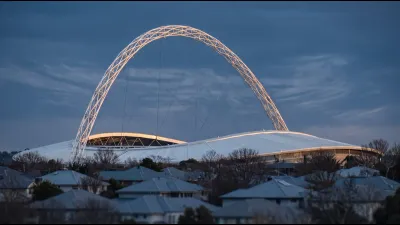
Wembley Stadium Capacity, Cost and Who Owns It
Wembley holds 90,000 — the UK's largest. What it cost to build, who owns it, why the arch exists, and how the capacity changes by event.
Most Expensive Stadiums Ever Built, and the Catch
SoFi Stadium cost $5.5 billion, more than double anything else. But most cost rankings quietly mix inflation-adjusted and nominal figures — here's both.