Most Expensive Stadiums Ever Built, and the Catch
On this page6
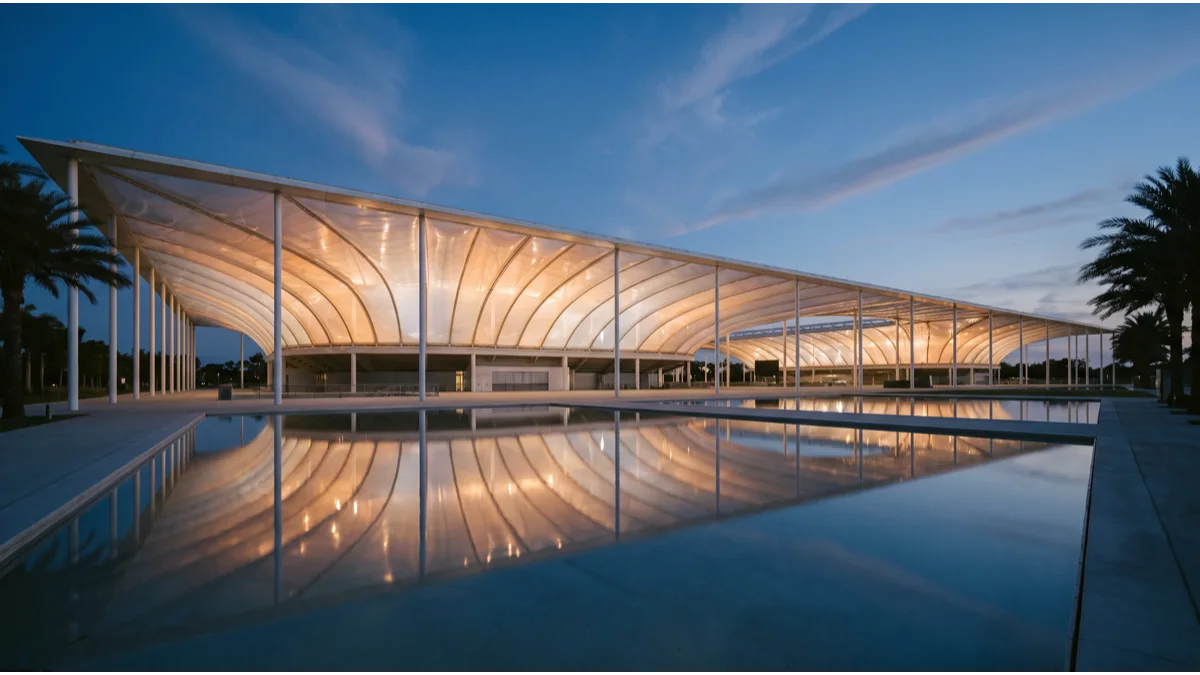
SoFi Stadium cost about $5.5 billion, which makes it the most expensive sports venue ever built by a margin of more than two to one.
Its successor act is an Olympic Games that will build nothing: LA 2028 uses more than 40 existing venues, covered in our guide to LA 2028 Olympic venues.
Everything below it comes with a caveat that most rankings do not state. These figures are inflation-adjusted and converted to US dollars, which is why Wembley appears here at roughly $2.4 billion despite a construction cost of £789 million in 2007. Both numbers are correct.
The most expensive stadiums ever built
| Rank | Stadium | City | Cost (adjusted USD) | Opened |
|---|---|---|---|---|
| 1 | SoFi Stadium | Inglewood, USA | ~$5.5 bn | 2020 |
| 2 | Allegiant Stadium | Las Vegas, USA | ~$2.483 bn | 2020 |
| 3 | Wembley Stadium | London, England | ~$2.428 bn | 2007 |
| 4 | MetLife Stadium | East Rutherford, USA | ~$2.301 bn | 2010 |
| 5 | Tottenham Hotspur Stadium | London, England | ~$1.3 bn | 2019 |
SoFi is the outlier, not the trend. It cost more than the second and third entries combined. Its roof canopy, twin video board and the surrounding entertainment district account for much of the difference, and it is the venue hosting Super Bowl LXI in February 2027 as well as swimming at the LA 2028 Olympics.
Money and time track each other here: SoFi took nearly four years to build, while a phased rebuild around a working ground runs to a decade — set out in our guide to how long it takes to build a stadium.
Note also how few of these are old. Four of the five opened since 2007, and three since 2019.
Why the figures move so much between sources
Three variables, and a comparison that does not state all three is not a comparison.
1. Nominal or inflation-adjusted. Wembley’s £789 million in 2007 money is not the same quantity as £789 million today. Adjusted rankings restate everything in current terms, which pushes older stadiums up the table relative to their headline cost.
2. Currency, and the date of conversion. A euro or sterling figure converted to dollars depends entirely on the exchange rate used. Convert Wembley’s cost at a 2007 rate or a 2026 rate and you get materially different dollar figures for the same building.
3. Construction only, or total project. Wembley’s £789 million is construction. The roughly £1 billion figure includes redevelopment of local transport infrastructure and the cost of financing. Land acquisition is sometimes in and sometimes out. Our guide to Wembley Stadium capacity sets out both figures and why the gap exists.
When you next see stadium costs compared, the useful question is not which is bigger but what is inside each number.
Renovations are a separate category
Two of the largest sums currently being spent on stadiums are not new builds at all, and folding them into a new-build ranking would be misleading.
- Santiago Bernabéu, Madrid — roughly €1.76 billion. A four-year renovation completed in late 2024. Real Madrid has still never officially confirmed the resulting capacity.
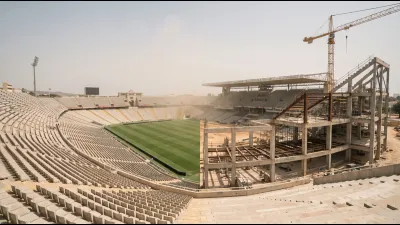
- Camp Nou, Barcelona — around €1.45 billion. The Espai Barça rebuild, financed through a package of roughly €1.5 billion involving Goldman Sachs and about 20 investors, with reported cost overruns in July 2026 and members asked to approve additional financing. See Camp Nou capacity.
Both are enormous. Neither produced a new stadium. Camp Nou’s rebuild alone costs more than Wembley’s entire original construction.
The proposed stadium that would top the list
Manchester United’s proposed 100,000-seat ground, about 350 metres from Old Trafford on 25 acres secured in June 2026, carries an estimated cost of around £2 billion.
That would place it second on this table on a nominal basis and possibly higher once built. It is excluded because it does not exist — the same rule that keeps proposed venues out of our capacity rankings. Our guide to Old Trafford capacity covers the proposal in full.
Why the NFL dominates
Most of the world’s most expensive venues are American football stadiums, and the reason is structural rather than architectural.
NFL stadiums are typically privately financed at very large scale, built for a 16-to-20-date home season, and designed to earn their return from premium hospitality, naming rights and non-sporting events rather than from ticket volume alone. That economic model supports spending that a European club playing 25-plus home fixtures a year to a mostly general-admission crowd cannot easily justify.
It also explains why capacity and cost barely correlate. SoFi holds about 70,240 in standard configuration — fewer than Wembley, Twickenham or Croke Park — while costing more than twice as much as any of them. Michigan Stadium holds over 107,000 and does not appear anywhere near this list. Our ranking of the biggest stadiums in the world is close to a different set of buildings entirely.
How we checked these numbers
The ranking and the adjusted dollar figures are from StadiumDB’s most-expensive list, Bleacher Report and Construction Dive’s ranking of thirty venues, with NFL-specific figures from Front Office Sports. Wembley’s nominal £789 million construction cost and roughly £1 billion total project cost are from Britannica and the stadium’s own history pages. The Manchester United estimate is from ESPN’s reporting of the announcement.
The table is on a single basis — inflation-adjusted US dollars — and says so. Nominal local-currency figures are given in the text where we have them, because the two are routinely quoted interchangeably and should not be. Renovation costs are kept separate from new-build costs for the same reason.
The nominal-cost version appears in our most expensive stadium in the world ranking. The same cluster also covers Dodger Stadium capacity and who owns the New York Yankees, which helps separate venue cost from franchise ownership.
Review class: event-driven. Recheck on any new stadium completion above roughly $1.5 billion, when Camp Nou’s final cost is settled, and if the Manchester United proposal proceeds.
Frequently asked questions
What is the most expensive stadium ever built?+
SoFi Stadium in Inglewood, California, at a reported cost of around $5.5 billion. It is home to the Los Angeles Rams and Los Angeles Chargers, opened in 2020, and cost more than double the next most expensive venue on the list.
Why does Wembley appear at $2.4 billion when it cost £789 million?+
Because most cost rankings adjust for inflation and convert to US dollars. Wembley's construction cost was £789 million in 2007, with the total project estimated near £1 billion including transport infrastructure and financing. Expressed in current dollars that becomes roughly $2.4 billion. Both figures describe the same stadium.
Which is the most expensive NFL stadium?+
SoFi Stadium at about $5.5 billion, followed by Allegiant Stadium in Las Vegas at roughly $2.483 billion and MetLife Stadium in New Jersey at about $2.301 billion. The NFL accounts for most of the world's most expensive venues, largely because its stadiums are privately financed at enormous scale.
What is the most expensive stadium in Europe?+
On an inflation-adjusted basis, Wembley at around $2.4 billion. Two current projects will change that: Real Madrid's Santiago Bernabeu renovation cost roughly €1.76 billion, and Barcelona's Espai Barca rebuild of Camp Nou is financed at around €1.45 billion and has overrun.
Is a renovation counted the same as a new build?+
Not in this ranking, and that is a common source of confusion. The Bernabeu's €1.76 billion and Camp Nou's €1.45 billion are rebuild and renovation costs for existing stadiums, not new construction. Comparing them directly against a new build like SoFi mixes two different kinds of spending.
How much will Manchester United's new stadium cost?+
Around £2 billion on current estimates, for a proposed 100,000-seat ground about 350 metres from Old Trafford. It is not in the ranking because it has not been built — the same rule that keeps every proposed venue out of our capacity rankings.
Why do stadium cost figures vary so much between sources?+
Three reasons. Whether the figure is nominal or inflation-adjusted. Whether it has been converted from another currency, and at what exchange rate. And whether it covers construction only or the total project including land, transport infrastructure and financing. Any comparison that does not state all three is unreliable.
Sources
- StadiumDB: top 20 most expensive stadiums in the world
- Bleacher Report: SoFi Stadium and the most expensive sports venues in the world
- Construction Dive: report ranks the 30 most expensive sports venues
- Front Office Sports: most expensive NFL stadiums by construction cost
- Britannica: Wembley Stadium
- ESPN: Manchester United reveal location for new 100,000-seater stadium
Related stadiums & arenas guides
View all →
How Long to Build a Stadium: 26 Months or 12 Years
AT&T Stadium took 26 months. Croke Park took twelve years. The difference isn't engineering — it's whether the ground has to keep hosting matches.

Wembley Stadium Capacity, Cost and Who Owns It
Wembley holds 90,000 — the UK's largest. What it cost to build, who owns it, why the arch exists, and how the capacity changes by event.
Biggest Stadiums in the UK: Why Every List Disagrees
Wembley leads at 90,000, but below the top five the order genuinely changes month to month. The published capacities, and the rebuilding wave behind the confusion.

Largest NFL Stadiums 2026: All 30 Ranked by Capacity
MetLife Stadium is the largest NFL stadium at 82,500. All 30 venues ranked with capacity, year opened, construction cost and naming-rights holder.
LA 2028 Venues: No New Stadiums, 35% Over Budget
Every LA 2028 venue, sport by sport — and why the first Games since London 1948 to build nothing has still gone from $5.3bn to $7.145bn.
Largest Stadium in Europe: Two Correct Answers
Camp Nou is Europe's biggest on paper at 105,000 but only ~62,652 is usable mid-rebuild. Wembley is the largest actually in use. The full ranked table.