Camp Nou Capacity: 62,652 Now, 105,000 Later
On this page6
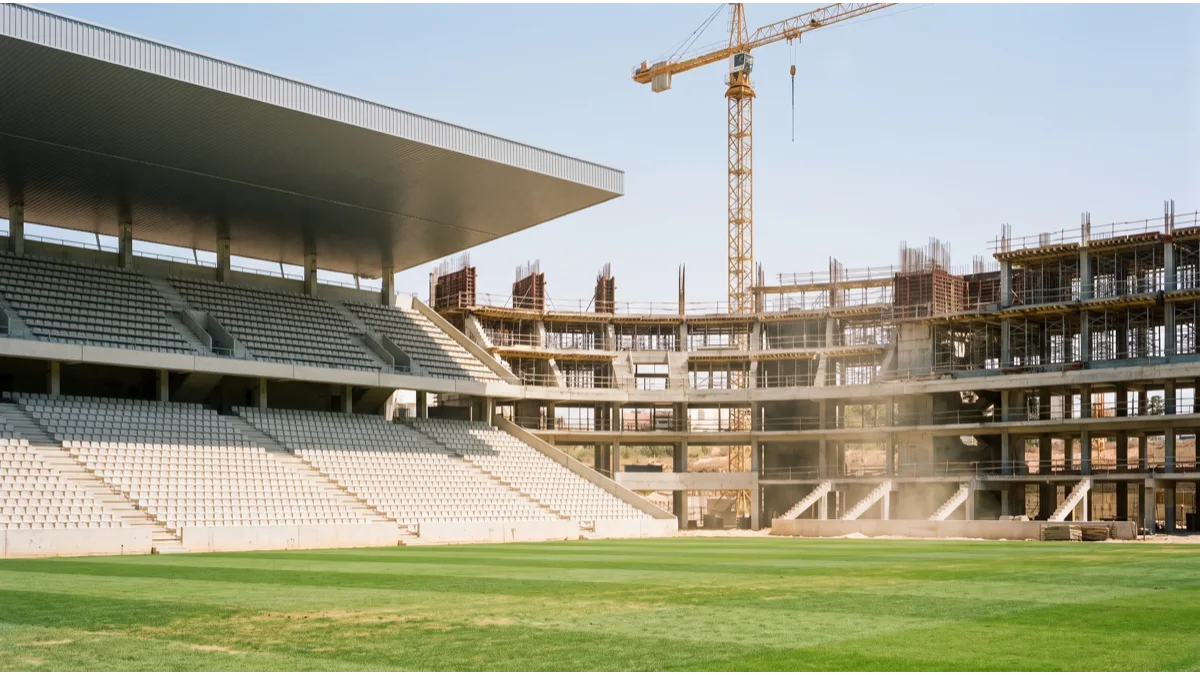
Camp Nou has two capacities, and almost every page quoting one fails to say which.
In use today: about 62,652. When finished: 105,000. The gap is the Espai Barça rebuild, which is expected to complete in 2027.
The consequence is that the stadium widely described as the largest in Europe is, right now, smaller than Celtic Park.
| Capacity now | ~62,652 |
| Capacity when complete | 105,000 |
| Completion expected | 2027 |
| Project financing | ~€1.45 billion |
| Returned to the ground | 22 November 2025 |
| Owner | FC Barcelona, owned by its members |
| Official name | Spotify Camp Nou |
Why the two numbers both get quoted as fact
The finished figure of 105,000 is a design target. The 62,652 figure is what the safety-certified, usable stadium holds while one part of it is a building site.
Both appear in print without qualification, which is why Camp Nou is the single largest source of confusion in European stadium lists. A page written from the project plan says 105,000. A page written from a matchday says 62,652. Neither is lying.
This is exactly why our ranking of the largest stadium in Europe shows design capacity and current usable capacity in separate columns. Ranking a continent mid-rebuild any other way either misleads readers or pretends nothing is being built.
Playing through the rebuild
Barcelona did not simply move out for the duration. The club played away from the ground during the most disruptive phase, then returned on 22 November 2025 with a 4–0 win over Athletic Bilbao, and has played there since at reduced capacity.
The stadium is reopening in stages rather than on a single date, with sections brought back into use as they are certified. That is why the usable figure has changed repeatedly and will change again before 2027 — any capacity number for Camp Nou needs the month attached to it.
Croke Park did something similar over twelve years, deliberately phasing four rebuild stages so it never missed an All-Ireland final, as our guide to Croke Park capacity sets out. The approach is not new; the scale at Barcelona is.
What it costs, and the overrun
Overall financing for the Espai Barça project is estimated at around €1.45 billion, drawn from a package of roughly €1.5 billion involving Goldman Sachs and around 20 investors.
Then the part that matters. Reports in July 2026 indicated that costs had overrun and that the club intended to ask its members to approve additional financing.
That last detail is unusual and worth dwelling on. FC Barcelona is owned by its members — the socios — not by a private owner or shareholders. So a stadium cost overrun becomes a question put to the people who support the club, and they vote on it. Most clubs rebuilding a ground answer to an owner or a board; Barcelona answers to a membership.
Those members own one of the two most valuable clubs in world football, neither of which has an owner who could sell — covered in our guide to fan-owned football clubs.
For comparison, Wembley cost £789 million to build with a total project estimate near £1 billion, and is owned outright by the Football Association — see Wembley Stadium capacity. Camp Nou’s rebuild alone costs more than Wembley’s entire construction — the comparison is set out in our ranking of the most expensive stadiums.
Naming rights, and what UEFA does with them
The ground is officially Spotify Camp Nou. Barcelona sold naming rights with the sponsor placed in front of the historic name rather than replacing it — a common compromise where a stadium name carries heritage value.
In UEFA competitions it appears simply as Camp Nou, because UEFA does not recognise commercial naming rights in its own tournaments. That is the same practice which renames three Euro 2028 venues, turning the Etihad into Manchester City Stadium and the Aviva into Dublin Arena.
Wembley is the instructive contrast: its name has never been sold, only sponsored around.
What 105,000 will mean
When the target is reached, Camp Nou will be the largest stadium in Europe by roughly 15,000 seats over Wembley — a bigger margin than currently separates the whole European top three.
It would also sit among the five largest stadiums in the world, alongside North Korea’s Rungrado and the American college football grounds that dominate the global list, as set out in our ranking of the biggest stadiums in the world.
Until then, the honest answer to “how big is Camp Nou” is: it depends what you mean, and here are both numbers.
How we checked these numbers
The current 62,652 usable capacity, the 105,000 target and the phased reopening are from Barcelona.com’s project pages and Football Ground Guide’s renovation tracker. The €1.45 billion financing estimate, the Goldman Sachs-led package, the 20 investors and the July 2026 overrun reporting are from My World of Football and ESPN’s coverage of the project. The 22 November 2025 return match is from the same renovation reporting.
Both capacity figures are given deliberately. Where a single number is quoted elsewhere without a date or a qualifier, treat it as incomplete rather than wrong.
Review class: event-driven. This page needs rechecking at each phase reopening, on any revision to the 2027 completion date, and if the members’ financing vote changes the project scope.
Frequently asked questions
What is Camp Nou's capacity in 2026?+
About 62,652 seats while the Espai Barca rebuild continues. That is the number in use, not the number the stadium is designed to hold. The finished ground targets 105,000, so almost any figure you see quoted is either the current partial capacity or the future full one, and sources rarely say which.
What will Camp Nou's capacity be when finished?+
105,000, which would reaffirm it as the largest stadium in Europe by roughly 15,000 seats over Wembley. Full completion is expected in 2027, after a phased reopening rather than a single opening date.
Is Camp Nou still the biggest stadium in Europe?+
By design, yes. In practice, no — at about 62,652 usable seats it currently sits outside the European top ten, behind grounds like Celtic Park. Wembley, at 90,000, is the largest stadium in Europe actually available at full size until Camp Nou completes.
How much is the Camp Nou renovation costing?+
The overall Espai Barca project financing is estimated at around €1.45 billion, drawn from a roughly €1.5 billion package involving Goldman Sachs and around 20 investors. Reports in July 2026 indicated costs had overrun and that the club planned to ask members to approve additional financing.
Did Barcelona keep playing at Camp Nou during the rebuild?+
Not throughout. The club played away from the ground during the most disruptive phase, then returned on 22 November 2025 with a 4-0 win over Athletic Bilbao, and has played there since at reduced capacity while work continues around the match schedule.
What is the stadium officially called?+
Spotify Camp Nou. Barcelona sold naming rights to Spotify, so the sponsor name sits in front of the historic one rather than replacing it. UEFA strips commercial names for its own competitions, so in European fixtures it appears simply as Camp Nou.
Who owns Camp Nou?+
FC Barcelona, which is itself owned by its members — the socios — rather than by a private owner or shareholders. That is why major financing decisions on the rebuild are put to a members' vote, an accountability step most clubs rebuilding a stadium do not face.
Sources
- Barcelona.com: new Camp Nou, project and progress of the works
- Football Ground Guide: Barcelona stadium renovation, latest news
- My World of Football: Camp Nou renovation cost, timeline and rebuild
- ESPN: Barcelona's Camp Nou renovation and expansion plans get go-ahead
- MeetStadium: Camp Nou capacity and visitor guide
Related stadiums & arenas guides
View all →
Wembley Stadium Capacity, Cost and Who Owns It
Wembley holds 90,000 — the UK's largest. What it cost to build, who owns it, why the arch exists, and how the capacity changes by event.

Largest NFL Stadiums 2026: All 30 Ranked by Capacity
MetLife Stadium is the largest NFL stadium at 82,500. All 30 venues ranked with capacity, year opened, construction cost and naming-rights holder.
Anfield Capacity: 45,000 to 61,000 Without Moving
Anfield grew by 16,000 seats in 13 years through two stand rebuilds. At roughly $10,300 a seat it is half the cost per seat of a new stadium.
Largest Stadium in Europe: Two Correct Answers
Camp Nou is Europe's biggest on paper at 105,000 but only ~62,652 is usable mid-rebuild. Wembley is the largest actually in use. The full ranked table.
Principality Stadium Capacity: 73,931 and a Roof
Cardiff holds 73,931 for rugby and about 78,000 for boxing. And the famous rule that both teams must agree to close the roof no longer applies.
Signal Iduna Park Capacity: 81,365 or 65,829
Germany's largest stadium holds 81,365 for the Bundesliga and 65,829 for UEFA matches. The 15,536-seat gap is the Yellow Wall being sat down.