Fan-Owned Football Clubs: Four Left in Spain

On this page6
Every football club in Spain was fan-owned until the early 1990s. Then the government required them to convert to private companies.
Four were exempted, and remain member-owned today:
| Club | Members |
|---|---|
| FC Barcelona | ~141,000 socios |
| Real Madrid | ~100,000 socios |
| Athletic Club | Member-owned |
| Osasuna | Member-owned |
What a socio actually holds
Not a share. A vote.
A socio pays an annual membership fee and receives voting rights over major decisions, including the election of the president and the board of directors — typically every four to six years.
What they do not receive is money. The structure carries substantial tax advantages in exchange for paying no dividends: all revenue must be reinvested in the club.
That is the trade at the heart of the model. Members get control and no return; investors get a return and no control. Almost every other ownership arrangement in football is a version of choosing one or the other.
The consequences are real rather than ceremonial. Barcelona’s socios were asked to approve additional financing when the Camp Nou rebuild overran — an accountability step with no Premier League equivalent.
The membership is closing
Here is the detail that changes how you should read “fan-owned”.
Real Madrid’s socio body grows only through the children and grandchildren of existing members. If you have no family connection, you cannot join.
So a club with 100,000 member-owners is also a club whose ownership is now heritable and effectively closed. The people who control Real Madrid in 2050 will largely be the descendants of the people who control it today.
That is a structural echo of something we found in Germany, where RB Leipzig satisfies the 50+1 rule with a members’ association of roughly 21 people, all connected to Red Bull — set out in our guide to the Bundesliga 50+1 rule. The German competition authority called that a circumvention.
The two are not equivalent, and it would be unfair to present them as such. One hundred thousand inherited members with genuine electoral power is a different thing from twenty-one appointed ones. But both show the same gap: a rule requiring members to hold control says nothing about who is allowed to be a member.
Real Madrid may be leaving
The most significant development in this subject is not historical.
Real Madrid has been preparing to take outside investment, in a break from the fan-owned model — reported in 2025 in relation to the club generally regarded as the most valuable in world football.
If it completes, it would be the largest change to Spanish club ownership since the exemptions were granted, and it would leave the socio model’s most prominent example holding it only partially.
Nothing has been confirmed. But any page describing the four Spanish clubs as a settled, permanent arrangement is describing the last thirty years rather than the next ten.
Beyond Spain
The socio model is Spanish, but member control is not.
| Club or body | Form |
|---|---|
| Bayern Munich | Largely member-controlled |
| Borussia Dortmund | Members hold control under 50+1 |
| Panathinaikos | Supporter-run |
| Most large South American clubs | Member associations |
| The GAA | Amateur association, member-owned |
| New Zealand Rugby | Owned by 26 provincial unions |
Germany’s 50+1 rule caps investors at 49% and was upheld by the country’s competition authority in August 2026. Ireland’s GAA reinvested 83 cent of every euro of its €142 million revenue. New Zealand Rugby is owned by its provincial unions and is considering buying back the private equity stake in its commercial arm.
Member ownership is not a Spanish curiosity. It is the dominant model everywhere except the English-speaking professional leagues.
What England has none of
There is no fan-controlled Premier League club. Seventeen of twenty are under private or investment ownership and eleven are American-owned, as our guide to who owns the Premier League clubs sets out.
The Owners’ and Directors’ Test screens who may buy a club. It places no limit on how much of one they may own, and no requirement that anyone who supports the club has a vote.
Supporter ownership does exist in England, but almost entirely at levels where clubs were rescued rather than chosen — which is a different origin story from Barcelona’s, and produces different institutions.
How we checked these numbers
The four exempted Spanish clubs — Real Madrid, Barcelona, Athletic Club and Osasuna — the early-1990s government requirement that other clubs convert to a private model, and Real Madrid’s preparation of outside investment are from Sportico’s report. The socio mechanism, annual membership fee, voting rights, election of the president and board every four to six years, the tax advantages, the no-dividends requirement and the reinvestment obligation are from FootTheBall’s explainer and False 9 Forum. Barcelona’s approximately 141,000 socios, Real Madrid’s approximately 100,000 and the restriction of new Real Madrid membership to children and grandchildren of existing members are from the same sources and Yahoo Sports’ guide to Barcelona’s ownership. The list of other supporter-run clubs is from Football Ground Guide.
Membership numbers move and are club-reported. Treat 141,000 and 100,000 as recent orders of magnitude rather than audited counts, and note that “member-owned” covers a range — Bayern Munich’s members hold most but not all of the club.
For a contrasting privately controlled Premier League model, see who owns Arsenal and how voting control differs from member ownership.
Review class: event-driven. Recheck on any completed Real Madrid investment, any change to the Spanish exemptions, or any published membership figures.
Frequently asked questions
Which football clubs are fan-owned?+
In Spain, four: Real Madrid, Barcelona, Athletic Club and Osasuna, which were exempted when the government required all other clubs to convert to private ownership in the early 1990s. Elsewhere, Borussia Dortmund, Bayern Munich in large part, Panathinaikos and most major South American clubs are supporter-run.
What is a socio in football?+
An official member of the club who pays an annual membership fee in exchange for voting rights and influence over major decisions. Socios elect the president and the board of directors, typically every four to six years.
How many socios does Barcelona have?+
Around 141,000. Real Madrid has approximately 100,000, a number that grows only through the children and grandchildren of existing members.
Do socios receive dividends?+
No. The structure carries substantial tax advantages in exchange for paying no dividends — all revenue must be reinvested in the club. Members hold control, not a financial return.
Can anyone become a Real Madrid socio?+
Not any more. Membership grows only through the children or grandchildren of current socios, so the body is effectively closed to people without a family connection. Barcelona's membership remains substantially larger.
Is Real Madrid still fan-owned?+
At the time of writing, yes, but it has been preparing to take outside investment in a break from the fan-owned model. That would be the most significant change to Spanish club ownership since the exemptions were granted in the 1990s.
Why did Spain make clubs convert to private ownership?+
The government required the change in the early 1990s, moving clubs toward a private company model closer to major US franchises. Four clubs judged to be on a sound financial footing were granted exemptions and kept their non-profit member-owned status.
Sources
- Sportico: Real Madrid preps outside investment in break from fan-owned model
- Yahoo Sports: who owns Barcelona? How socios retain control
- FootTheBall: who are socios? The men behind Florentino Pérez and Joan Laporta
- False 9 Forum: what are socios in football, explained
- Football Ground Guide: list of fan-owned clubs in England, the UK and the world
Related ownership guides
View all →
Most Valuable Football Clubs: The Top Two Have No Owner
Real Madrid $9.5bn, Barcelona $7.5bn — both member-owned. Manchester United, privately held, dropped to third. Forbes' 2026 valuations, with the ownership overlay.
Which European Football Clubs Are Fan-Owned?
Fan ownership can mean member voting control, a supporters trust holding a decisive stake, or a club structure that gives members formal governance rights. The label needs a country and legal definition because supporter influence varies widely.

Most Valuable Sports Teams: The NFL Owns the List
The Dallas Cowboys are worth $13bn — and NFL franchises take 13 of the top 20. Real Madrid leads world football on $9.5bn and still ranks outside the top five.
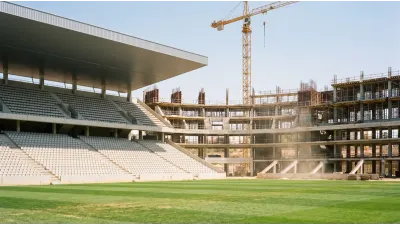
Camp Nou Capacity: 62,652 Now, 105,000 Later
Camp Nou will hold 105,000 when its rebuild finishes in 2027, but only 62,652 seats are in use today. The cost, the phases and the overrun explained.
Which Premier League Clubs Are American-Owned?
American ownership can mean a US-based controlling group, a minority private-equity stake or a multinational consortium. The ownership label must identify the legal entity and date checked.

What Is Multi-Club Ownership in Football?
Multi-club ownership is a structure in which one investor or group controls, funds or holds material influence in more than one football club. Competition rules can limit common ownership where clubs may meet in the same tournament.