Who Owns the GAA: Its Own Members
On this page6
The fourth-largest stadium in Europe is owned by an association of amateurs, and nobody who plays in it is paid.
Croke Park belongs to the GAA, and the GAA belongs to its own members.
| Owner | The membership, through the clubs |
| Croke Park capacity | ~82,300 — 4th largest in Europe |
| 2025 consolidated revenue | €142m |
| 2025 consolidated surplus | €3.7m |
| Reinvested | 83 cent of every euro |
| Players paid | No |
The structure
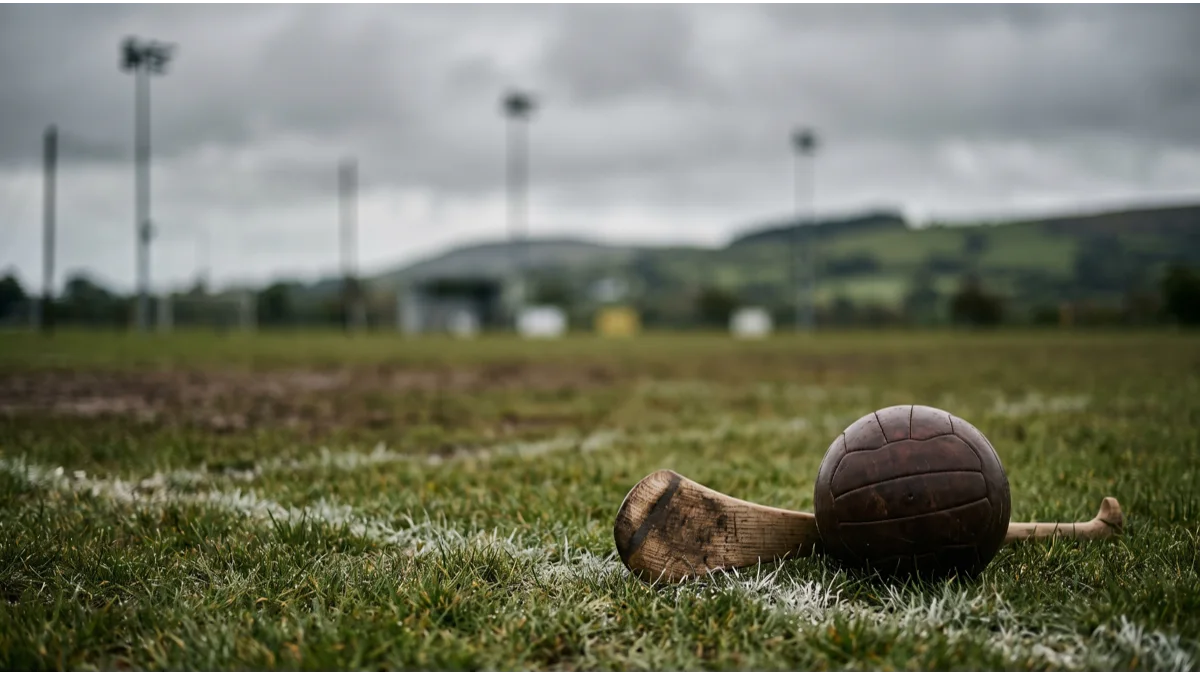
The GAA is a voluntary, democratic association, and its basic unit is the individual club.
Authority runs upward, not downward. Clubs form county boards; county boards send representatives to provincial councils and to Central Council; Congress meets annually as the gathering of county boards and provincial councils. World headquarters sits at Croke Park.
There is no owner. No shareholder, no holding company, no investor. The people who turn up are the people who decide.
And most clubs own their own grounds — including in the most rural parts of Ireland, where clubs have developed and hold their own facilities. The property base is distributed across the country rather than concentrated at the top, which is the opposite of how almost every professional sport is arranged.
€142 million, and a surplus of €3.7 million
The financial shape is the clearest evidence that this is not a business wearing an association’s clothes.
| 2025 | |
|---|---|
| Consolidated revenue | €142m |
| Croke Park Stadium | €50.5m (up €4.5m) |
| Gate receipts | €45.7m |
| Consolidated surplus | €3.7m |
A surplus of €3.7 million on €142 million of revenue is a margin of about 2.6%. The association states it reinvested 83 cent of every euro directly into development across clubs, schools, counties and provinces.
Croke Park’s own €50.5 million was up €4.5 million after a summer of concerts, and gate receipts rose on strong All-Ireland attendances. The money came in and went back out. That is the design.
What one Premier League club receives
For scale, set the GAA’s entire national revenue against a single English football club.
| GAA, all activity, 2025 | €142m |
| Bottom Premier League club, central payments 2025-26 | ~£109m |
Those two figures are of comparable magnitude. One funds Gaelic games across every county in Ireland, plus schools, plus a stadium that seats 82,300. The other is what the worst-performing club in one English league receives before it sells a ticket — set out in our guide to Premier League promotion value.
Eight of Ireland’s nine largest grounds belong to the association — the full table is in our ranking of the biggest stadiums in Ireland.
Neither figure is a judgement on the other. Together they explain why the two sports look so different.
Rule 42, and what member ownership actually means
Ownership models are usually abstract. The GAA’s produced one of the most consequential decisions in Irish sport.
Rule 42 restricted the use of GAA grounds by other sports, and once banned soccer and rugby from Croke Park entirely. When that changed, it changed because the membership voted, as our guide to Croke Park capacity sets out.
Consider what that means. The question of whether Ireland’s largest stadium could host other sports was settled by delegates representing clubs, not by a board weighing a commercial case. A different structure would have answered it in a boardroom in an afternoon.
Members with real authority are slower and less predictable than owners. They are also the reason the decision belonged to Irish sport rather than to whoever happened to hold the asset.
Where it sits among ownership models
| Model | Example |
|---|---|
| Amateur association, member-owned | The GAA |
| Members hold control by rule | Bundesliga 50+1 |
| Member-owned club | FC Barcelona — 141,000 socios vote on major finance |
| Private / investment ownership | 17 of 20 Premier League clubs |
| Multi-club investment group | City Football Group, 13 clubs |
The GAA sits at the far end of that range, and it is the only entry where nobody is paid to play.
Germany’s 50+1 rule caps investors at 49% and was upheld by the country’s competition authority in August 2026. Barcelona’s socios vote on major financing. But both are professional clubs with members attached. The GAA is an amateur body that happens to own one of Europe’s largest stadiums — as our guides to the largest stadium in Europe and Premier League owners show from the other direction.
How we checked these numbers
The voluntary democratic structure, the club as basic unit, the county board, provincial council, Central Council and Congress hierarchy, GAA ownership of Croke Park and the fact that most clubs own their own grounds are from Wikipedia’s article on the structure of the Gaelic Athletic Association. The €142 million 2025 consolidated revenue, €3.7 million surplus, Croke Park Stadium’s €50.5 million up €4.5 million, and the €9 million revenue increase are from RTÉ’s report on the 2025 annual figures. The 83 cent reinvestment figure is the GAA’s own published statement, and the €45.7 million gate receipts figure is from the Irish Examiner, with additional detail from Sport for Business.
The 2.6% margin is our own calculation from the published revenue and surplus. Consolidated figures cover the association’s central activity and its commercial subsidiaries; county and club finances are reported separately and are not included, so €142 million understates total money moving through Gaelic games.
Review class: annual. Recheck when the GAA publishes its next annual report, usually reported in February.
Frequently asked questions
Who owns the GAA?+
Its members. The Gaelic Athletic Association is a voluntary, democratic association in which the individual club is the basic unit, governed upward through county boards, provincial councils, Central Council and an annual Congress. There is no owner, shareholder or investor.
Who owns Croke Park?+
The GAA itself. At about 82,300 it is the largest stadium in Ireland and the fourth largest in Europe, and it belongs to the association rather than to any club, company or state body.
How much revenue does the GAA make?+
€142 million in consolidated revenue in 2025, with a consolidated surplus of €3.7 million. Croke Park Stadium generated €50.5 million of that, up €4.5 million on the previous year after a summer of concerts.
Is the GAA a profit-making organisation?+
No. It reinvested 83 cent of every euro generated directly into the development of the association across clubs, schools, counties and provinces in 2025, and the surplus on €142 million of revenue was €3.7 million — a margin of about 2.6%.
Are GAA players paid?+
No. Players in Gaelic games remain amateur, which is the defining feature of the association and the reason its economics look nothing like professional sport's despite the crowds it draws.
What is Rule 42?+
The GAA rule that restricted the use of its grounds by other sports, and which once banned soccer and rugby from Croke Park entirely. It is the clearest example of member ownership having real consequences — the membership, not an owner, decided who could use the stadium.
Do GAA clubs own their own grounds?+
The vast majority do, including in the most rural parts of Ireland. Clubs have developed and hold their own grounds and facilities, which is why the association's property base is spread across the country rather than concentrated at the top.
Sources
- Wikipedia: structure of the Gaelic Athletic Association
- RTÉ: increased crowds help drive €9m increase in GAA revenue
- GAA: the association reinvests 83 cent of every euro generated
- Irish Examiner: GAA reports €45.7m gate receipts as Cork support boosts All-Ireland attendances
- Sport for Business: the GAA annual report 2025, revenue and expenditure
Related ownership guides
View all →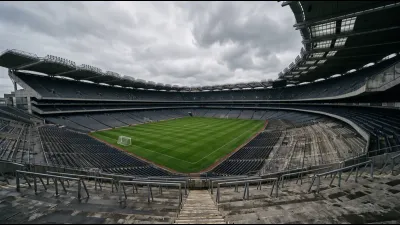
Croke Park Capacity, Ownership and Rule 42
Croke Park holds 82,300 — Ireland's largest and among Europe's biggest. Owned by an amateur association, and left out of Euro 2028 in its own city.
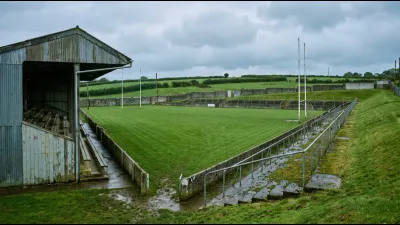
Biggest Stadiums in Ireland: An Amateur Monopoly
Croke Park leads at 82,300, but the real story is that eight of Ireland's nine largest stadiums are owned by an amateur association.

Who Owns the WNBA: The NBA Holds 42%
The NBA owns 42% of the WNBA, franchise owners 42%, investors 16%. A team now costs $250m to join a league where one franchise is valued at $1 billion.
Most Valuable Sports Teams: The NFL Owns the List
The Dallas Cowboys are worth $13bn — and NFL franchises take 13 of the top 20. Real Madrid leads world football on $9.5bn and still ranks outside the top five.
Multi-Club Ownership: 42% of Europe's Biggest Clubs
City Football Group owns 13 clubs. Nearly 42% of Big Five league clubs sit under multi-club ownership — and UEFA's expanded format makes collisions likelier.

Private Equity in Sports: The NBA Went to Eight
Every major US league now allows private equity. The NFL caps it at 10%. And since December 2025 one NBA fund can hold stakes in eight teams.