Largest Stadium in Europe: Two Correct Answers
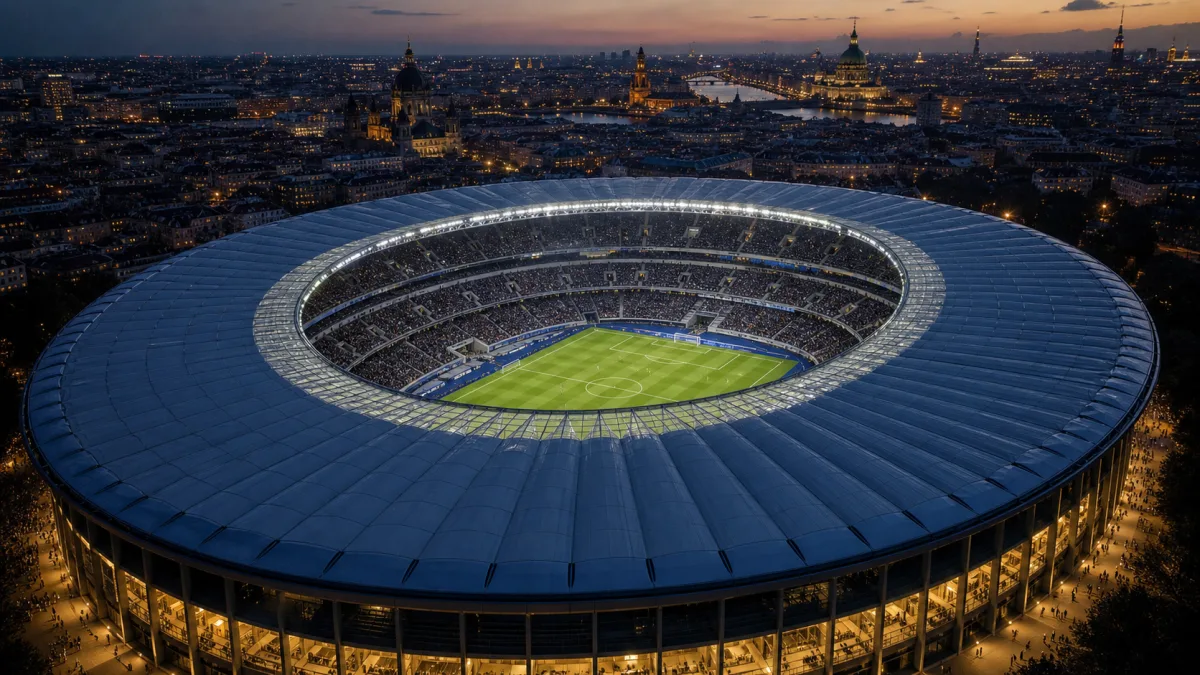
On this page8
There are two correct answers to this question, and most pages give one without saying so.
On paper, the largest stadium in Europe is Camp Nou in Barcelona, targeting 105,000 seats as its rebuild completes in 2027. In use today, it is Wembley Stadium at 90,000, because Camp Nou currently has only around 62,652 usable seats while construction continues.
That is not a technicality. Barcelona’s ground is nominally Europe’s biggest and currently smaller than Celtic Park. For the full picture on the stadium that actually holds the title today, see Wembley Stadium capacity. Figures below were checked in August 2026.
How we have ranked these
The table ranks by design capacity in the standard configuration — the number the finished venue holds — with the currently usable figure shown alongside where the two differ. That is the only way to rank a continent with three of its largest grounds mid-transformation without either misleading readers or pretending nothing is being built.
The same standard-configuration rule as our guides to the largest stadiums in the world and the biggest stadiums in the UK applies: no concert or special-event configurations, and no purely proposed stadiums.
All sports are included. Lists that count only football drop Croke Park and Twickenham, both of which belong in the European top five — see Croke Park capacity for the stadium an amateur association owns.
The largest stadiums in Europe
| Rank | Stadium | City | Design capacity | Usable now |
|---|---|---|---|---|
| 1 | Camp Nou | Barcelona | ~105,000 (2027 target) | ~62,652 |
| 2 | Wembley Stadium | London | ~90,000 | ~90,000 |
| 3 | Santiago Bernabéu † | Madrid | ~83,186 (unconfirmed) | same |
| 4 | Croke Park | Dublin | ~82,300 | same |
| 5 | Twickenham (Allianz Stadium) | London | ~82,000 | same |
| 6 | Signal Iduna Park | Dortmund | 81,365 | same |
| 7 | Luzhniki Stadium | Moscow | ~81,000 | same |
| 8 | Stade de France | Saint-Denis | 80,698 | same |
| 9 | San Siro ‡ | Milan | 75,817 limited / 80,018 max | same |
| 10 | Old Trafford | Manchester | ~74,310 | same |
| 11 | Principality Stadium | Cardiff | 73,931 | same |
† The Bernabéu figure is not officially confirmed. See below. ‡ San Siro is being replaced by a smaller stadium. See below.
The Bernabéu: the capacity Real Madrid will not confirm
This is the strangest entry on the list. Real Madrid completed a four-year, roughly €1.76 billion renovation of the Santiago Bernabéu in late 2024 — and has never officially confirmed the new capacity.
The most-cited figure is 83,186. Reported figures range from about 78,000 to 85,000, and the gap has been large enough for StadiumDB to publish an investigation into it. Whatever the reason for the silence — phased seating installation, hospitality reconfiguration, or simple commercial preference — the effect is that Europe’s third-largest stadium has a capacity that is effectively a trade secret.
We have placed it third on the most-cited figure and flagged it. If the true number is 78,000 it drops below Twickenham and Croke Park; if it is 85,000 it stays comfortably third.
San Siro is deliberately getting smaller
San Siro is the only stadium on this list scheduled to shrink.
AC Milan and Inter have completed their purchase of San Siro and the surrounding area from the city of Milan, clearing the way for a jointly built replacement holding 71,500 — around 4,000 fewer than the current limited configuration and roughly 8,500 below its maximum.
The timing was set by an unrelated event: San Siro hosted the opening ceremony of the Milan Cortina 2026 Winter Olympics, so no work could begin until after February 2026. Inauguration of the new ground is planned for 2030.
A smaller replacement is a deliberate choice, not a compromise. Modern stadium economics favour higher-value hospitality over raw volume, which is the same logic behind several English rebuilds.
Camp Nou: the biggest that mostly is not there
Barcelona chose to rebuild Camp Nou in stages rather than move out and demolish, which is why its usable capacity has changed repeatedly and will change again before 2027.
The consequence for anyone reading a stadium list is that Camp Nou has been simultaneously the largest stadium in Europe and roughly the eleventh largest, for about two years. Both statements have been true at once, depending on whether you meant the building or the seats.
Our full guide to Camp Nou capacity covers the phases, the €1.45 billion financing and the 2026 cost overrun. When the 105,000 target is reached it will be the largest stadium in Europe by roughly 15,000 seats and among the five largest in the world — a bigger margin than the current top three have between them.
Notable exclusions
Recording these matters, because their absence is a decision rather than an oversight.
- Atatürk Olympic Stadium, Istanbul — commonly listed around 76,000, which would place it near San Siro. We have left it out because the published figures we could verify were inconsistent, and we would rather omit an entry than rank it on a number we cannot stand behind.
- Proposed stadiums. Manchester United’s 100,000-seat proposal would rank second in Europe on completion. It is not built, so it is not ranked — the same rule that keeps the finished Camp Nou at number one and its building site out of the argument.
- Concert configurations. Several of these grounds hold more for music than for sport. Not comparable.
What the ranking does not tell you
Capacity is the least interesting thing about most of these venues, which is why the composite matters more than the order.
Two of the European top five — Croke Park and Twickenham — are not football stadiums at all. Signal Iduna Park has the largest single terrace in European football, the Südtribüne, holding 24,454 standing — and its capacity falls to 65,829 for UEFA matches when that terrace is sat down, as our guide to Signal Iduna Park capacity sets out. Wembley and the Stade de France are national stadiums with no resident club. And access varies enormously: Twickenham internationals are not sold to the public at all, as our guide to Six Nations tickets sets out.
For the global picture see the biggest stadiums in the world, and for the American comparison the largest NFL stadiums. The full set is in our stadiums hub.
How we checked these numbers
Camp Nou’s target and current usable capacity, and the Bernabéu range and Real Madrid’s non-confirmation, are from StadiumDB and Football Ground Guide reporting. The San Siro purchase and the 71,500 replacement figure are from ESPN’s report of the deeds signing and FourFourTwo’s project summary. Remaining capacities are published figures cross-referenced across Football Ground Guide and Wikipedia’s European capacity list.
Tildes mean approximate on purpose. Where sources conflict we have given the range and said which figure we ranked on, and where we could not verify a figure at all we have excluded the stadium and said so.
Review class: event-driven. Recheck on each Camp Nou phase reopening, if Real Madrid ever confirms a Bernabéu figure, when San Siro construction begins, and on any Euro 2028 venue upgrade.
Frequently asked questions
What is the largest stadium in Europe?+
It depends what you mean. Camp Nou in Barcelona is the largest by design, with a target of 105,000 as its rebuild completes in 2027, but only about 62,652 seats are usable while work continues. Wembley Stadium, at 90,000, is the largest stadium in Europe currently available at full size.
What is Camp Nou's capacity now?+
Around 62,652 while the rebuild proceeds in stages. The finished stadium targets 105,000, which would keep it the largest in Europe by a clear margin. Barcelona has been reopening sections progressively rather than closing the ground entirely, so the usable figure has changed repeatedly and will change again.
What is the capacity of the new Santiago Bernabeu?+
The most-cited figure is 83,186, but Real Madrid has never officially confirmed it and reported figures range from about 78,000 to 85,000. The renovation cost roughly €1.76 billion and completed in late 2024. It is the only major European stadium whose capacity is effectively a trade secret.
Is Wembley the biggest stadium in the UK and Europe?+
Wembley is the largest in the UK at 90,000 and the largest in Europe currently in use at full capacity. It is second in Europe by design capacity, behind Camp Nou's 105,000 target. Whether you call Wembley or Camp Nou Europe's largest depends on whether you count paper capacity or usable seats.
Is San Siro getting bigger or smaller?+
Smaller. AC Milan and Inter have completed their purchase of San Siro and the surrounding area from the city, clearing the way for a joint 71,500-seat replacement. The current ground holds 75,817 in its limited configuration and up to 80,018 at maximum, so the new stadium is a deliberate reduction.
Which is the largest stadium in Europe outside football?+
Croke Park in Dublin, at about 82,300, which is the home of Gaelic games rather than football. Twickenham in London, at about 82,000, is the largest rugby union stadium. Both sit inside the European top five and are routinely left out of lists that only count football grounds.
Why do European stadium capacities keep changing?+
Because several of the biggest are being rebuilt at once. Camp Nou is mid-reconstruction, the Bernabeu has just finished a four-year renovation, San Siro is being replaced, and English grounds are upgrading for Euro 2028. A capacity figure without a date attached is close to useless at the moment.
Sources
- StadiumDB: what is the capacity of the new Bernabeu?
- Football Ground Guide: new report hints at the true capacity of the Santiago Bernabeu
- StadiumDB: Estadio Santiago Bernabeu
- ESPN: Milan and Inter sign San Siro deeds, key step to new stadium
- FourFourTwo: the new San Siro stadium, capacity and design details
- Football Ground Guide: the biggest stadiums in Europe
- Wikipedia: list of stadiums in Europe by capacity
Related stadiums & arenas guides
View all →
Biggest Stadiums in the UK: Why Every List Disagrees
Wembley leads at 90,000, but below the top five the order genuinely changes month to month. The published capacities, and the rebuilding wave behind the confusion.
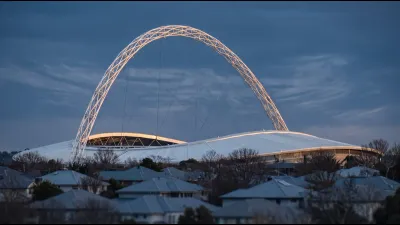
Wembley Stadium Capacity, Cost and Who Owns It
Wembley holds 90,000 — the UK's largest. What it cost to build, who owns it, why the arch exists, and how the capacity changes by event.
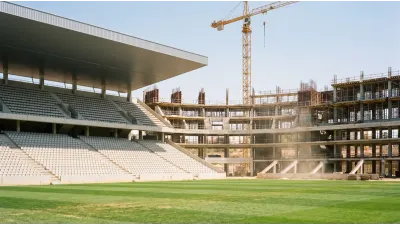
Camp Nou Capacity: 62,652 Now, 105,000 Later
Camp Nou will hold 105,000 when its rebuild finishes in 2027, but only 62,652 seats are in use today. The cost, the phases and the overrun explained.
Largest Stadium in the World (2026): Full Capacity Ranking
Narendra Modi Stadium is the largest stadium in the world at 132,000. Full 2026 ranking with capacity, year opened, build cost and owner for each venue.
Biggest Stadium in the US (2026): Top 20 by Capacity
Michigan Stadium is the biggest stadium in the US at 107,601. See the top 20 ranked with capacity, year opened, build cost, owner and naming rights.

Largest NFL Stadiums 2026: All 30 Ranked by Capacity
MetLife Stadium is the largest NFL stadium at 82,500. All 30 venues ranked with capacity, year opened, construction cost and naming-rights holder.