Signal Iduna Park Capacity: 81,365 or 65,829
On this page6
Signal Iduna Park holds 81,365. It also holds 65,829.
Both figures are correct, and the 15,536-place gap between them is the single most interesting number in European stadium design.
| Configuration | Capacity |
|---|---|
| Bundesliga | 81,365 — largest in Germany |
| UEFA matches | 65,829 |
| Difference | 15,536 |
| Südtribüne (Yellow Wall) | 24,454 standing |
What the gap actually is
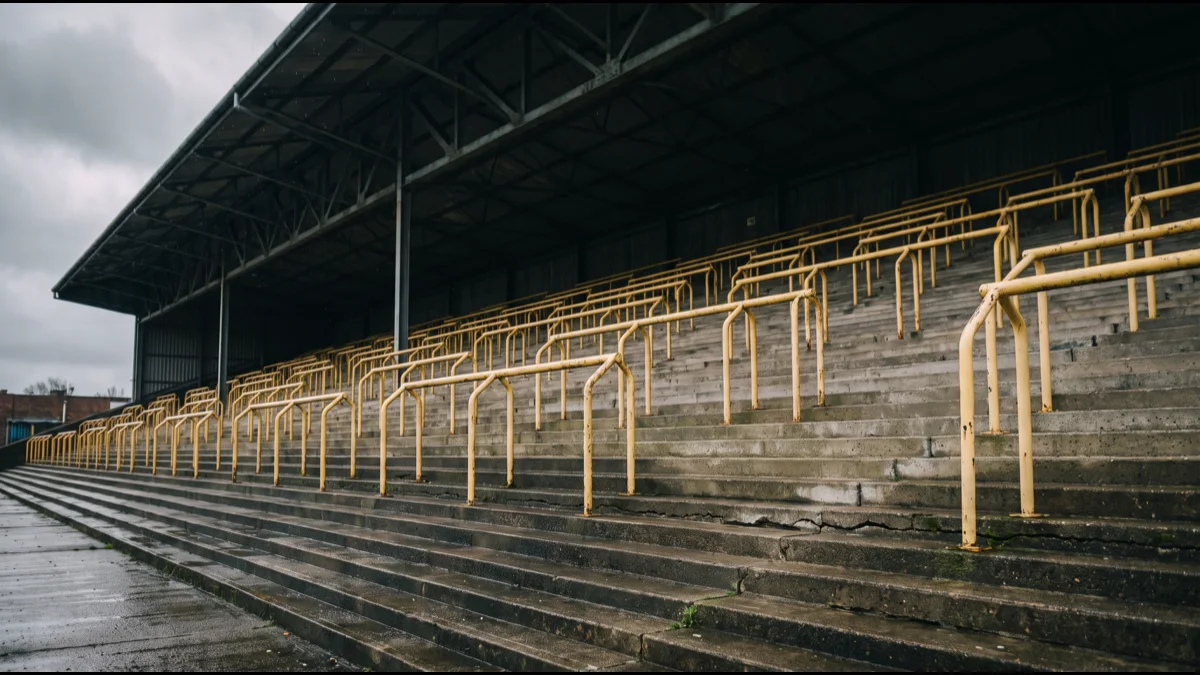
The Südtribüne — the Yellow Wall — is a 24,454-place standing terrace, the largest at any club stadium in European football. A single unbroken tier, not a stand divided across levels.
German domestic football permits standing. UEFA competition does not. So for European matches the terrace is converted to seats, and the ground drops to 65,829.
The arithmetic follows from that: if the whole reduction came from the terrace, its 24,454 standing places would become roughly 8,900 seats — a little under one seat for every three people who stand there. In practice some of the difference also comes from segregation, media and hospitality requirements for European matches, so treat that conversion figure as indicative rather than exact.
Either way, the direction is unambiguous. Standing fits nearly three times as many people into the same concrete.
Why this ground exists and a British one does not
Britain has no equivalent, and the reason is regulatory rather than architectural.
British top-flight grounds became all-seater following the Taylor Report. The safe-standing rail seating now permitted converts existing seated areas — it does not create new terraces, and it does not restore the capacities that were lost.
That is why the crowd records set in the standing era are unreachable. Old Trafford’s record of 76,962 in 1939 is higher than its current 74,310, and the 1950 World Cup final’s 173,850 will never be approached, as our guide to highest attendance records sets out.
Germany kept standing in its domestic game. Dortmund is what that decision looks like in concrete.
Built in 1974, and barely recognisable
The ground opened as the Westfalenstadion, built between 1971 and 1974. It was a modest World Cup venue — nothing like its present scale.
Successive expansions, including the corner infills that closed the bowl, took it to 81,365. It is the same staged approach used at Croke Park and at Anfield: rebuild around the existing structure, keep playing, add capacity in phases rather than moving.
The difference is where it ended up. Anfield’s phased approach topped out at 61,000. Dortmund’s reached the largest capacity in Germany.
Why the rankings disagree about it
This is the recurring problem with stadium lists, and Signal Iduna Park is its clearest case.
A ranking using 81,365 puts Dortmund top in Germany and among the largest football grounds in Europe. A ranking using 65,829 puts it below several German stadiums whose capacity does not change between configurations.
Neither list is wrong. They are answering different questions — and almost none of them say which. It is the same trap as comparing a concert configuration against a football one, covered in our guide to the biggest stadiums in the UK, and it recurs across our ranking of the largest stadium in Europe.
Ask which configuration a figure describes before comparing it to anything.
The ownership behind it
Borussia Dortmund is a publicly listed club that operates under Germany’s 50+1 rule, upheld by the country’s competition authority in August 2026 — investors capped at 49%, voting control with the members.
It is not a coincidence that the country with members holding control is also the country that kept its terraces. Both are answers to the same question about who a football club is for, and the Yellow Wall is the 24,454-place version of it.
How we checked these numbers
The 81,365 Bundesliga capacity, the 65,829 figure for international and UEFA matches, the Südtribüne’s 24,454 standing places and its status as the largest standing terrace at a European club stadium are from Borussia Dortmund’s official stadium page, the World Stadium Database entry for the Westfalenstadion and Stadium Seeker’s venue guide. The 1971–74 construction dates are from the same sources.
The ~8,900 seat conversion figure is our own arithmetic, derived by subtracting the two published capacities. It assumes the entire reduction falls on the terrace, which is an approximation — European fixtures also alter segregation, media and hospitality allocations. We have not found a published seated capacity for the Südtribüne alone.
Review class: stable, with event-driven triggers — recheck on any published capacity revision or change to UEFA’s all-seated requirement.
Frequently asked questions
What is Signal Iduna Park's capacity?+
81,365 for Bundesliga matches, which makes it the largest stadium in Germany. For UEFA matches the figure is 65,829, because European competition requires an all-seated configuration and the standing terrace has to be converted.
Why does Signal Iduna Park have two different capacities?+
Because the Südtribüne is a standing terrace. Domestic German football permits standing; UEFA competition does not. Converting the terrace to seats removes about 15,536 places, taking the ground from 81,365 to 65,829.
How big is the Yellow Wall?+
24,454 places. The Südtribüne at Signal Iduna Park is the largest standing terrace at any club stadium in European football, and it is a single unbroken tier rather than a stand split across levels.
Is Signal Iduna Park the biggest stadium in Germany?+
Yes, on its Bundesliga capacity of 81,365. On the all-seated UEFA figure of 65,829 it is smaller than several German grounds whose capacities do not change between configurations, which is why rankings disagree.
When was Signal Iduna Park built?+
It was built between 1971 and 1974 as the Westfalenstadion, and has been expanded successively since. The corner infills and upper tiers added over the following decades took it from a modest World Cup ground to the largest in the country.
Could a British stadium have a terrace like the Yellow Wall?+
Not at this scale. British top-flight grounds became all-seater after the Taylor Report, and the safe-standing rail seating now permitted converts existing seated areas rather than creating new terraces. The Yellow Wall exists because Germany never removed standing from its domestic game.
Which figure should be used for Signal Iduna Park?+
It depends on the comparison. For domestic attendance and stadium rankings within Germany, 81,365. For any comparison involving European matches or all-seated grounds elsewhere, 65,829 is the like-for-like number.
Sources
Related stadiums & arenas guides
View all →
Croke Park Capacity, Ownership and Rule 42
Croke Park holds 82,300 — Ireland's largest and among Europe's biggest. Owned by an amateur association, and left out of Euro 2028 in its own city.
Anfield Capacity: 45,000 to 61,000 Without Moving
Anfield grew by 16,000 seats in 13 years through two stand rebuilds. At roughly $10,300 a seat it is half the cost per seat of a new stadium.
Principality Stadium Capacity: 73,931 and a Roof
Cardiff holds 73,931 for rugby and about 78,000 for boxing. And the famous rule that both teams must agree to close the roof no longer applies.
Camp Nou Capacity: 62,652 Now, 105,000 Later
Camp Nou will hold 105,000 when its rebuild finishes in 2027, but only 62,652 seats are in use today. The cost, the phases and the overrun explained.
Old Trafford Capacity, Record Crowd and New Trafford
Old Trafford holds 74,310 — the UK's largest club ground. Why four different figures circulate, the 76,962 record, and the 100,000-seat replacement plan.
Twickenham Capacity, and the £100m Rename
Twickenham holds 82,000 — the largest rugby union stadium in the world. Owned by the RFU, and renamed Allianz Stadium in 2024 after 115 years.