Anfield Capacity: 45,000 to 61,000 Without Moving
On this page6
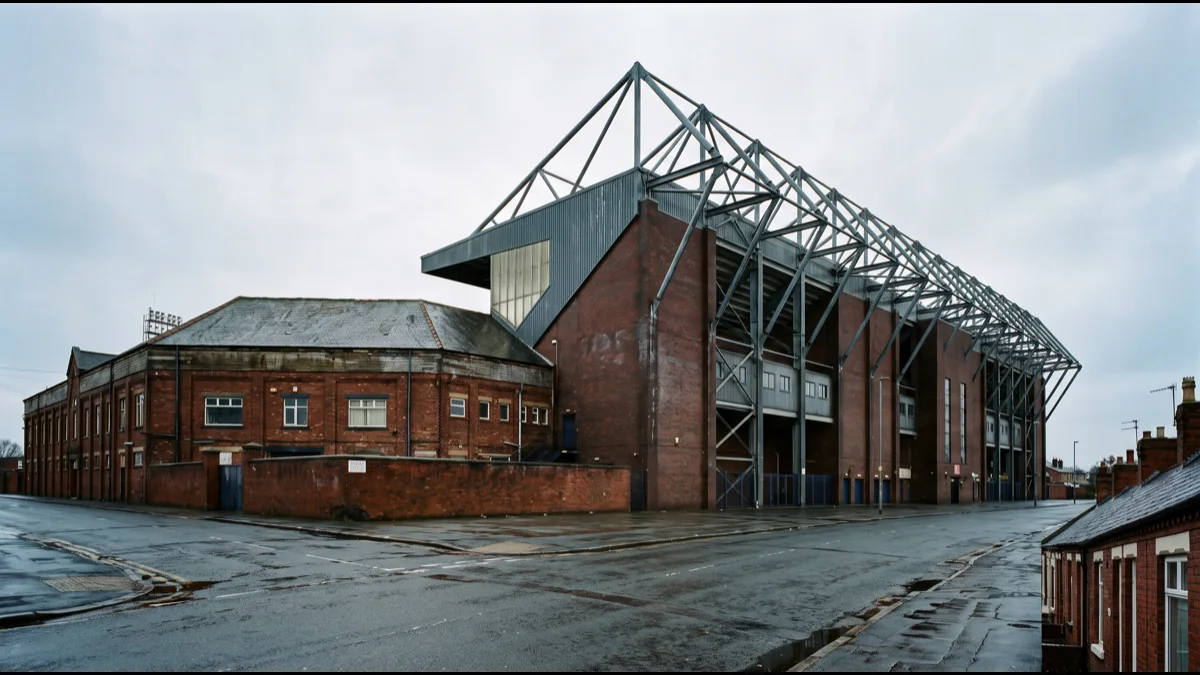
Anfield holds about 61,000. When Fenway Sports Group bought Liverpool in 2010, it held up to 45,000.
The club added 16,000 seats in thirteen years without moving — and did it at roughly half the cost per seat of building a new stadium.
| Capacity now | ~61,000 |
| Capacity in 2010 | ~45,000 |
| Main Stand | +9,000 seats, 2016 |
| Anfield Road Stand | +7,000 seats, 2023/24 |
| Anfield Road cost | ~$72 million |
| Owner | Fenway Sports Group |
| Further expansion | Ruled out |
Two stands, thirteen years
The arithmetic is unusually clean. 45,000 + 9,000 + 7,000 = 61,000.
The Main Stand was redeveloped first, adding 9,000 seats in 2016. The Anfield Road Stand followed, completed during the 2023/24 season, adding 7,000 at a reported cost of $72 million.
Liverpool remained at Anfield throughout, playing in a reduced ground while each stand was rebuilt around the existing structure. It is the same staged approach Croke Park used across four phases and twelve years without missing an All-Ireland final, covered in our guide to Croke Park capacity — and the approach Barcelona is attempting on a far larger scale at Camp Nou, where usable capacity has fallen to about 62,652 mid-rebuild.
The cost-per-seat comparison
This is the number that makes Anfield interesting rather than merely large.
| Project | Cost | Seats added | Cost per seat |
|---|---|---|---|
| Anfield Road Stand | ~$72m | 7,000 | ~$10,300 |
| New Trafford (proposed) | ~£2bn | 100,000 | ~£20,000 |
Even allowing for currency and for the fact that a new stadium delivers far more than seats — concourses, hospitality, transport, a modern shell — expanding an existing ground came in at roughly half the per-seat cost of Manchester United’s proposed replacement, covered in our guide to Old Trafford capacity.
Two clubs faced the same problem: a historic ground too small for demand. They chose opposite answers. Liverpool rebuilt around itself for tens of millions; United propose to move for around £2 billion.
Neither is obviously wrong. Anfield’s approach is cheaper and preserves the site, but it is now finished — and it tops out 39,000 seats below what United are planning.
Liverpool have called it the ceiling
FSG have indicated there will be no further expansion beyond 61,000, though the club has signalled interest in work “at the back of the house” — the concourses, hospitality and revenue-generating space behind the stands rather than more seating.
That is a meaningful choice. Anfield is hemmed in by terraced streets on multiple sides, and each expansion has been more constrained than the last. Liverpool have effectively decided that the remaining value lies in what each existing seat generates rather than in adding more of them.
It also means Anfield’s position in our ranking of the the UK capacity rankings is now settled, in a cluster of four grounds sitting within about 2,000 seats of each other — while Manchester City’s Etihad continues rising past 61,000 and will pass it.
Owned from Boston
Liverpool is owned by Fenway Sports Group, which also holds the Boston Red Sox. That places Anfield among the eleven of twenty Premier League grounds under American ownership, as our guide to who owns the Premier League clubs sets out.
The investment pattern is recognisably American: incremental capital spending justified by a revenue return, rather than a trophy build. $72 million for 7,000 seats is a calculation about matchday income and hospitality yield, and it is the kind of project a US franchise operator has done before.
Where it ranks
Anfield sits inside the contested group in English football — around eighth in the UK, alongside Tottenham Hotspur Stadium, the London Stadium and the Etihad, all within roughly 2,000 seats of one another. It is well behind Wembley’s 90,000 and Twickenham’s 82,000, and now behind Old Trafford’s 74,310.
For the wider picture see our rankings of the Europe’s biggest grounds and the most expensive stadiums ever built.
How we checked these numbers
The 61,000 current capacity, the 45,000 figure at FSG’s 2010 takeover, the Main Stand’s 9,000 seats in 2016, the Anfield Road Stand’s 7,000 seats in 2023/24 and the ~$72 million cost are from This Is Anfield, GiveMeSport’s Anfield Road coverage and Liverpool.com’s project reporting. The statement that no further expansion is planned is from This Is Anfield’s June 2025 report.
The cost-per-seat comparison is our own calculation from the reported $72 million and 7,000 seats, set against Manchester United’s reported ~£2 billion for 100,000. It compares an expansion with a new build, which are not equivalent products — the figure indicates why clubs choose differently, not that one is better value.
Review class: stable, with event-driven triggers — recheck on any capacity revision or if the no-further-expansion position changes.
Frequently asked questions
What is Anfield's capacity?+
About 61,000, following two phases of redevelopment under Fenway Sports Group. The Main Stand added 9,000 seats in 2016 and the Anfield Road Stand a further 7,000 during the 2023/24 season, taking the ground from roughly 45,000 when FSG bought the club in 2010.
How much did the Anfield Road Stand expansion cost?+
A reported $72 million for 7,000 additional seats, which works out at roughly $10,300 a seat. That is about half the per-seat cost of Manchester United's proposed 100,000-seat ground at an estimated £2 billion.
Will Anfield be expanded again?+
Liverpool have indicated not. FSG have said there will be no further expansion beyond 61,000, though the club has signalled interest in work behind the stands — concourses and hospitality space rather than additional seating.
Why did Liverpool expand Anfield instead of moving?+
Expanding proved far cheaper per seat and allowed the club to stay on a historic site. The trade-off is a ceiling: Anfield tops out around 61,000, roughly 39,000 below what Manchester United are proposing at a new ground.
Who owns Anfield?+
Liverpool Football Club, which is owned by Fenway Sports Group, the American group that also holds the Boston Red Sox. Anfield is one of eleven Premier League grounds under American ownership.
Is Anfield bigger than Old Trafford?+
No. Old Trafford holds about 74,310 against Anfield's 61,000. Anfield sits in a contested group of English grounds within roughly 2,000 seats of one another, alongside Tottenham Hotspur Stadium, the London Stadium and the Etihad.
Did Liverpool keep playing at Anfield during the rebuilds?+
Yes. Both stands were rebuilt around the existing structure while the club continued to play there at reduced capacity — the same staged approach used at Croke Park across four phases and now at Camp Nou on a much larger scale.
Sources
Related stadiums & arenas guides
View all →
Camp Nou Capacity: 62,652 Now, 105,000 Later
Camp Nou will hold 105,000 when its rebuild finishes in 2027, but only 62,652 seats are in use today. The cost, the phases and the overrun explained.
Principality Stadium Capacity: 73,931 and a Roof
Cardiff holds 73,931 for rugby and about 78,000 for boxing. And the famous rule that both teams must agree to close the roof no longer applies.
Signal Iduna Park Capacity: 81,365 or 65,829
Germany's largest stadium holds 81,365 for the Bundesliga and 65,829 for UEFA matches. The 15,536-seat gap is the Yellow Wall being sat down.
Croke Park Capacity, Ownership and Rule 42
Croke Park holds 82,300 — Ireland's largest and among Europe's biggest. Owned by an amateur association, and left out of Euro 2028 in its own city.
Old Trafford Capacity, Record Crowd and New Trafford
Old Trafford holds 74,310 — the UK's largest club ground. Why four different figures circulate, the 76,962 record, and the 100,000-seat replacement plan.
Twickenham Capacity, and the £100m Rename
Twickenham holds 82,000 — the largest rugby union stadium in the world. Owned by the RFU, and renamed Allianz Stadium in 2024 after 115 years.