Old Trafford Capacity, Record Crowd and New Trafford
On this page6
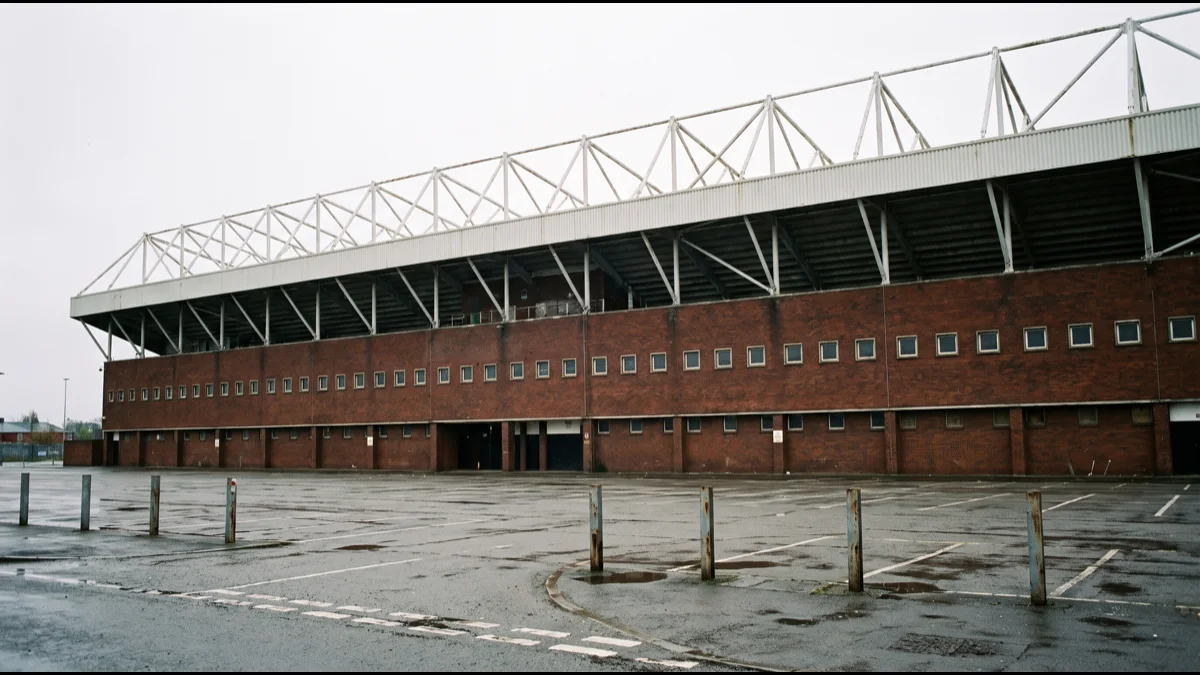
Old Trafford holds 74,310, which makes it the largest club football stadium in the UK. Wembley and Twickenham are larger, but both are national stadiums rather than club grounds.
Two numbers around it are more interesting than the capacity itself. Its record crowd is 76,962 — higher than the stadium can now hold. And Manchester United have confirmed a proposed location for a 100,000-seat replacement about 350 metres away.
| Capacity | 74,310 |
| Opened | 19 February 1910 |
| Record attendance | 76,962 (1939) |
| Nickname | The Theatre of Dreams |
| Owner | Manchester United, Glazer-controlled; INEOS 28.94% |
| Naming rights | Never sold |
| Proposed replacement | 100,000 seats, ~£2 billion |
Why four different capacities circulate
Search for Old Trafford’s capacity and you will find 74,197, 74,310, 74,879 and 75,765 on the first page of results. We use 74,310 as the best-supported current figure.
None of these is simply an error. Three things move the certified number without any visible construction:
- Safe-standing conversions. Converting seated areas to licensed standing changes the permitted total. A stand can gain or lose several hundred places and no photograph would show it.
- Hospitality reconfiguration. Replacing rows of seats with boxes or premium seating reduces the count.
- Different source dates. A figure from 2019 and a figure from 2026 are both accurate for their moment.
The practical rule, which applies across British football at present: a capacity figure without a date attached is close to meaningless. Our guide to the biggest stadiums in the UK sets out why four grounds currently sit within 2,000 seats of one another and why the order between them is unsettled.
The 1939 record, and what it tells you about capacity
76,962 people watched the FA Cup semi-final between Wolverhampton Wanderers and Grimsby Town at Old Trafford in 1939. That is roughly 2,650 more than the stadium is permitted to hold today.
This is the single clearest illustration of a distinction most stadium lists blur. Attendance records and capacity are different measurements. Terraces packed standing spectators at densities that seating cannot match, so almost every historic English attendance peak exceeds the modern all-seater capacity of the same ground.
Our guide to highest attendance records sets out how far this effect runs across sport. It also means a straight comparison of “biggest ever crowd” against “biggest stadium” is not comparing like with like — and that any pre-1990s attendance figure belongs to a different regulatory era, not just a different year.
New Trafford: the 100,000-seat proposal
Manchester United have confirmed a proposed location for a new stadium: roughly 350 metres north-west of Old Trafford, in Stretford, on 25 acres secured in June 2026, at an estimated £2 billion. Briefing material refers to it as New Trafford, and it is expected to take about five years to build, with United continuing to play at Old Trafford until it opened. That is fast for a ground of that size — a phased rebuild in place typically runs to a decade, as our guide to how long it takes to build a stadium sets out.
The scale of that is worth stating plainly. At 100,000 seats it would:
- become the largest stadium in the UK of any kind, passing Wembley’s 90,000
- become the largest club football ground in Europe
- rank second in Europe overall, behind only the rebuilt Camp Nou’s 105,000 target
Old Trafford has been United’s home since 1910 — more than 115 years. Moving would be among the largest single venue changes in the history of European club football, and it is why the proposal is not included in any of our capacity rankings: it does not exist yet, and we apply that rule to every proposed venue.
Ownership, and the name that was never sold
Manchester United is controlled by the Glazer family, who hold roughly 69% of shares and voting rights through Manchester United plc. INEOS holds 28.94% and responsibility for football operations — a split between ownership and control set out in our guide to who owns Manchester United.
The stadium’s naming rights have never been sold. For a club of this commercial scale that is a deliberate choice, and it puts Old Trafford in a small group with Wembley — whose name has also never been sold, only sponsored around, as our guide to Wembley Stadium capacity explains. Barcelona took the opposite route, placing a sponsor in front of the historic name at Spotify Camp Nou.
Which grounds have sold their name, and for how much, is set out in our guide to stadium naming rights.
The nickname “The Theatre of Dreams” came from Bobby Charlton. It is not an official name and appears nowhere on the building, but it is the most widely recognised ground nickname in British football.
Where it ranks
Third in the UK behind Wembley (~90,000) and Twickenham (~82,000), and first among club grounds. In Europe it sits around tenth, as set out in our ranking of the largest stadium in Europe. Globally it is outside the top twenty, dominated by American college football stadiums and covered in our biggest stadiums in the world ranking.
How we checked these numbers
Capacity, opening date, the 1939 record attendance and the Charlton nickname are from Wikipedia’s Old Trafford entry cross-referenced with StadiumDB. The New Trafford location, acreage, cost estimate and timeline are from ESPN and Stadia Magazine reporting of the announcement. Ownership figures are as reported for the most recent completed season and are subject to change.
We have named the competing capacity figures rather than presenting one as settled, because all four are in active circulation and the reason for the spread is more useful than the number.
Review class: event-driven. Recheck on any capacity revision, if the New Trafford proposal receives planning consent, and on any ownership change.
Frequently asked questions
What is Old Trafford's capacity?+
74,310, which makes it the largest club football stadium in the UK and the third largest stadium of any kind in the country behind Wembley and Twickenham. Figures of 74,197, 74,879 and 75,765 also circulate, largely because safe-standing conversions and hospitality reconfigurations change the certified number without any visible building work.
Why is Old Trafford's record attendance higher than its capacity?+
Because the record was set in the standing era. 76,962 spectators watched the 1939 FA Cup semi-final between Wolverhampton Wanderers and Grimsby Town, when terraces held far more people in the same footprint than seats do. Every all-seater conversion in British football reduced capacity below historic attendance peaks.
When did Old Trafford open?+
19 February 1910. It has been Manchester United's home for more than 115 years, which makes the proposed move to a new ground one of the largest single venue changes in the history of European club football.
Is Manchester United building a new stadium?+
They have confirmed a proposed location. The 100,000-seat ground would sit about 350 metres north-west of Old Trafford in Stretford, on 25 acres secured in June 2026, at an estimated cost of around £2 billion. Briefing material refers to it as New Trafford, and it is expected to take about five years to build.
Would New Trafford be the biggest stadium in the UK?+
Yes. At 100,000 it would pass Wembley's 90,000 to become the largest stadium in the UK of any kind, and the largest club football ground in Europe. It would also rank second in Europe overall behind the rebuilt Camp Nou's 105,000 target.
Who owns Old Trafford?+
Manchester United, which is controlled by the Glazer family through Manchester United plc, with INEOS holding a minority stake of 28.94% and responsibility for football operations. The stadium itself has never had its naming rights sold.
Why is Old Trafford called the Theatre of Dreams?+
The nickname was given by Bobby Charlton, the club's former player and director. It is not an official name and appears nowhere on the stadium, but it has been in common use for decades and is now the most widely recognised nickname of any British ground.
Sources
Related stadiums & arenas guides
View all →
Anfield Capacity: 45,000 to 61,000 Without Moving
Anfield grew by 16,000 seats in 13 years through two stand rebuilds. At roughly $10,300 a seat it is half the cost per seat of a new stadium.
Principality Stadium Capacity: 73,931 and a Roof
Cardiff holds 73,931 for rugby and about 78,000 for boxing. And the famous rule that both teams must agree to close the roof no longer applies.
Signal Iduna Park Capacity: 81,365 or 65,829
Germany's largest stadium holds 81,365 for the Bundesliga and 65,829 for UEFA matches. The 15,536-seat gap is the Yellow Wall being sat down.
Camp Nou Capacity: 62,652 Now, 105,000 Later
Camp Nou will hold 105,000 when its rebuild finishes in 2027, but only 62,652 seats are in use today. The cost, the phases and the overrun explained.
Croke Park Capacity, Ownership and Rule 42
Croke Park holds 82,300 — Ireland's largest and among Europe's biggest. Owned by an amateur association, and left out of Euro 2028 in its own city.
Twickenham Capacity, and the £100m Rename
Twickenham holds 82,000 — the largest rugby union stadium in the world. Owned by the RFU, and renamed Allianz Stadium in 2024 after 115 years.