Euro 2028 Venues: All Nine Stadiums Ranked
On this page7
Euro 2028 runs from 9 June to 9 July 2028 across nine stadiums in eight cities in the UK and Republic of Ireland. Cardiff hosts the opening match on Friday 9 June, and Wembley hosts both semi-finals and the final.
Cardiff’s ground holds 73,931 for rugby and about 78,000 in boxing configuration, and carries the only fully retractable roof of its kind in Britain — set out in our guide to Principality Stadium capacity.
Three of the nine are being built or expanded specifically for the tournament, and four of the largest grounds in the host nations were left out entirely. Capacities were checked in August 2026 and several will change before kick-off.
The nine venues, by capacity
| Rank | Stadium (UEFA name) | Usual name | City | Capacity |
|---|---|---|---|---|
| 1 | Wembley Stadium | — | London | ~90,000 |
| 2 | National Stadium of Wales | Principality Stadium | Cardiff | 73,931 |
| 3 | Tottenham Hotspur Stadium | — | London | ~62,850 |
| 4 | Manchester City Stadium | Etihad Stadium | Manchester | 61,000+ (rising) |
| 5 | Everton Stadium | — | Liverpool | ~52,900 |
| 6 | St James’ Park | — | Newcastle | ~52,300 |
| 7 | Hampden Park | — | Glasgow | ~51,900 |
| 8 | Dublin Arena | Aviva Stadium | Dublin | ~51,700 |
| 9 | Villa Park | — | Birmingham | 50,000+ (expanding) |
The shape of that table matters more than the order. Wembley is roughly 16,000 larger than the next biggest, and after Cardiff there is a steep drop — the remaining seven venues all sit between about 50,000 and 63,000. This is a tournament with two big stadiums and seven medium ones.
Why the names are different
UEFA does not recognise commercial naming rights during its own tournaments, so sponsor names are stripped for the duration. That produces three renamings that confuse fixture lists:
- Etihad Stadium → Manchester City Stadium
- Principality Stadium → National Stadium of Wales
- Aviva Stadium → Dublin Arena
Same buildings, different names. If you are cross-referencing a UEFA fixture list against a stadium guide, this is usually the source of the confusion. It is also a reminder of how much a naming-rights deal is worth to a club precisely because it disappears at moments like this — see our ranking of the biggest stadium naming rights deals.
Three venues are being built or rebuilt for the tournament
This is the part that makes Euro 2028 unusual as a venue story.
Villa Park is the clearest case. Its north stand is closed through 2026/27, temporarily cutting the ground to around 37,000, while the stand grows from 5,000 to 12,000 seats. Completion is due before the start of 2027/28, taking Villa Park beyond 50,000 in time for the tournament. For one season the smallest Euro 2028 venue will be far smaller than its tournament capacity.
Manchester City Stadium is rising from 53,400 to more than 61,000 through the new Pep Guardiola Stand, with completion due before the end of 2026.
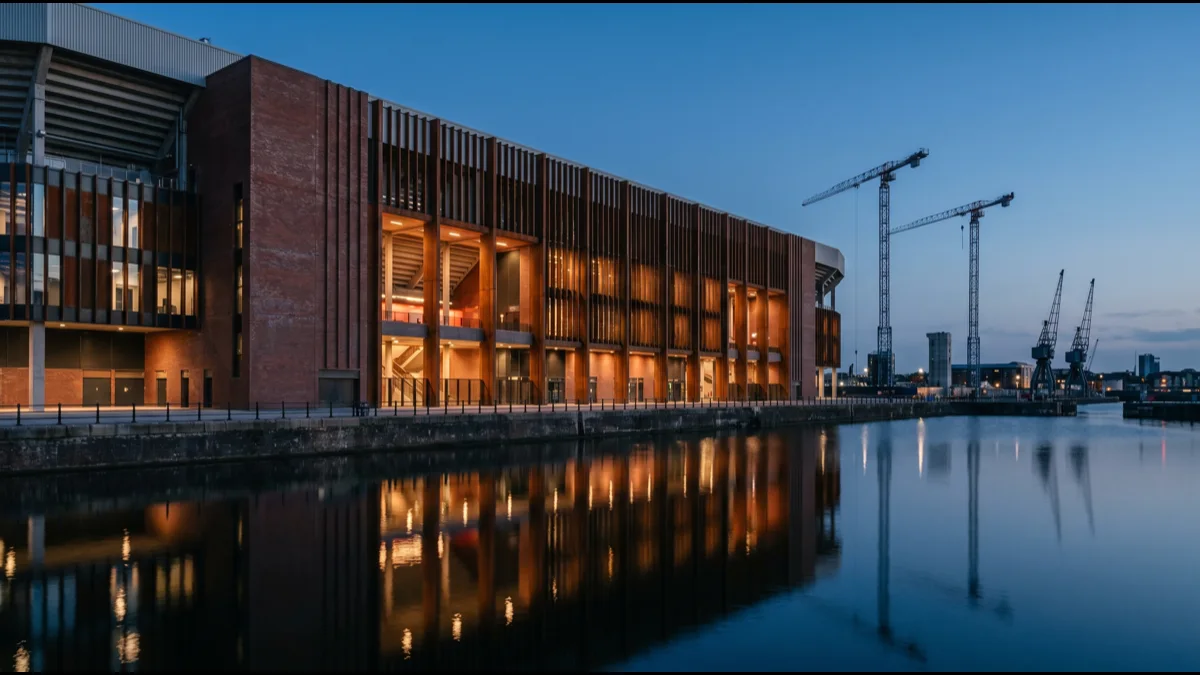
Everton Stadium is entirely new, having opened in 2025 on the Liverpool waterfront. It replaced Goodison Park, and Euro 2028 will be its first major international tournament.
The practical consequence: any capacity figure for Euro 2028 published before 2028 is provisional. The same problem runs through every current stadium list, as our guide to the biggest stadiums in the UK sets out.
The big grounds that were left out
Four of the largest stadiums in the host nations are not being used, and the omissions are more interesting than the selections.
- Croke Park, Dublin — about 82,300. By far the largest stadium in Ireland, and it would have been the second largest venue in the tournament. The only Irish venue selected is Dublin Arena at roughly 51,700. Ireland’s biggest ground sits out its own home tournament — see Croke Park capacity, including the rule that once banned soccer there entirely.
- Old Trafford, Manchester — about 74,310. England’s largest club ground. Manchester is represented by the Etihad instead.
- Twickenham — about 82,000 and Scottish Gas Murrayfield — 67,144. Both larger than every selected venue except Wembley and Cardiff, but rugby union grounds with pitch dimensions and infrastructure built for a different sport.
Anfield, the Emirates, Celtic Park and Ibrox are also absent despite each holding around 60,000. Nine venues from a pool this deep means good stadiums missed out, which is unusual for a European Championship.
For the continental context, all of Wembley, Croke Park and Twickenham feature in our ranking of the largest stadium in Europe.
What we know about the schedule
Confirmed so far:
- Opening match: Cardiff, Friday 9 June 2028
- Both semi-finals: Wembley
- Final: Wembley, 9 July 2028
- Format: 24 teams
Wembley holding both semi-finals as well as the final is a concentration not every recent tournament has used, and it makes London the only city where a supporter could see two knockout rounds without travelling.
Tickets, and when to expect them
UEFA had not announced ticket arrangements when this page was written. On the pattern of recent European Championships, expect a public ballot roughly 12 to 18 months ahead — meaning at some point during 2027.
Two things worth doing early, because they apply to almost every major tournament: register an account on UEFA.com before any window opens, since account registration is normally a precondition and cannot be done retrospectively, and watch for a host-nation priority window, which several events run and advertise only domestically. Our guide to how major event ballots work tracks every major event’s window and which are currently open.
How we checked these numbers
The venue list, host cities, tournament dates, opening match and final are from UEFA’s own venue guide and fixtures-by-venue pages, cross-checked against Sky Sports’ schedule summary. Expansion detail for Villa Park and Manchester City Stadium is from StadiumDB’s construction records.
Capacities are current published figures for the standard configuration, not projected 2028 figures, except where a venue is explicitly marked as rising or expanding. Tildes mean approximate on purpose, and the two expanding grounds will need revising.
Review class: event-driven. Recheck when Manchester City Stadium completes, when Villa Park’s north stand reopens, on any UEFA ticketing announcement, and once the full fixture schedule is published.
Frequently asked questions
How many stadiums are being used for Euro 2028?+
Nine, across eight cities in the UK and Republic of Ireland. London has two — Wembley Stadium and Tottenham Hotspur Stadium — while Cardiff, Manchester, Liverpool, Newcastle, Birmingham, Glasgow and Dublin have one each. Twenty-four teams will compete between 9 June and 9 July 2028.
Where is the Euro 2028 final?+
Wembley Stadium in London, on 9 July 2028. Wembley also hosts both semi-finals, making it the only venue with more than one knockout match at that stage. The opening match of the tournament is in Cardiff on Friday 9 June 2028.
Why does UEFA use different names for the Euro 2028 stadiums?+
UEFA does not recognise commercial naming rights during its tournaments, so sponsor names are stripped. The Etihad Stadium becomes Manchester City Stadium, the Principality Stadium becomes the National Stadium of Wales, and the Aviva Stadium becomes Dublin Arena. It is the same buildings under different names.
Is Croke Park a Euro 2028 venue?+
No, and it is the most surprising omission. Croke Park holds about 82,300 and is by far the largest stadium in Ireland, but the only Irish venue selected is Dublin Arena — the Aviva Stadium — at roughly 51,700. Ireland's biggest ground is not being used at all.
Which Euro 2028 stadiums are being rebuilt for the tournament?+
Three. Villa Park is expanding beyond 50,000, with its north stand closed through 2026/27 and completion due before 2027/28. Manchester City Stadium is rising from 53,400 to more than 61,000. Everton Stadium is entirely new, having opened in 2025 on the Liverpool waterfront.
What is the biggest Euro 2028 stadium?+
Wembley Stadium at about 90,000, which is roughly 16,000 larger than the next biggest, the National Stadium of Wales in Cardiff at 73,931. After those two there is a steep drop: the remaining seven venues all sit between roughly 50,000 and 63,000.
When do Euro 2028 tickets go on sale?+
UEFA had not announced ticket sales when this page was written. On the pattern of recent European Championships, expect a public ballot roughly 12 to 18 months ahead — so during 2027. Register interest on UEFA.com in advance, because these windows are short and account registration is normally required first.
Sources
Related stadiums & arenas guides
View all →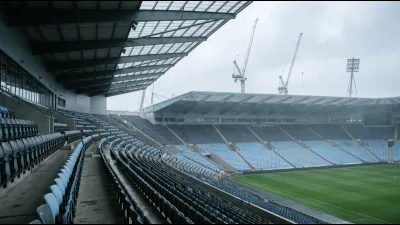
Biggest Stadiums in the UK: Why Every List Disagrees
Wembley leads at 90,000, but below the top five the order genuinely changes month to month. The published capacities, and the rebuilding wave behind the confusion.
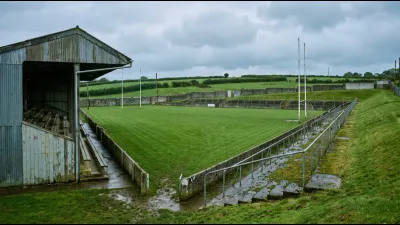
Biggest Stadiums in Ireland: An Amateur Monopoly
Croke Park leads at 82,300, but the real story is that eight of Ireland's nine largest stadiums are owned by an amateur association.
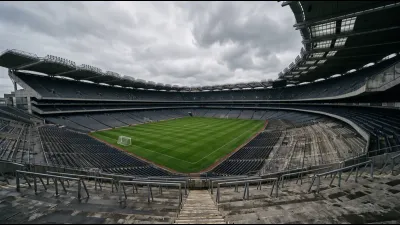
Croke Park Capacity, Ownership and Rule 42
Croke Park holds 82,300 — Ireland's largest and among Europe's biggest. Owned by an amateur association, and left out of Euro 2028 in its own city.
Biggest Stadiums in Australia and New Zealand
The MCG holds 100,024 — more than Eden Park and Wellington combined. And almost every ground in the region has two capacities, which is why lists disagree.
Largest NFL Stadiums 2026: All 30 Ranked by Capacity
MetLife Stadium is the largest NFL stadium at 82,500. All 30 venues ranked with capacity, year opened, construction cost and naming-rights holder.
Largest Stadium in Europe: Two Correct Answers
Camp Nou is Europe's biggest on paper at 105,000 but only ~62,652 is usable mid-rebuild. Wembley is the largest actually in use. The full ranked table.