10 Biggest Soccer Stadiums in the World by Capacity
On this page14
- 01How we ranked the largest soccer stadiums
- 02The 10 biggest soccer stadiums in 2026
- 031. Rungrado 1st of May Stadium: 113,281
- 042. FNB Stadium: 94,736
- 053. Misr Stadium: 93,940
- 064. Wembley Stadium: 90,000
- 075. Lusail Stadium: 88,966
- 086. Bukit Jalil National Stadium: 87,411
- 097. Borg El Arab Stadium: 86,000
- 108. Mâs Monumental: 85,018
- 119. Luzhniki Stadium: 81,000
- 1210. Mexico City Stadium: 80,824
- 13Is the biggest soccer stadium also the world’s biggest stadium?
- 14Future stadiums that could change the ranking
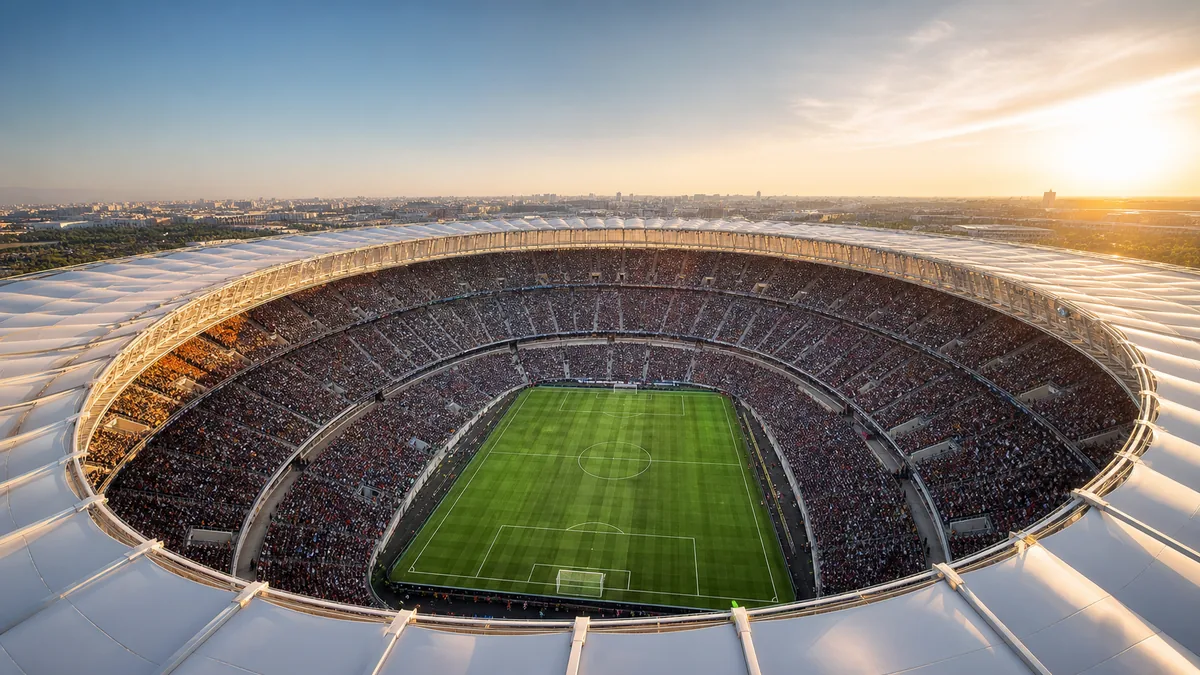
The world’s biggest soccer stadium is Rungrado 1st of May Stadium in Pyongyang, North Korea, with 113,281 seats on an independent post-renovation count. Johannesburg’s FNB Stadium is second at 94,736, followed by Egypt’s Misr Stadium at 93,940.
How we ranked the largest soccer stadiums
This ranking uses current permanent or normal football capacity checked in August 2026. A venue qualifies when association football is a regular or established main use, even if it also hosts athletics, rugby or ceremonies.
Temporary seating, concert layouts, historical standing crowds and proposed expansions do not count. Tournament capacity is used only when it is the best current verified configuration. That method avoids comparing 150,000 people standing decades ago with 90,000 numbered seats today.
The 10 biggest soccer stadiums in 2026
| Rank | Stadium | City and country | Capacity | Main football use |
|---|---|---|---|---|
| 1 | Rungrado 1st of May Stadium | Pyongyang, North Korea | 113,281 | North Korea national team |
| 2 | FNB Stadium | Johannesburg, South Africa | 94,736 | South Africa, Kaizer Chiefs |
| 3 | Misr Stadium | New Administrative Capital, Egypt | 93,940 | Egypt national events |
| 4 | Wembley Stadium | London, England | 90,000 | England national team |
| 5 | Lusail Stadium | Lusail, Qatar | 88,966 | Qatar and major finals |
| 6 | Bukit Jalil National Stadium | Kuala Lumpur, Malaysia | 87,411 | Malaysia national team |
| 7 | Borg El Arab Stadium | Alexandria area, Egypt | 86,000 | Egypt national team, major club games |
| 8 | Mâs Monumental | Buenos Aires, Argentina | 85,018 | River Plate, Argentina |
| 9 | Luzhniki Stadium | Moscow, Russia | 81,000 | Russia national team, major finals |
| 10 | Mexico City Stadium | Mexico City, Mexico | 80,824 | Mexico, Club América |
Capacities close together can reverse when a competition blocks seats for media or security. The order here uses the normal verified figure stated in the methodology rather than peak attendance.
1. Rungrado 1st of May Stadium: 113,281
Rungrado stands on Rungra Island in Pyongyang and combines a football field with an athletics track and space for mass performances. Its scalloped roof gives the building its recognizable flower-like outline.
North Korean sources historically claimed 150,000. After renovation, an independent seat-by-seat assessment published by StadiumDB put it at 113,281. That is the more defensible current figure and still leaves Rungrado nearly 19,000 seats clear of second place.
2. FNB Stadium: 94,736
FNB Stadium, also called Soccer City or the Calabash, was rebuilt for the 2010 World Cup. It hosted that tournament’s opening match and final and remains the largest stadium in Africa under the current figures used here.
South Africa’s national team and Kaizer Chiefs use the Johannesburg venue. Its rounded facade was designed to resemble an African pot, a visual identity that survived the World Cup rather than becoming temporary tournament dressing.
3. Misr Stadium: 93,940
Misr Stadium is part of Egypt International Olympic City in the New Administrative Capital east of Cairo. Opened in 2024, it moved ahead of Borg El Arab as Egypt’s largest venue and added a second African ground above 90,000.
Some reports write its name as Egypt Stadium or New Administrative Capital Stadium. Those are different English labels for the same building, not three separate entries.
4. Wembley Stadium: 90,000
Wembley is the largest stadium in the United Kingdom. The venue’s official facts page lists exactly 90,000 seats across three tiers, all with unobstructed views.
England plays its home internationals there, alongside FA Cup finals, League Cup finals and major UEFA matches. Event organizers sometimes publish a lower net figure after removing operational seats, but 90,000 remains the building’s official seating capacity.
5. Lusail Stadium: 88,966
Lusail staged the 2022 World Cup final between Argentina and France. FIFA finalized its tournament capacity at 88,966, and three matches reached that exact attendance.
The figure is useful because it came after seating maps and tournament infrastructure were complete. Early project descriptions often rounded the stadium to 80,000, which understates the verified event configuration by almost 9,000.
6. Bukit Jalil National Stadium: 87,411
Bukit Jalil is the home of Malaysia’s national team and the centerpiece of Kuala Lumpur’s national sports complex. Current reference lists commonly use 87,411, while AFC descriptions range from “near-90,000” to an older 100,000 figure.
The 87,411 seated configuration keeps the comparison conservative. The disagreement also illustrates why a bare capacity number needs a date and definition.
7. Borg El Arab Stadium: 86,000
Borg El Arab sits west of Alexandria and holds 86,000 in its all-seat configuration. It was Egypt’s largest stadium until Misr Stadium opened.
The national team and leading Egyptian clubs use it for high-demand matches. Egypt is the only country with two venues in this top 10.
8. Mâs Monumental: 85,018
River Plate’s official page lists 85,018 after the 2020 to 2025 renovation, making Mâs Monumental the largest current soccer stadium in South America. River and Argentina both play there.
The club plans another expansion and full roof, targeting 101,000 by 2029. This ranking keeps the completed 85,018 figure until those new seats open.
9. Luzhniki Stadium: 81,000
Luzhniki was reconstructed for the 2018 World Cup and hosted both its opening game and final. Its normal post-rebuild capacity is about 81,000, while FIFA’s net tournament figure was 78,011 after operational seats were removed.
Using the normal figure places it ninth. Using the 2018 tournament layout would move Mexico City above it, a reasonable alternative if every entry were ranked only by World Cup net capacity.
10. Mexico City Stadium: 80,824
Estadio Azteca, known as Mexico City Stadium during FIFA competition, held 80,824 for the 2026 World Cup. FIFA reported five sellouts at that exact figure.
The stadium became the first to stage men’s World Cup matches in three editions: 1970, 1986 and 2026. Its current capacity is lower than the six-figure crowds associated with its past because modern seating, hospitality, media and safety requirements use more space. The complete World Cup 2026 venue guide records the other 15 tournament configurations.
Is the biggest soccer stadium also the world’s biggest stadium?
No. Narendra Modi Stadium in Ahmedabad holds 132,000 for cricket, making it the largest active stadium of any sport. Rungrado is second in the all-sports comparison but first among venues regularly used for association football.
American college football also contributes several 100,000-seat grounds. They are excluded here because soccer is an occasional use rather than their primary sporting purpose. See the largest stadiums in the world and biggest US stadiums for those broader rankings.
Future stadiums that could change the ranking
Morocco’s planned Grand Stade Hassan II near Casablanca is designed for about 115,000 spectators before the 2030 World Cup. If completed at that capacity, it would pass Rungrado for first place.
Two club projects also matter. Barcelona’s rebuilt Camp Nou targets about 105,000, and River Plate plans to take Mâs Monumental to 101,000. Neither future number belongs in a ranking of seats available today. Our current largest stadiums in Europe comparison separates Camp Nou’s licensed reopening capacity from its completion target. Project delays, safety approvals and final layouts can all change the result before opening.
That is also why historical Maracanã crowds do not define current capacity. Attendance records describe a past event; this ranking measures the usable stadium now. More current venue comparisons are collected on the SportsLook stadiums hub.
Frequently asked questions
What is the biggest soccer stadium in the world?+
Rungrado 1st of May Stadium in Pyongyang, North Korea, at 113,281 seats after renovation. Older sources still quote its original claimed capacity of 150,000, but an independent seat count supports the lower current figure.
Is Camp Nou the biggest soccer stadium?+
Not currently. Barcelona's rebuilding project targets about 105,000 seats, which would make Camp Nou Europe's largest and second on this list once fully completed. It is excluded from the current ranking while reconstruction limits its operating capacity.
Is Wembley the largest football stadium in the world?+
No. Wembley's 90,000 seats make it the largest in the United Kingdom and fourth in this global ranking. Rungrado, FNB Stadium and Misr Stadium are larger by current listed capacity.
What is the biggest soccer stadium in the United States?+
Many US college football grounds are larger, but they are built primarily for American football. The largest 2026 FIFA World Cup soccer configuration in the US was New York New Jersey Stadium, normally MetLife Stadium, at 80,663.
Which soccer stadium will be the largest in the future?+
Morocco's Grand Stade Hassan II is planned for about 115,000 seats, which would pass Rungrado if completed as designed. Completion is targeted before the 2030 World Cup, so it is not included in the current ranking.
Why do stadium capacity figures disagree?+
A venue may publish permanent seats, gross capacity, net tournament capacity or an expanded concert layout. Renovations also remove or add seats. This ranking uses current normal football capacity and explains important event-specific exceptions.
Sources
Related stadiums & arenas guides
View all →
Biggest Stadiums in Germany: football capacity and standing-room context
Germany’s largest football grounds explained with the standing-room and international-match distinction made explicit.
Largest Football Stadiums in England: the current capacity guide
A verified comparison of England’s biggest football grounds, separating published capacity from match-day availability.
Most Expensive Stadiums Ever Built, and the Catch
SoFi Stadium cost $5.5 billion, more than double anything else. But most cost rankings quietly mix inflation-adjusted and nominal figures — here's both.
Levi's Stadium Capacity: 49ers, Concerts and Soccer
Levi's Stadium holds 68,500 for 49ers games and expands to 75,000. See World Cup, concert and seating capacities explained.
MetLife Stadium Capacity: NFL, Concerts and Soccer
MetLife Stadium holds 82,500 for NFL games. See its World Cup conversion, concert capacities, seating levels and Giants-Jets setup.
Rose Bowl Capacity: Football, Soccer and Concerts
The Rose Bowl lists a 90,888 capacity, but event inventories vary. See seating, concert layouts, record crowds and its SoFi comparison.