Allianz Arena Capacity: Why the Number Changes by Competition

On this page6
The Allianz Arena’s main published capacity is 75,024 for domestic matches. For international games, the official arena page lists 70,000, because the standing areas are not used in the same way. FC Bayern’s venue page also lists 68,000 as an all-seater capacity, so the right figure depends on the competition and how the total is counted. Compare the same configuration when using SportsLook’s Anfield capacity guide, Allegiant Stadium capacity guide and MetLife Stadium capacity guide.
What is the Allianz Arena’s standard capacity?
The clearest current answer is 75,024 for domestic matches. The official arena FAQ breaks that into 61,682 seating places and 13,342 standing places, while the arena’s general facts page lists the same domestic total.
| Competition or layout | Published capacity | Why it differs |
|---|---|---|
| Domestic matches | 75,024 | Includes authorised standing areas and seats |
| International games | 70,000 | All-seater rules remove standing inventory |
| All-seater figure on FC Bayern’s page | 68,000 | Separate venue description and counting method |
| UEFA stadium listing | 75,024 | Uses the arena’s published stadium total |
The difference is a definition issue, not evidence that the building has been rebuilt three times. Standing terraces, business seats, press positions, VIP boxes and competition rules all affect the final figure.
Why does the international capacity fall to 70,000?
International fixtures are generally run as all-seater events. When the North and South Stand standing areas are converted or closed, the available total falls from the domestic 75,024 figure to the official 70,000 international capacity.
This matters for Champions League matches, national-team fixtures and tournament games. A ticket buyer should use the competition’s own stadium information, not assume that a Bundesliga capacity automatically applies to a UEFA match.
How many seats and standing places are there?
The official arena FAQ lists 61,682 seats and 13,342 standing places for domestic games. It identifies 9,336 standing places in the South Stand and 4,006 in the North Stand.
FC Bayern’s page gives a different but related snapshot: 68,000 for an all-seater configuration, along with 71,137 undercover capacity including executive boxes and business seats. The page is useful evidence that the venue publishes multiple operational counts, but the arena’s current capacity table is the cleaner source for the headline answer.
Who uses the Allianz Arena?
FC Bayern Munich is the Allianz Arena’s permanent main tenant. The arena’s official history says the club acquired full ownership of Allianz Arena Munich Stadion GmbH in 2006, and the lease arrangement with TSV 1860 Munich ended after the club’s relegation in 2017.
The stadium opened with matches involving TSV 1860 Munich and FC Bayern on 30 and 31 May 2005. It has since become a football-first venue for Bayern’s domestic and European schedule, while selected international events use the all-seater limit.
What should fans use when comparing stadiums?
Use the capacity for the same event type. Comparing Allianz Arena’s 75,024 domestic figure with a rival stadium’s international or concert capacity creates a misleading ranking.
For a fair comparison, record:
- whether standing areas are permitted;
- whether business, media and VIP places are included;
- whether the number is licensed capacity or tickets released for one match;
- the competition and date attached to the figure.
That method also explains why a real attendance can sit below the official capacity. Safety blocks, segregated supporter sections, production space and unsold inventory affect the crowd without changing the building’s licensed maximum.
Frequently asked questions
What is the Allianz Arena’s capacity?
It is 75,024 for domestic matches and 70,000 for international games.
How many seats are there?
The official FAQ lists 61,682 seats and 13,342 standing places for domestic games.
Why is the international number lower?
International matches use an all-seater layout, so standing inventory is removed or converted.
What is the 68,000 figure?
FC Bayern’s venue page describes 68,000 as the all-seater capacity. It is a different published count from the arena FAQ’s 70,000 international figure.
Who plays there?
FC Bayern Munich is the permanent main tenant.
When did it open?
The opening matches were held on 30 and 31 May 2005.
Bottom line
For most domestic fixtures, quote 75,024. For international matches, quote 70,000 unless the competition publishes a more specific event limit. The 68,000 all-seater figure appears on FC Bayern’s venue page, which is why any careful capacity guide should name the configuration instead of presenting one unexplained number.
Frequently asked questions
What is the Allianz Arena's capacity?+
The official arena page lists 75,024 for domestic matches and 70,000 for international games without standing areas.
How many seats does the Allianz Arena have?+
The arena FAQ lists 61,682 seating places plus 13,342 standing places for domestic games. FC Bayern's page separately describes a 68,000 all-seater capacity.
Why is the international capacity lower?+
International competitions generally require an all-seater layout, so standing areas are converted into seats and the total falls to 70,000.
Who plays at the Allianz Arena?+
FC Bayern Munich is the permanent main tenant. TSV 1860 Munich no longer has a lease for the stadium.
When did the Allianz Arena open?+
The opening matches took place on 30 and 31 May 2005, according to the arena's official facts page.
Where is the Allianz Arena?+
It is in Munich, Germany, and is the home stadium of FC Bayern Munich.
Sources
Related stadiums & arenas guides
View all →
Allianz Stadium Sydney Capacity: How Many Seats Are There?
Allianz Stadium Sydney has a published capacity of 42,500 seats. Learn who plays there, when it opened and why event capacity can vary.

Allegiant Stadium Capacity: How Many People Can It Hold?
Allegiant Stadium holds 65,000 for Raiders games and can expand to 71,835. Compare football, concert and soccer configurations.
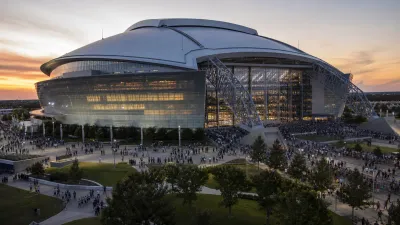
AT&T Stadium Capacity: Cowboys Seats and 100,000 Max
AT&T Stadium seats 80,000 and expands to 100,000 for major events. See Cowboys, concert and soccer capacities plus seating tips.
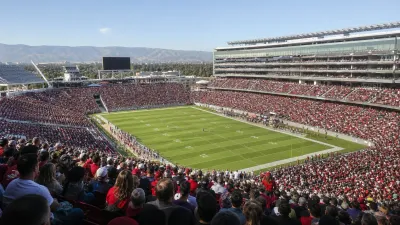
Levi's Stadium Capacity: 49ers, Concerts and Soccer
Levi's Stadium holds 68,500 for 49ers games and expands to 75,000. See World Cup, concert and seating capacities explained.
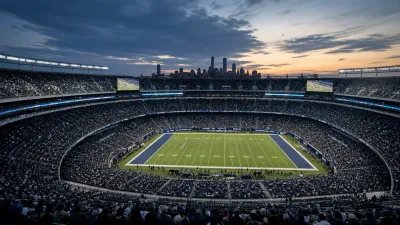
MetLife Stadium Capacity: NFL, Concerts and Soccer
MetLife Stadium holds 82,500 for NFL games. See its World Cup conversion, concert capacities, seating levels and Giants-Jets setup.
Rose Bowl Capacity: Football, Soccer and Concerts
The Rose Bowl lists a 90,888 capacity, but event inventories vary. See seating, concert layouts, record crowds and its SoFi comparison.