New NFL Stadiums: Every Project From 2026 to 2031
On this page11
- 01New NFL stadium timeline
- 02Buffalo Bills: Highmark Stadium opened in 2026
- 03Tennessee Titans: New Nissan Stadium in 2027
- 04Jacksonville Jaguars: Stadium of the Future in 2028
- 05Cleveland Browns: New Huntington Bank Field in 2029
- 06Washington Commanders: RFK-site stadium in 2030
- 07Kansas City Chiefs: new Kansas stadium in 2031
- 08Chicago Bears: still a proposal without a date
- 09New builds versus major renovations
- 10How the new stadiums change NFL capacity
- 11What can still change?
Buffalo opened the NFL’s newest stadium in June 2026. The next scheduled openings are Tennessee in 2027, Jacksonville’s reconstructed venue in 2028, Cleveland in 2029, Washington in 2030 and Kansas City in 2031. Those dates are current project targets, not guarantees.
New NFL stadium timeline
This tracker separates completed buildings, active construction, confirmed projects and proposals. It also distinguishes a new stadium from a rebuild of an existing one.
| Opening target | Team | Project | Capacity | Status in August 2026 |
|---|---|---|---|---|
| 2026 | Buffalo Bills | Highmark Stadium | 60,108 | Opened June 2026 |
| 2027 | Tennessee Titans | New Nissan Stadium | About 60,000 | Under construction |
| 2028 | Jacksonville Jaguars | Stadium of the Future | 63,000+, expandable past 70,000 | Existing stadium reconstruction |
| 2029 | Cleveland Browns | New Huntington Bank Field | 67,500 seats + 2,500 standing | Under construction |
| 2030 | Washington Commanders | RFK-site stadium | Not yet published by team | Confirmed design and delivery target |
| 2031 | Kansas City Chiefs | New Kansas stadium | About 70,000 | Confirmed, design stage |
| Not fixed | Chicago Bears | Fixed-roof stadium | Not fixed | Proposal/site decision unresolved |
The list includes Jacksonville because it changes almost every part of the fan experience, but it is not a ground-up replacement. Costs and delivery dates will be updated as teams publish contracts and construction milestones.
Buffalo Bills: Highmark Stadium opened in 2026
The Bills’ new Highmark Stadium opened in Orchard Park in June 2026, across Abbott Road from the team’s former home. It is an open-air, natural-grass venue with 60,108 seats.
That capacity makes it the smallest regular NFL stadium, a deliberate shift toward wider concourses, improved sightlines and more premium space rather than maximizing the seat count. The project was announced near $1.4 billion, while completion reporting put the cost around $2.1 billion to $2.2 billion after increases.
Buffalo is no longer a future project. Pages written before summer 2026 that still call it “under construction” are out of date.
Tennessee Titans: New Nissan Stadium in 2027
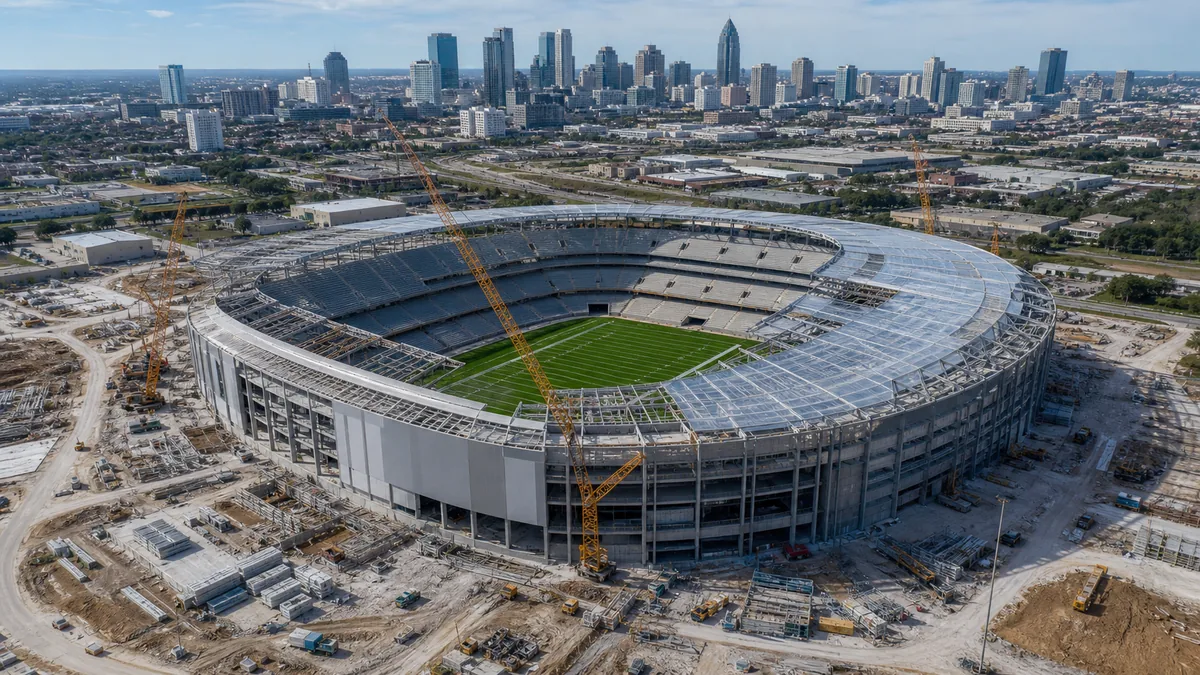
The Titans are building an enclosed stadium on Nashville’s East Bank beside the current Nissan Stadium. The target is February 2027, leaving time to prepare for the 2027 NFL season.
The roughly 60,000-seat design uses a translucent roof and is budgeted at about $2.1 billion. Its enclosed format opens the city to winter and weather-sensitive events. NFL owners selected Nashville to host Super Bowl LXIV in 2030, giving the building its first scheduled Super Bowl three years after opening.
The old Nissan Stadium will be demolished after the move, and the surrounding riverfront site will be redeveloped.
Jacksonville Jaguars: Stadium of the Future in 2028
Jacksonville is transforming EverBank Stadium rather than constructing a separate replacement. Work began in 2025 and the finished venue is scheduled to open in August 2028.
The plan includes a protective canopy, wider concourses, new seating and public park space. Base capacity will exceed 63,000, with expansion beyond 70,000 for college games and other large events.
Construction produces an unusual schedule:
- the 2026 Jaguars capacity drops to roughly 42,500;
- the team plays its 2027 home season at Camping World Stadium in Orlando;
- Jacksonville reopens the completed stadium for 2028.
Calling this a brand-new stadium is imprecise. The structure and site remain, but the scale of the reconstruction earns it a place in a future-venue tracker.
Cleveland Browns: New Huntington Bank Field in 2029
The Browns broke ground in Brook Park on 30 April 2026. Their enclosed New Huntington Bank Field is planned for the 2029 season near Cleveland Hopkins International Airport.
The club lists 67,500 seats plus 2,500 standing spaces for football, with event configurations ranging from 6,000 to 75,000. A translucent roof, a sunken bowl and a 176-acre mixed-use district are central to the plan.
The reported cost reached about $2.6 billion in 2026. Litigation over part of Ohio’s public contribution remains a project risk, so the opening year should be treated as a target until work is further advanced. If completed near that figure, it will rank behind SoFi but above every other current venue in our most expensive NFL stadiums comparison.
Washington Commanders: RFK-site stadium in 2030
Washington plans a roofed stadium on the former RFK Stadium site in the District of Columbia. HKS’s initial design uses a transparent sculpted dome, surrounding parkland and a continuous colonnade intended to connect the building with the Anacostia River and the city plan.
The team says construction is anticipated to finish in 2030. Its current public design page does not state a final football capacity, so this tracker leaves that cell open rather than repeating an unofficial estimate.
Enabling work, approvals and utilities must move on a compressed schedule to meet 2030. The project is more advanced than a casual proposal, but less certain than Tennessee or Cleveland, where construction is already visible.
Kansas City Chiefs: new Kansas stadium in 2031
On 22 July 2026, the Chiefs published the first concepts for a new stadium in Kansas City, Kansas. The $3 billion building is targeted for 2031 and is expected to hold about 70,000.
Its fully enclosed roof will use more than 400,000 square feet of translucent ETFE panels above the playing surface. The bowl borrows the steep, noise-focused geometry associated with Arrowhead, and the site plan retains more than 20,000 parking spaces for tailgating.
This is a move across the Missouri-Kansas state line, not a move out of the Kansas City market. Arrowhead remains the Chiefs’ home until the replacement is ready.
Chicago Bears: still a proposal without a date
The Bears intend to replace Soldier Field with a fixed-roof stadium, but location, public infrastructure arrangements and a construction timetable have moved repeatedly. The team owns the former Arlington International Racecourse site in Arlington Heights and has also explored other options.
Without a final site decision and published opening schedule, assigning a year would create false precision. The Bears will move into the confirmed timeline only when approvals, financing and delivery are concrete enough to support it.
New builds versus major renovations
Several large NFL projects do not create a new stadium. Jacksonville is the clearest example in this timeline, and other teams are improving existing venues through phased work.
| Project type | What changes | Example |
|---|---|---|
| New build | New structure on a new or adjacent site | Bills, Titans, Browns |
| Replacement in same market | New venue replaces current home | Commanders, Chiefs |
| Structural transformation | Existing building retained and extensively rebuilt | Jaguars |
| Phased renovation | Venue stays in service through upgrades | Panthers and other current projects |
The distinction affects cost, temporary relocation and environmental claims. It also matters to fans searching for the next stadium opening: Jacksonville returns to a transformed old address, while Tennessee moves into a separate building.
How the new stadiums change NFL capacity
New does not mean bigger. Buffalo reduced its listed seating capacity, and Tennessee’s 60,000-seat target is smaller than the current Nissan Stadium. Teams increasingly allocate more floor area to circulation, clubs, suites, food service and adaptable event space.
Cleveland and Kansas City sit closer to the league’s middle by seats. Their roofs and expandable event setups matter more commercially than topping a capacity table. The current NFL stadium capacity ranking shows how all 30 active venues compare, while the largest US stadiums explains why college football still owns the country’s biggest permanent crowds.
What can still change?
Opening dates move when financing, litigation, permits, material supply or site work changes. Capacity can also fall between a concept rendering and the final fire and occupancy approvals.
For that reason, this page treats:
- an opened stadium as complete;
- visible construction as under construction;
- a team-announced site and target as confirmed but still conditional;
- a location or financing debate as a proposal.
Future World Cup or Super Bowl layouts may use different net capacities from NFL games. The World Cup 2026 stadium guide demonstrates how event infrastructure changed the numbers at existing NFL venues. More project and capacity coverage lives on the stadiums hub.
Frequently asked questions
What is the newest NFL stadium?+
Highmark Stadium in Orchard Park, home of the Buffalo Bills. It opened in June 2026 and begins NFL regular-season use in the 2026 season. The open-air building has 60,108 seats.
Which NFL team gets a new stadium in 2027?+
The Tennessee Titans. New Nissan Stadium in Nashville is scheduled for completion in February 2027 and will open for the 2027 NFL season with about 60,000 seats under a translucent enclosed roof.
Which new NFL stadiums are under construction?+
As of August 2026, the Titans' New Nissan Stadium and Browns' new Huntington Bank Field are active new builds. Jacksonville is reconstructing EverBank Stadium rather than replacing it. Other confirmed projects are at design or pre-construction stages.
Where will the Jaguars play in 2027?+
The Jaguars will play their 2027 home schedule at Camping World Stadium in Orlando while the Jacksonville stadium reconstruction enters its most disruptive phase. They plan to return in August 2028.
Are the Chiefs leaving Missouri?+
The Chiefs announced a new enclosed stadium in Kansas City, Kansas, targeted for 2031. That moves the team across the state line from Arrowhead Stadium in Kansas City, Missouri, while keeping it in the same metropolitan area.
Are the Bears building a new stadium?+
The Bears want a fixed-roof stadium, but the team's available official update still treated location and delivery as unresolved. Until a site, approvals, financing and construction schedule are fixed, it belongs in the proposal category rather than the confirmed-opening timeline.
Sources
- Buffalo Bills: new Highmark Stadium project
- Tennessee Titans: New Nissan Stadium project
- NFL: New Nissan Stadium completion target
- Jacksonville Jaguars: Stadium of the Future FAQ
- Cleveland Browns: July 2026 construction update
- Washington Commanders: new RFK-site stadium renderings
- Kansas City Chiefs: new 2031 stadium announcement
- Chicago Bears: official stadium decision update
Related stadiums & arenas guides
View all →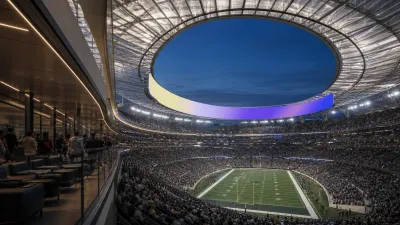
10 Most Expensive NFL Stadiums Ever Built
Rank the most expensive active NFL stadiums by original project cost, from $5.5B SoFi to the billion-dollar venues, with financing explained.
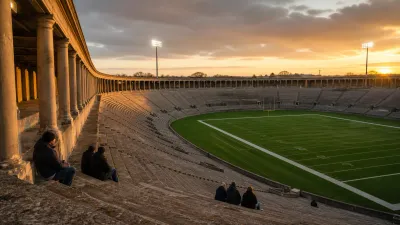
12 Oldest NFL Stadiums Still in Use in 2026
Rank the oldest NFL stadiums by opening year, from Soldier Field and Lambeau to the 1990s venues, with renovations and replacements explained.
Biggest Stadiums in the UK: Why Every List Disagrees
Wembley leads at 90,000, but below the top five the order genuinely changes month to month. The published capacities, and the rebuilding wave behind the confusion.
World Cup 2026 Stadiums: All 16 Venues and Capacities
All 16 World Cup 2026 stadiums with FIFA's final capacities, regular venue names, match totals and knockout stages in one verified guide.
Largest NFL Stadiums 2026: All 30 Ranked by Capacity
MetLife Stadium is the largest NFL stadium at 82,500. All 30 venues ranked with capacity, year opened, construction cost and naming-rights holder.

Biggest Stadiums in Australia: capacities, uses and caveats
A source-led guide to Australia’s biggest sports venues, with event capacity, configuration notes and official links.