12 Oldest NFL Stadiums Still in Use in 2026
On this page11
- 01How we ranked the oldest NFL stadiums
- 02Oldest NFL stadiums ranked by opening year in 2026
- 031. Soldier Field: opened in 1924
- 042. Lambeau Field: opened in 1957
- 053. Arrowhead Stadium: opened in 1972
- 064. Caesars Superdome: opened in 1975
- 075. Hard Rock Stadium: opened in 1987
- 086-8. EverBank, Bank of America and Northwest Stadium
- 099-12. The four venues from 1998 and 1999
- 10Does a rebuild create a new stadium?
- 11Why have so few old NFL stadiums survived?
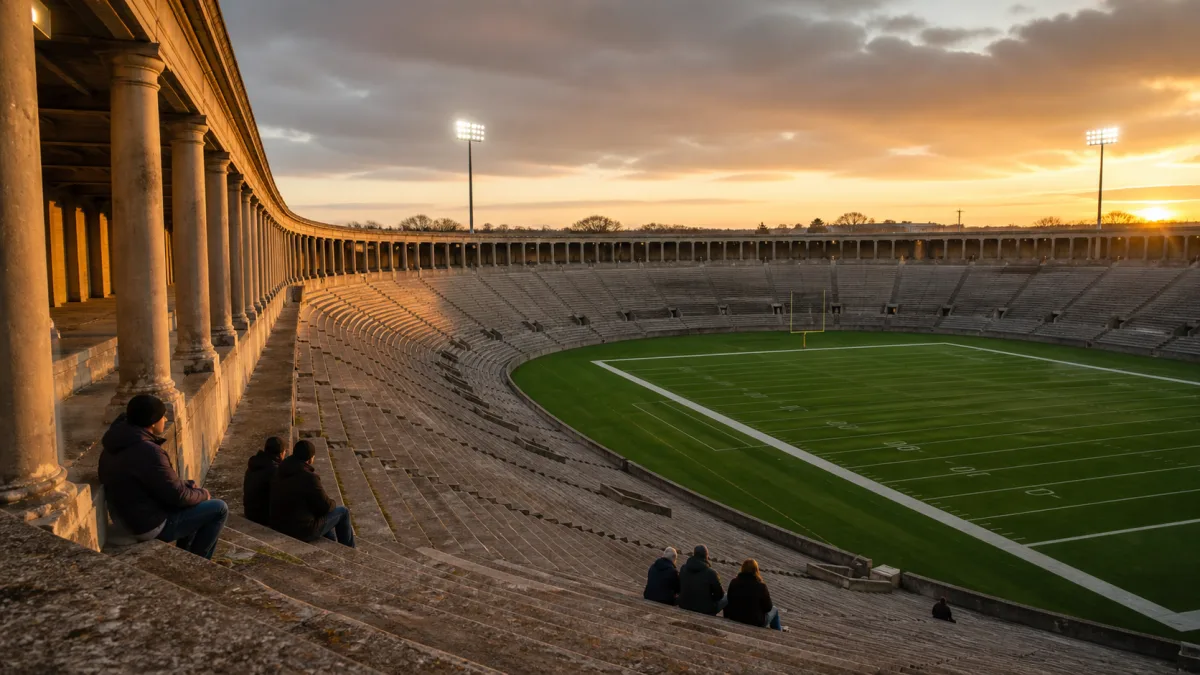
Soldier Field is the oldest stadium in the NFL. It opened in 1924, more than three decades before second-place Lambeau Field. That simple answer needs one qualification: the Bears did not move into Soldier Field until 1971, while the Packers have played at Lambeau since the day it opened in 1957.
How we ranked the oldest NFL stadiums
The list includes stadiums serving as an NFL team’s regular home in the 2026 season and orders them by the year the venue first opened. A major renovation does not reset the clock if the original stadium remained in place. A demolition followed by a separate replacement would create a new venue and a new opening date.
Former NFL homes, temporary homes and stadiums used only for occasional league games are excluded. Ties are kept together when venues opened in the same year rather than inventing a precise order that the evidence cannot support.
Oldest NFL stadiums ranked by opening year in 2026
This list ranks the current homes of NFL teams by the year each building first opened. A large renovation does not reset the clock, but a replacement building does. Ages are the number of years since opening during the 2026 season, not a claim that every part of the structure is original.
| Rank | Stadium | Current team | Opened | Age in 2026 |
|---|---|---|---|---|
| 1 | Soldier Field | Chicago Bears | 1924 | 102 |
| 2 | Lambeau Field | Green Bay Packers | 1957 | 69 |
| 3 | GEHA Field at Arrowhead Stadium | Kansas City Chiefs | 1972 | 54 |
| 4 | Caesars Superdome | New Orleans Saints | 1975 | 51 |
| 5 | Hard Rock Stadium | Miami Dolphins | 1987 | 39 |
| 6 | EverBank Stadium | Jacksonville Jaguars | 1995 | 31 |
| 7 | Bank of America Stadium | Carolina Panthers | 1996 | 30 |
| 8 | Northwest Stadium | Washington Commanders | 1997 | 29 |
| 9= | M&T Bank Stadium | Baltimore Ravens | 1998 | 28 |
| 9= | Raymond James Stadium | Tampa Bay Buccaneers | 1998 | 28 |
| 11= | Nissan Stadium | Tennessee Titans | 1999 | 27 |
| 11= | Cleveland Browns Stadium | Cleveland Browns | 1999 | 27 |
The year is the useful comparison; an age can differ by one depending on whether a stadium’s anniversary has passed. Stadium naming rights also change much faster than the buildings. The table uses the names in use for the 2026 season.
1. Soldier Field: opened in 1924
Soldier Field began life as Municipal Grant Park Stadium and was renamed in 1925 as a memorial to American service members. Its 1924 opening makes it the oldest current NFL venue by 33 years.
The Bears are not nearly as old as tenants. They played at Wrigley Field through 1970 and began calling Soldier Field home in 1971. A major 2002-03 reconstruction placed a modern seating bowl inside the historic colonnades; the team spent the 2002 season at Memorial Stadium in Champaign. That history is why “oldest building” is more accurate than “longest continuously used NFL home.”
Soldier Field is also the league’s smallest established venue by normal football capacity. Its 61,500 fixed seats and larger event configurations explain why official sources sometimes publish different totals. Its age, constrained lakefront site and limited premium space sit behind the Bears’ long-running search for a new roofed stadium.
2. Lambeau Field: opened in 1957
Lambeau Field opened as City Stadium and was dedicated on 29 September 1957. It took its current name in 1965 after Packers founder, player and coach Curly Lambeau.
Unlike Soldier Field, it was built for its current team. The Packers have used it from the start, making Lambeau the NFL’s oldest continuously occupied current home. Expansions have wrapped new seating, suites and public areas around the original bowl without replacing the venue’s identity.
This is the distinction behind apparently conflicting answers online: Soldier Field is the older stadium; Lambeau has the longer continuous relationship with one NFL tenant.
3. Arrowhead Stadium: opened in 1972
Arrowhead opened for the 1972 season, with the first game played on 12 August. It is the oldest stadium in the AFC and the oldest active NFL venue designed only for football rather than as a multipurpose bowl.
Its steep seating geometry remains central to Arrowhead’s reputation for crowd noise. Renovations have updated concourses, technology and premium areas, but the distinctive bowl survives. That continuity will end if the Chiefs’ announced enclosed stadium in Kansas opens on its current 2031 target.
4. Caesars Superdome: opened in 1975
The Superdome opened on 3 August 1975 and has housed the Saints since that season. It is the oldest domed stadium still used in the NFL and the only pre-1980 dome left in the league.
Its history cannot be reduced to age. The building sheltered thousands of people during Hurricane Katrina in 2005, suffered severe damage and did not reopen for the Saints until September 2006. Renovations before Super Bowl LIX in 2025 changed much of the interior while retaining the original dome and downtown footprint.
5. Hard Rock Stadium: opened in 1987
Miami’s stadium opened in 1987 as Joe Robbie Stadium. It has carried several sponsored names, hosted both football and baseball, and gained a large canopy during a 2015-16 renovation.
The canopy can make the venue look newer than its opening date suggests, but the underlying stadium is the Dolphins’ original 1987 building. It marks a 12-year gap after the Superdome and the start of the second generation in this list.
6-8. EverBank, Bank of America and Northwest Stadium
Three 1990s expansion-era buildings come next:
- EverBank Stadium (1995) opened with the Jacksonville Jaguars, largely replacing the old Gator Bowl structure on the same site. Its “Stadium of the Future” reconstruction is scheduled to finish in 2028, so the venue will retain its lineage while looking substantially different.
- Bank of America Stadium (1996) opened with the Carolina Panthers and remains on its original uptown Charlotte site. Renovations, rather than a confirmed replacement, have kept it in service.
- Northwest Stadium (1997) opened in Landover, Maryland, as Jack Kent Cooke Stadium. Washington plans to move back to the former RFK site in a new roofed stadium targeted for 2030.
These examples show why stadium age does not predict remaining life by itself. Ownership plans, location, public financing and the ability to renovate matter just as much.
9-12. The four venues from 1998 and 1999
M&T Bank Stadium and Raymond James Stadium both opened in 1998. Nissan Stadium and Cleveland Browns Stadium followed in 1999. They are tied by year within each pair because ranking them by opening day would imply a meaningful difference where none exists.
Of these four, Nissan Stadium has the clearest end date: the Titans’ enclosed replacement is scheduled for 2027. Cleveland’s lakefront building also has an intended successor, with the Browns constructing a roofed venue in Brook Park for 2029. Baltimore and Tampa continue to invest in their existing homes.
Does a rebuild create a new stadium?
There is no universal statistical rule, so this ranking uses a practical test: did the venue continue as the same named building on the same footprint, or did the team open an independently constructed replacement?
| Situation | How this ranking treats it | Example |
|---|---|---|
| Interior and concourse renovation | Original opening year | Superdome |
| New bowl within retained historic exterior | Original year, with a clear caveat | Soldier Field |
| Extensive reconstruction on the same stadium | Original lineage | EverBank Stadium |
| New building on an adjacent or different footprint | New opening year | Buffalo’s 2026 Highmark Stadium |
This method avoids calling a century-old facade a brand-new stadium while still telling readers when little of the old fan experience remains.
Why have so few old NFL stadiums survived?
NFL buildings age economically before they become structurally unusable. Newer venues devote more room to suites, clubs, food service, video boards and non-football events. Roofs can make winter concerts and championship games easier to schedule. Public agencies and teams also use stadium districts as real-estate projects rather than stand-alone bowls.
The survivors have a reason to resist that cycle. Lambeau’s history is part of the Packers’ identity. Arrowhead’s shape creates its atmosphere. The Superdome occupies a valuable downtown site and has repeatedly adapted. Soldier Field retains protected historic elements even as its football future remains unsettled.
The other end of the timeline is covered in our tracker of new NFL stadiums opening from 2026 onward. For size rather than age, see the complete NFL stadium capacity ranking and the broader stadiums guide.
Frequently asked questions
What is the oldest NFL stadium?+
Soldier Field in Chicago. It opened in 1924, although the Bears did not move there until 1971 and played the 2002 season elsewhere during reconstruction.
Why is Lambeau Field sometimes called the oldest NFL stadium?+
Lambeau Field is the oldest stadium built for and continuously occupied by its current NFL team. The Packers have played there since it opened as City Stadium in 1957. Soldier Field is an older building, but the Bears arrived 47 years after it opened.
What is the oldest stadium in the AFC?+
GEHA Field at Arrowhead Stadium. The Kansas City Chiefs' purpose-built home opened in 1972 and is the third-oldest active NFL stadium overall.
How many NFL stadiums opened before 1980?+
Four active NFL stadiums opened before 1980: Soldier Field, Lambeau Field, Arrowhead Stadium and Caesars Superdome. The next-oldest, Hard Rock Stadium, opened in 1987.
Do renovations reset a stadium's age?+
Not in this ranking. It uses the year the venue originally opened, while noting major reconstructions. A genuinely new building on another footprint receives a new opening date.
Which old NFL stadiums are being replaced?+
The Titans are scheduled to leave Nissan Stadium for a new building in 2027. The Chiefs announced a new Kansas stadium targeted for 2031, and the Bears continue to pursue a replacement for Soldier Field without a fixed opening date.
Sources
Related stadiums & arenas guides
View all →
10 Most Expensive NFL Stadiums Ever Built
Rank the most expensive active NFL stadiums by original project cost, from $5.5B SoFi to the billion-dollar venues, with financing explained.
New NFL Stadiums: Every Project From 2026 to 2031
Track every new NFL stadium from Buffalo to Kansas City, with opening dates, capacities, costs and clear status for confirmed builds and proposals.

Biggest Stadiums in Italy: capacity, club use and configuration
Italy’s largest football grounds compared using venue and league sources, with a note on seating changes for domestic and international matches.
Soldier Field Capacity: How Many People Does It Hold?
Soldier Field holds 61,500 for NFL games. Compare Bears, soccer and concert capacities, including official event figures up to 63,500.
Largest NFL Stadiums 2026: All 30 Ranked by Capacity
MetLife Stadium is the largest NFL stadium at 82,500. All 30 venues ranked with capacity, year opened, construction cost and naming-rights holder.

Biggest Stadiums in Australia: capacities, uses and caveats
A source-led guide to Australia’s biggest sports venues, with event capacity, configuration notes and official links.