How Much Public Money Goes Into Sports Stadiums?
On this page6
There is no single public-money percentage for sports stadiums. The contribution can include tax-backed bonds, direct grants, public land, roads, tax abatements and operating support. Recent research and policy summaries show that public contributions vary widely by project, so a serious comparison must define which costs and benefits are included. This article separates the definition from changing figures and names the source trail. Related reading includes all-inclusive hospitality, corporate hospitality boxes, debenture seats.
What is the short answer?
There is no single public-money percentage for sports stadiums. The contribution can include tax-backed bonds, direct grants, public land, roads, tax abatements and operating support. Recent research and policy summaries show that public contributions vary widely by project, so a serious comparison must define which costs and benefits are included.
How should readers define the query?
Search terms in sport often collapse different records or contracts into one phrase. A useful answer states the unit, date, competition and legal or commercial scope before comparing numbers. That is why this page does not treat a press headline or a marketplace listing as a complete source.
What do the primary sources show?
National Conference of State Legislatures stadium review, Oxford Academic stadium finance research, J.C. Bradbury stadium cost data provide the source trail for this page. The responsible league, club, venue, governing body or company controls the current wording. When a secondary result disagrees with an official document, the official scope takes priority and the uncertainty is stated.
| Field | What to check |
|---|---|
| Direct subsidy | Grant, appropriation or public payment |
| Public debt | Bonds backed by taxes or dedicated revenue |
| Land and infrastructure | Site, roads, transit or utilities |
| Tax expenditure | Abatement or foregone revenue |
| Private share | Team, owner, lender or sponsor money |
What should a reader compare?
Compare like with like. Separate a primary ticket from resale, a public contribution from a private loan, a club from its wider ownership group, and a historical record from a current status. If the source does not state an inclusion, do not assume it.
What can change after publication?
Ownership stakes, ticket windows, prices, league tests, funding agreements and official records can change. Recheck the named source after a filing, new season handbook, venue announcement, ticket release or material correction. The visible date records this editorial check; it is not a promise that a changing figure stays fixed.
Frequently asked questions
What counts as public money?
Count direct payments, public debt, public land, infrastructure and measurable tax expenditure, then state the definition.
Do stadiums always use taxpayer money?
No. Some are privately financed, while many use mixed public-private structures.
Why do headline percentages disagree?
Analysts may exclude land, roads, tax incentives, renovation or long-term debt service.
Does a stadium always boost the local economy?
Research is mixed. The effect depends on visitors, location, spending leakage, operating costs and the counterfactual use of the money.
How should I compare two projects?
Use the same cutoff, include the same cost categories and separate promised benefits from realised public revenue.
Can a public contribution be indirect?
Yes. A lease, tax exemption, bond guarantee or publicly built road can support a project without a direct grant cheque.
Bottom line
There is no single public-money percentage for sports stadiums. The contribution can include tax-backed bonds, direct grants, public land, roads, tax abatements and operating support. Recent research and policy summaries show that public contributions vary widely by project, so a serious comparison must define which costs and benefits are included. Read the current official terms or filing before making a purchase, relying on a record or describing an ownership position.
Frequently asked questions
What counts as public money?+
Count direct payments, public debt, public land, infrastructure and measurable tax expenditure, then state the definition.
Do stadiums always use taxpayer money?+
No. Some are privately financed, while many use mixed public-private structures.
Why do headline percentages disagree?+
Analysts may exclude land, roads, tax incentives, renovation or long-term debt service.
Does a stadium always boost the local economy?+
Research is mixed. The effect depends on visitors, location, spending leakage, operating costs and the counterfactual use of the money.
How should I compare two projects?+
Use the same cutoff, include the same cost categories and separate promised benefits from realised public revenue.
Can a public contribution be indirect?+
Yes. A lease, tax exemption, bond guarantee or publicly built road can support a project without a direct grant cheque.
Sources
Related stadiums & arenas guides
View all →
Who Pays for NFL Stadiums? Public Money, Owners and NFL Loans
NFL stadiums can use team money, loans, league support, bonds, taxes and public land. The funding mix changes by project.
Oldest Football Stadiums in England: Why the Answer Depends on the Record
The oldest football venue depends on whether you mean the oldest ground, club home or professional league stadium. Keep the records separate.
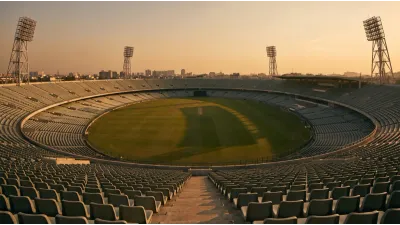
Biggest Stadiums in Australia and New Zealand
The MCG holds 100,024 — more than Eden Park and Wellington combined. And almost every ground in the region has two capacities, which is why lists disagree.
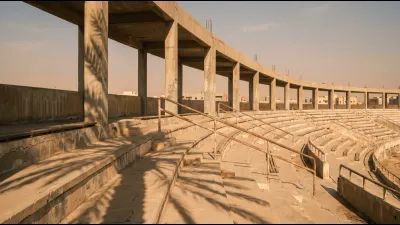
LA 2028 Venues: No New Stadiums, 35% Over Budget
Every LA 2028 venue, sport by sport — and why the first Games since London 1948 to build nothing has still gone from $5.3bn to $7.145bn.
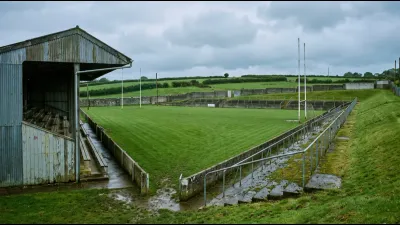
Biggest Stadiums in Ireland: An Amateur Monopoly
Croke Park leads at 82,300, but the real story is that eight of Ireland's nine largest stadiums are owned by an amateur association.
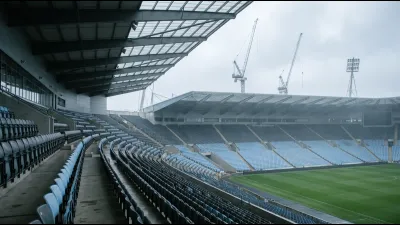
Biggest Stadiums in the UK: Why Every List Disagrees
Wembley leads at 90,000, but below the top five the order genuinely changes month to month. The published capacities, and the rebuilding wave behind the confusion.