15 Biggest Indoor Arenas in the World by Capacity
On this page12
- 01How we ranked the world’s biggest arenas
- 02World’s largest indoor arenas ranked
- 031. KJC Kingdome: 75,000 seats
- 042. Philippine Arena: up to 55,000
- 053. Mineirinho: about 25,000
- 064. GMO Arena Saitama: 22,500 in arena mode
- 074. SKA Arena: about 22,500
- 086. Arena Ciudad de México: 22,300
- 097-10. The 21,750-to-22,114 group
- 1011-15. Knoxville, Manchester and the large North American arenas
- 11Why Kingdome now ranks first
- 12Arena, dome and indoor stadium are not synonyms
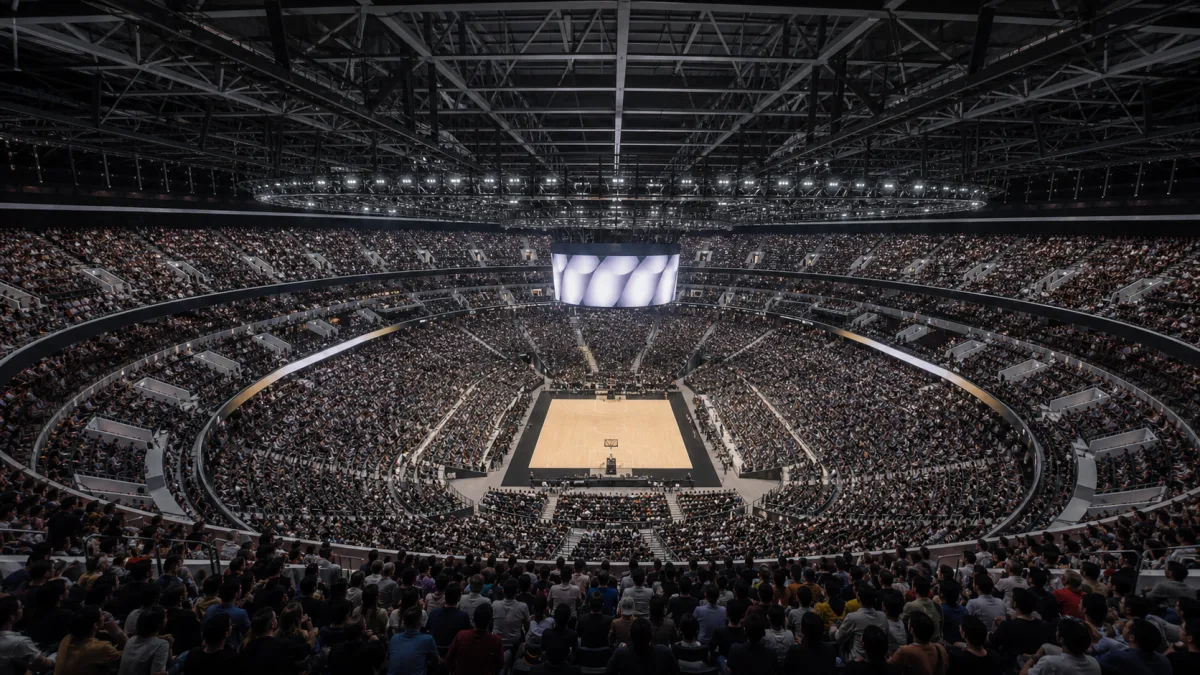
KJC Kingdome is the biggest indoor arena in the world under this ranking’s broad definition. Its owner and the Philippine Information Agency report 75,000 installed seats, 20,000 more than Philippine Arena’s largest published configuration.
That answer needs a definition. A roofed 70,000-seat football stadium is indoors, but it is not an arena in the same architectural category. Kingdome is primarily a cathedral and assembly venue, yet it has an enclosed central event floor, tiered seating and stated uses that include concerts and sports. This list uses a broad purpose-built indoor-arena definition and ranks completed venues by maximum seated capacity.
How we ranked the world’s biggest arenas
This ranking uses the largest published seated capacity for a completed indoor arena or arena-scale assembly venue. The building must have an enclosed central event floor and tiered seating, and its stated uses must include sport, concerts or large public gatherings. We checked venue and operator figures first, then used government or other secondary references where an operator does not publish a clear configuration.
Closed buildings, outdoor stadiums, racecourses and domes whose main floor functions as a full stadium are excluded. Temporary concert layouts do not replace the normal sports figure. That definition is why a building with a spectacular one-off attendance may sit below an arena with more permanent seats.
World’s largest indoor arenas ranked
Capacities are configuration-dependent. The figures below are the largest documented seated arena setup, not a promise that every basketball, hockey or concert event can sell that many seats.
| Rank | Arena | City | Country | Max seated capacity | Opened |
|---|---|---|---|---|---|
| 1 | KJC Kingdome | Davao City | Philippines | 75,000 | 2026 |
| 2 | Philippine Arena | Bulacan | Philippines | Up to 55,000 | 2014 |
| 3 | Mineirinho | Belo Horizonte | Brazil | About 25,000 | 1980 |
| 4= | GMO Arena Saitama | Saitama | Japan | 22,500 arena mode | 2000 |
| 4= | SKA Arena | St. Petersburg | Russia | About 22,500 | 2023 |
| 6 | Arena Ciudad de México | Mexico City | Mexico | 22,300 | 2012 |
| 7 | Bell Centre | Montreal | Canada | Up to 22,114 | 1996 |
| 8 | KFC Yum! Center | Louisville | United States | 22,090 | 2010 |
| 9 | Greensboro Coliseum | Greensboro | United States | About 22,000 | 1959 |
| 10 | Dean Smith Center | Chapel Hill | United States | 21,750 | 1986 |
| 11 | Thompson-Boling Arena at Food City Center | Knoxville | United States | 21,678 | 1987 |
| 12 | AO Arena | Manchester | United Kingdom | About 21,000 | 1995 |
| 13 | United Center | Chicago | United States | 20,917 | 1994 |
| 14 | Amerant Bank Arena | Sunrise | United States | 20,737 | 1998 |
| 15 | Tacoma Dome | Tacoma | United States | 20,722 | 1983 |
Ties reflect the precision available. Calling one 22,500-seat venue larger because a source adds a few temporary chairs would create a false distinction.
1. KJC Kingdome: 75,000 seats
KJC Kingdome in Davao City formally opened on September 1, 2026. The venue owner describes 75,000 installed seats, and the Philippine Information Agency reported the same figure after the opening ceremony.
It is not a conventional basketball or hockey building with a regular team tenant. Kingdome was built primarily for Kingdom of Jesus Christ worship and assemblies, but its enclosed, column-free central floor is also intended for concerts, sporting events and other large gatherings. That mixed role is why some sources call it an indoor cathedral while others call it an arena.
The 75,000 figure is a stated installed-seat capacity, not a sport-specific ticket inventory. Individual events may use fewer seats because stages, production areas, safety zones and sightlines can close sections.
2. Philippine Arena: up to 55,000
Philippine Arena sits in Ciudad de Victoria, north of Manila. Hanwha, its design-build contractor, reports 51,000 permanent seats and a maximum capacity of 55,000. Guinness lists 51,929 for the record it certified when the building opened.
The bowl is one-sided, with a stage and focal area at one end rather than seats wrapping evenly around a center court. That design suits worship gatherings, concerts and large ceremonies while still allowing basketball and other sports. The roof covers nearly 36,000 square metres without internal columns blocking views.
Philippine Arena remains the largest venue in this list with a builder-published conventional arena configuration. Its maximum is roughly 30,000 above Mineirinho, so the gap below the top two is still enormous.
3. Mineirinho: about 25,000
Mineirinho stands beside the Mineirão football stadium in Belo Horizonte. The indoor venue has hosted volleyball, futsal, basketball and concerts, with arena directories commonly listing about 25,000.
Configuration and renovation history make its figure less clean than Philippine Arena’s. It remains useful as the third entry under a broad maximum-capacity method, but event-specific plans may be lower. Readers buying tickets should use the promoter’s seating chart rather than a building maximum.
4. GMO Arena Saitama: 22,500 in arena mode
The venue long known as Saitama Super Arena uses a 15,000-ton movable block to change its interior volume. Its official main-arena layouts hold roughly 19,000 to 22,500 for indoor sports and about 22,000 for a centre-stage concert.
It can expand into a “stadium mode” holding up to 37,000 for concerts and trade shows. This ranking uses 22,500 because that is its arena configuration; using 37,000 would compare a transformed stadium floor with conventional arena bowls.
There is also a current-status caveat. The venue closed on 13 January 2026 for major renovation expected to last up to 18 months. The building still exists in the capacity ranking but is not hosting main-arena events during that closure.
4. SKA Arena: about 22,500
SKA Arena opened in St. Petersburg in 2023 as a modern ice-hockey venue. Its hockey configuration is generally listed around 21,500, with larger seated arrangements reaching roughly 22,500. Venue scale and player compensation are separate comparisons; see the current highest-paid NHL players for the 2026-27 cap-hit ranking.
That difference illustrates a recurring problem: an ice rink removes floor seats, while a concert or fighting-sport setup can add them. The table uses the maximum documented seated arena arrangement, not hockey-only capacity.
6. Arena Ciudad de México: 22,300
Mexico’s national cultural venue database lists Arena CDMX at 22,300. The building opened in 2012 with 126 suites, a large exterior LED facade and a column-free oval bowl.
At that figure it is the largest purpose-built arena in North America under this method, just ahead of Bell Centre and KFC Yum! Center. It hosts concerts, basketball, combat sports and family shows rather than relying on one permanent major-league tenant.
7-10. The 21,750-to-22,114 group
Four venues are separated by only 364 seats:
- Bell Centre can reach 22,114 and is the largest NHL home by its highest arena setup. Hockey seating is lower because the rink and sightlines consume floor space.
- KFC Yum! Center lists 22,090 for basketball and is the University of Louisville’s downtown home.
- Greensboro Coliseum can approach 22,000 in its largest setup and remains unusually large for a building opened in 1959.
- Dean Smith Center seats 21,750 for North Carolina basketball, one of the largest fixed college-basketball crowds.
The concentration of US college arenas near the top is not accidental. Campus basketball can fill buildings that host 15 to 20 home dates without the premium-space tradeoffs common in newer professional venues.
11-15. Knoxville, Manchester and the large North American arenas
Food City Center in Knoxville starts this group at 21,678. AO Arena in Manchester follows at about 21,000, then United Center at 20,917 for basketball, making it the largest NBA arena by listed basketball seats.
Amerant Bank Arena and Tacoma Dome fill out the list. Tacoma is architecturally different, with a cable-supported wooden dome and flexible floor layouts, while Amerant Bank Arena is a conventional professional ice-hockey and event bowl.
At this end of the table, capacity changes by event. A stage can close thousands of seats behind it; a centre-stage show can reopen those sections and add floor chairs.
Why Kingdome now ranks first
Kingdome was previously excluded because 75,000 was a construction target and the building had not opened. That changed on September 1, 2026. The owner announced the opening and described 75,000 seats, while the Philippine Information Agency reported that the venue formally opened with those seats installed.
Its category still needs care. Kingdome’s primary function is religious assembly, so readers looking for the largest regular basketball or hockey arena should not treat its headline capacity as a normal sports configuration. This ranking includes it because the completed building has an arena-style central floor and is intended to host sports and concerts as well as worship gatherings.
Arena, dome and indoor stadium are not synonyms
Arenas normally wrap steep seating around a court, rink or performance floor. Indoor stadiums enclose a full football, rugby or baseball field. The distinction matters because venues such as Caesars Superdome, AT&T Stadium and Paris La Défense Arena can seat far more than 55,000 in some layouts.
| Building type | Typical floor | Example | Included here? |
|---|---|---|---|
| Indoor arena or arena-scale assembly venue | Court, stage or central event floor | KJC Kingdome | Yes, with a category note |
| Conventional multipurpose arena | Court, rink or concert floor | Philippine Arena | Yes |
| Convertible arena/stadium | Movable arena blocks | GMO Arena Saitama | Arena mode only |
| Roofed field stadium | Full football/rugby field | Caesars Superdome | No |
| Planned or unfinished arena | Proposed capacity without an operating venue | Future projects | No |
For field-scale buildings, use the largest stadiums in the world and largest US stadiums comparisons. The separate NBA arena ownership guide explains why the team, building owner, operator and naming sponsor may be four different entities. More venue definitions and rankings live on the stadiums hub.
Frequently asked questions
What is the biggest indoor arena in the world?+
KJC Kingdome in Davao City, Philippines, under this ranking's broad indoor-arena definition. The 75,000-seat venue formally opened on September 1, 2026, passing Philippine Arena's maximum configuration of 55,000.
Is KJC King Dome the world's largest arena?+
KJC Kingdome is the largest completed indoor arena by stated installed seating capacity. It has 75,000 seats, although its main purpose is worship and large assemblies rather than a regular professional-sports schedule.
Why is the Superdome not in this ranking?+
The Superdome is a roofed full-size field stadium built for American football. This list focuses on arena-scale buildings designed primarily for indoor court, ice, concert or assembly configurations.
Why do arena capacity figures vary?+
A basketball court, ice rink and end-stage concert each consume different floor space. Some venues count standing spectators or suites in one figure but not another. This ranking uses the largest documented seated arena setup.
What is the biggest indoor arena in North America?+
Arena Ciudad de México is the largest in this purpose-built arena comparison at 22,300, narrowly ahead of Montreal's Bell Centre and Louisville's KFC Yum! Center.
What is the largest NBA arena?+
United Center in Chicago, with 20,917 listed seats for basketball. College venues and multipurpose arenas elsewhere can seat more but are not NBA homes.
Sources
- Kingdome owner: opening date and 75,000-seat capacity
- Philippine Information Agency: 75,000-seat Kingdome formally opened
- Hanwha: Philippine Arena has 51,000 seats, 55,000 maximum
- Guinness: largest mixed-use indoor theatre
- GMO Arena Saitama: official configurations
- Mexico Ministry of Culture: Arena CDMX capacity
- Current indoor arena capacity directory
- GMO Arena Saitama: 2026 renovation closure
Related stadiums & arenas guides
View all →
What Is the Largest Indoor Arena in the World?
How to answer the largest-indoor-arena question without mixing enclosed arenas, domes and outdoor stadiums.
Biggest NBA Arenas 2026: All 30 Ranked by Capacity
The United Center is the biggest NBA arena at 20,917. All 30 arenas ranked with capacity, year opened, naming-rights holder and NHL co-tenants.

Biggest Stadiums in Germany: football capacity and standing-room context
Germany’s largest football grounds explained with the standing-room and international-match distinction made explicit.

Biggest Stadiums in Italy: capacity, club use and configuration
Italy’s largest football grounds compared using venue and league sources, with a note on seating changes for domestic and international matches.

Biggest Stadiums in New Zealand: a practical capacity guide
New Zealand’s largest multi-sport venues compared by published seating capacity and event use.
10 Biggest Soccer Stadiums in the World by Capacity
Rungrado is the world's biggest soccer stadium at 113,281 seats. See the verified top 10, capacity conflicts and future stadiums that may pass it.