15 Largest Baseball Stadiums in MLB by Capacity (2026)
On this page11
- 01How we ranked the largest baseball stadiums
- 02Largest MLB stadiums ranked by capacity
- 031. Dodger Stadium: 56,000
- 042. Chase Field: 48,330
- 053. T-Mobile Park: 47,368
- 064. Coors Field: 46,897
- 075. Yankee Stadium: 46,543
- 086-10. The rest of the top ten
- 0911-15. Five more parks above 41,000
- 10Why older lists put Oakland Coliseum first
- 11Capacity is not the same as attendance
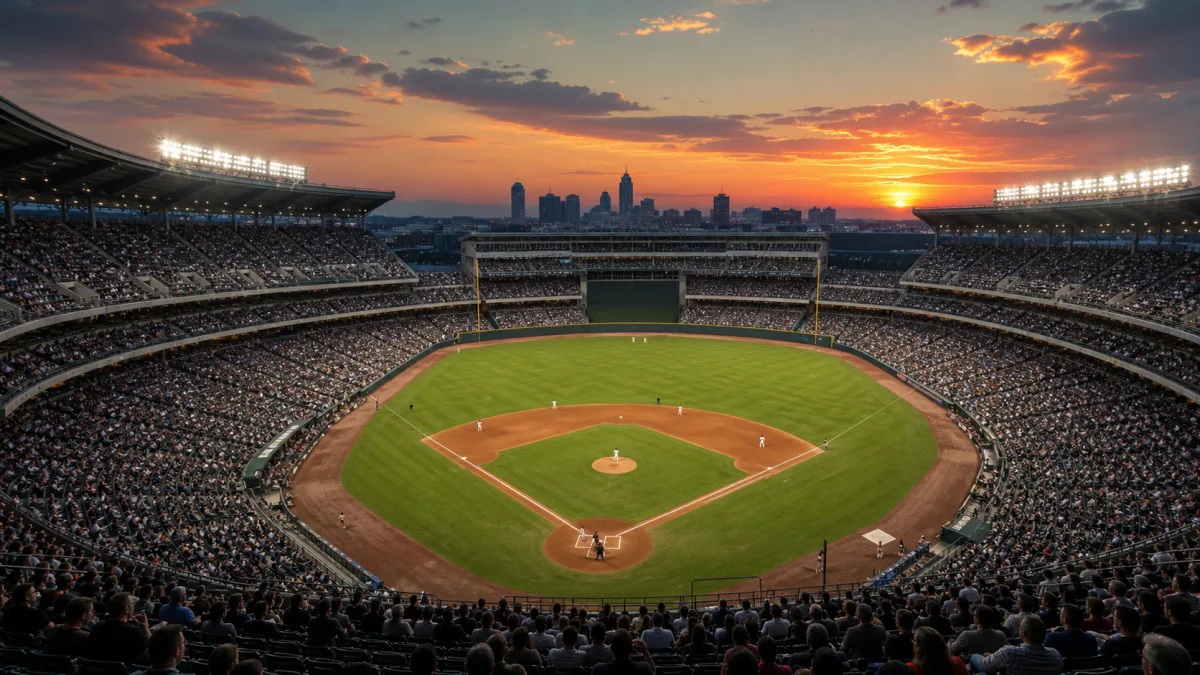
Dodger Stadium is the largest ballpark in Major League Baseball in 2026, with 56,000 seats. It leads Chase Field by 7,670 and Yankee Stadium by 9,457. The gap is unusually large: no other active MLB park reaches 50,000 in its normal baseball setup.
How we ranked the largest baseball stadiums
The list covers the 30 current Major League Baseball home parks as of the 2026 season and ranks them by the standard baseball capacity published by the club or venue. We use permanent normal seating, not a concert layout, standing-room sellout or attendance record. A retractable roof does not affect eligibility.
Former MLB parks and active parks outside MLB are excluded from this table. Oakland Coliseum is the most important close call: it remains a large baseball venue, but it stopped being an MLB home after the Athletics left, so it cannot rank among current MLB stadiums.
Largest MLB stadiums ranked by capacity
The ranking uses standard baseball capacity for active 2026 venues. It does not add temporary floor seats, concert layouts or every possible standing-room ticket. Capacities can change when teams remove seats for social spaces or revise how standing areas are counted, so the season and method matter.
| Rank | Ballpark | Team | Capacity | Opened | Roof |
|---|---|---|---|---|---|
| 1 | Dodger Stadium | Los Angeles Dodgers | 56,000 | 1962 | Open-air |
| 2 | Chase Field | Arizona Diamondbacks | 48,330 | 1998 | Retractable |
| 3 | T-Mobile Park | Seattle Mariners | 47,368 | 1999 | Retractable canopy |
| 4 | Coors Field | Colorado Rockies | 46,897 | 1995 | Open-air |
| 5 | Yankee Stadium | New York Yankees | 46,543 | 2009 | Open-air |
| 6 | Angel Stadium | Los Angeles Angels | 45,517 | 1966 | Open-air |
| 7 | Oriole Park at Camden Yards | Baltimore Orioles | 44,487 | 1992 | Open-air |
| 8 | Busch Stadium | St. Louis Cardinals | 44,383 | 2006 | Open-air |
| 9 | Great American Ball Park | Cincinnati Reds | 43,500 | 2003 | Open-air |
| 10 | Citizens Bank Park | Philadelphia Phillies | 42,901 | 2004 | Open-air |
| 11 | Tropicana Field | Tampa Bay Rays | 42,735 | 1990 | Fixed dome |
| 12 | Citi Field | New York Mets | 41,922 | 2009 | Open-air |
| 13 | American Family Field | Milwaukee Brewers | 41,900 | 2001 | Retractable |
| 14 | Wrigley Field | Chicago Cubs | 41,649 | 1914 | Open-air |
| 15 | Nationals Park | Washington Nationals | 41,373 | 2008 | Open-air |
The list measures seats, not the physical area behind the outfield fence. Baseball has no standard field shape, so “biggest stadium” and “largest playing field” are different questions.
1. Dodger Stadium: 56,000
Dodger Stadium has carried a 56,000 official capacity since it opened in 1962. Its exact chair inventory has shifted with renovations, a distinction covered in the full Dodger Stadium capacity guide. It remains both MLB’s largest current park and its third-oldest, behind Fenway Park and Wrigley Field.
Its six seating levels rise from the hillside rather than forming a downtown street wall. Renovations have added plazas, elevators and social areas without cutting the headline capacity. The result is rare in modern baseball: an old park that still carries substantially more fixed seating than a new one.
The largest US stadiums comparison shows how that figure compares with six-figure college-football venues; this ranking uses only its baseball configuration.
2. Chase Field: 48,330
Phoenix’s Chase Field opened with the expansion Diamondbacks in 1998. Its retractable roof and cooling system make summer baseball workable in desert heat, while a swimming pool beyond right-center field gives it one of MLB’s most recognizable premium areas.
At 48,330, it is the league’s second-largest park but still almost 8,000 seats short of Los Angeles. Proposed renovation or replacement plans could change both the capacity and its future place in this table.
3. T-Mobile Park: 47,368
T-Mobile Park uses a retractable roof as an umbrella rather than a sealed dome. The sides remain open when the roof closes, preserving the outdoor temperature and views while keeping rain off the field.
Its 47,368 capacity places Seattle third. Some sources publish a slightly different number because they count standing-room inventory or use an earlier seating configuration; this table uses the current standard baseball figure.
4. Coors Field: 46,897
Coors Field opened in downtown Denver in 1995 and remains the fourth-largest MLB park. Capacity has fallen from earlier configurations as the Rockies converted upper-deck seating into the Rooftop social area.
The stadium’s altitude affects play more than its seat count does. Thinner air reduces pitch movement and lets batted balls travel farther, which is why the club stores baseballs in a humidor and why raw hitting statistics from Denver need context.
5. Yankee Stadium: 46,543
The current Yankee Stadium opened in 2009 across the street from the original. Its design borrows the old park’s limestone facade and right-field dimensions, but it is a separate building and does not inherit the 1923 opening date.
Its listed 46,537 seats make it fifth, not first. The name and the Yankees’ attendance history often create the impression that it must be baseball’s largest venue. The Yankees ownership guide explains how the Steinbrenner family controls the club separately from the stadium. The same listed-versus-expanded distinction affects the NFL stadium capacity ranking, where standing room changes the practical order.
6-10. The rest of the top ten
The next five parks sit within 2,616 seats of one another:
- Angel Stadium (45,517) opened in 1966 and was substantially rebuilt after the NFL’s Rams left. It remains the fourth-oldest active MLB park.
- Oriole Park at Camden Yards (44,487) reshaped ballpark design in 1992 by pairing modern services with a downtown, old-warehouse setting. Recent outfield changes have also shifted its capacity.
- Busch Stadium (44,383) frames the Gateway Arch beyond center field and consistently turns its large seat count into strong attendance.
- Great American Ball Park (43,500) is a compact riverfront home-run environment whose name refers to its sponsor, not a claim to be MLB’s largest.
- Citizens Bank Park (42,901) rounds out the top ten and hosted the 2026 All-Star Game.
Capacity alone says little about atmosphere. A full 40,000-seat park will feel louder and more intimate than a half-used 50,000-seat bowl.
11-15. Five more parks above 41,000
Tropicana Field, Citi Field, American Family Field, Wrigley Field and Nationals Park complete the top 15. Only 1,362 seats separate number 11 from number 15.
This group contains almost every design type in MLB: a fixed dome in St. Petersburg, a modern New York park, Milwaukee’s fan-shaped retractable roof, a 1914 neighborhood landmark and Washington’s open riverfront venue. Similar capacity does not mean a similar game-day experience.
Rogers Centre in Toronto sits outside this top 15 after renovations replaced mass seating with wider seats and social spaces. Lists restricted to the United States omit it entirely, another reason rankings can appear inconsistent.
Why older lists put Oakland Coliseum first
Oakland Coliseum could exceed 56,000 when its upper-deck tarps were removed, so rankings written before 2025 often placed it ahead of Dodger Stadium. The Athletics played their final Oakland season in 2024 and moved temporarily to Sutter Health Park in West Sacramento.
Once Oakland ceased to be an active MLB venue, Dodger Stadium became the undisputed leader. Sutter Health Park is a minor-league-sized temporary home and is nowhere near this top 15. A future Las Vegas stadium would receive its own capacity and opening date when it becomes operational.
Capacity is not the same as attendance
Capacity is the number a venue is configured to hold. Attendance is the crowd reported for a particular game. The two diverge because teams can sell standing room, use temporary seats, leave obstructed areas closed or count distributed tickets differently.
That is why this table does not rank record crowds. Neutral-site games at football stadiums and speedways have drawn far more than 56,000, but those buildings are not regular MLB ballparks. For a cross-sport comparison, see the largest stadiums in the United States and the full stadiums hub.
Frequently asked questions
What is the largest baseball stadium in MLB?+
Dodger Stadium in Los Angeles, with a listed capacity of 56,000 for baseball. It has led MLB since the Athletics left Oakland Coliseum after the 2024 season.
What are the five largest MLB stadiums?+
Dodger Stadium, Chase Field, T-Mobile Park, Coors Field and Yankee Stadium are the five largest active MLB ballparks by standard 2026 baseball capacity.
Is Yankee Stadium the biggest baseball stadium?+
No. Yankee Stadium holds 46,543 in its standard baseball configuration, placing it fifth in this 2026 MLB ranking and 9,457 seats behind Dodger Stadium.
Why is Oakland Coliseum missing?+
The Athletics left Oakland after the 2024 season. The club uses Sutter Health Park in West Sacramento temporarily, so Oakland Coliseum is no longer an active MLB stadium.
Does capacity include standing room?+
This ranking uses each venue's listed baseball capacity. Standing-room tickets, temporary seats, concerts and special-event layouts can push actual attendance above that number.
Is the largest ballpark also the oldest?+
No. Fenway Park, opened in 1912, is MLB's oldest active ballpark but one of its smallest. Dodger Stadium opened in 1962 and is the third-oldest active MLB park as well as the largest.
Sources
Related stadiums & arenas guides
View all →
Dodger Stadium Capacity: Baseball, Concerts and Seats
Dodger Stadium's official capacity is 56,000, MLB's largest. Explore its seating levels, concert layouts, attendance and renovations.

Largest Football Stadiums in England: the current capacity guide
A verified comparison of England’s biggest football grounds, separating published capacity from match-day availability.
Largest NFL Stadiums 2026: All 30 Ranked by Capacity
MetLife Stadium is the largest NFL stadium at 82,500. All 30 venues ranked with capacity, year opened, construction cost and naming-rights holder.

Biggest Stadiums in Germany: football capacity and standing-room context
Germany’s largest football grounds explained with the standing-room and international-match distinction made explicit.

Biggest Stadiums in Italy: capacity, club use and configuration
Italy’s largest football grounds compared using venue and league sources, with a note on seating changes for domestic and international matches.

Biggest Stadiums in New Zealand: a practical capacity guide
New Zealand’s largest multi-sport venues compared by published seating capacity and event use.