Wimbledon Tickets: Ballot, Queue and What They Cost
On this page8
Wimbledon has the widest access-price range of any event in world sport. At the 2026 Championships a Grounds Pass cost £33, an on-site resale seat on Centre Court about £15, and a debenture seat for the men’s singles final £9,995. The same afternoon, the same tennis.
More surprising still: the free route can get you the best seat in the building. All prices below are from the 2026 Championships, the most recent published, and the 2027 ballot is expected to open in early September 2026. Other major event windows are collected in our tickets hub.
The four ways in
| Route | Cost | When to act |
|---|---|---|
| Public ballot | Free to enter; face value if successful | September, the year before |
| The Queue | Free to join; face value on the day | On the day, very early |
| On-site resale | ~£15–£20 for a show court | During the day, once inside |
| Debentures | Six figures for a five-year bond | Any time, on the open market |
Official hospitality packages sit alongside these and cost considerably more than face value. The ballot and the Queue are what almost everyone actually uses.
The public ballot, and the deadline before the deadline
The public ballot is free, random, and opens roughly ten months before the Championships. The 2026 ballot ran 2–21 September 2025, so the 2027 ballot should open in the first days of September 2026 and close about three weeks later.
That is an inference, not an announcement. The AELTC’s ballot page was 2027-facing but undated when we checked on 28 August 2026, so treat early September as an estimate until wimbledon.com publishes specifics.
Two things to do now, neither of which can be done later:
- Create a free myWimbledon account at wimbledon.com and opt in to ticket and ballot communications. You cannot enter the ballot without one.
- Check the separate LTA route if you are a member. The opt-in window for the LTA Advantage Wimbledon ballot runs 23 July to 31 August — a different mechanism, with a deadline that falls before the public ballot even opens.
If you are successful, you are allocated a specific court on a specific day. You do not choose. That is the trade-off for face-value access to the most oversubscribed tennis tickets in the world.
What Wimbledon tickets cost at face value
| 2026 ticket | Days 1–8 | Days 9–11 | Days 12–14 |
|---|---|---|---|
| Grounds Pass | £33 | £26 | £21 |
| No.1 Court | from ~£65 | rising | to ~£155 |
| Centre Court | from ~£70 | rising | ~£240–£315 |
Note what the Grounds Pass does: it gets cheaper as the tournament progresses, from £33 to £21, because fewer matches are played on the outside courts once the draw thins. Centre Court moves the opposite way, roughly quadrupling from first round to final.
For a first visit, the first week on a Grounds Pass is the best value in the sport. Sixteen courts are in play, you can stand courtside at matches involving seeded players, and it costs less than a Premier League ticket.
The Queue: free, and it works
The Queue is a genuine institution and the reason Wimbledon feels different from other majors. It is first-come, first-served, and it is free to join.
You enter Wimbledon Park via Gate 10 and are given a card showing your number. The AELTC holds tickets back specifically for the Queue — roughly 500 each for Centre Court, No.1 Court and No.2 Court, plus a large number of Grounds Passes.
The numbers translate directly into odds:
- Under 500: a strong chance of Centre Court.
- Under about 1,500: you will usually get a show court of some kind.
- Beyond that: a Grounds Pass, which is still a full day’s tennis.
Timing follows from that. Show-court tickets, and Centre Court in particular, normally require overnight queuing. For an early-round Grounds Pass, arriving between 5am and 7am is generally enough.
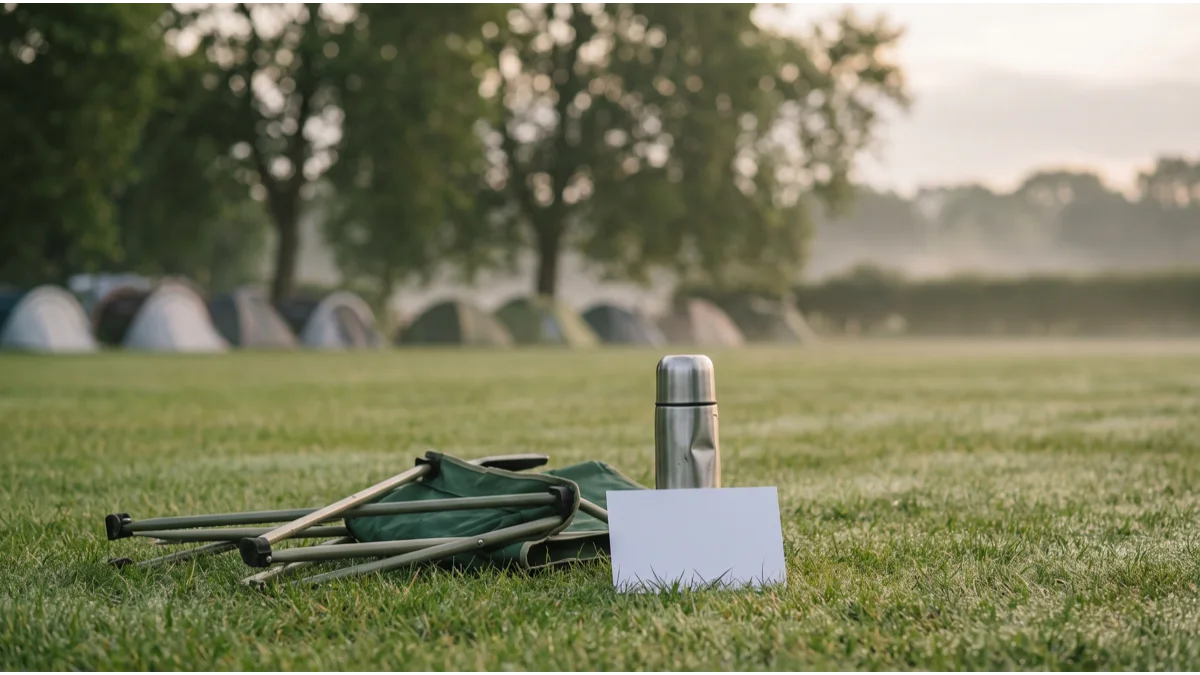
Camping is free and stewarded within Wimbledon Park, with two rules worth knowing: only two-person tents are permitted, and there is a storage facility where you leave tents and sleeping bags before going into the grounds, collecting them on the way out.
One requirement that has caught people out recently: for 2026 the AELTC asked all visitors to download the Wimbledon app and create a myWimbledon account before attending, because it is needed to buy a ticket and is scanned at the point of sale — in the Queue as well as elsewhere. Do it before you travel, not while standing in a field.
The £15 seat almost nobody mentions
This is the best-value ticket at Wimbledon and it is barely publicised.
Show-court ticket holders who leave before play ends drop their tickets into collection boxes on the way out. Those seats are then resold to people already inside the grounds on a Grounds Pass, typically for around £15 to £20, with the proceeds going to charity.
So the practical route to sitting on Centre Court without a ballot win or an overnight queue is: buy a Grounds Pass, get in, join the resale queue in the afternoon, and pay about £15 for a seat that a debenture holder paid six figures to guarantee.
It requires patience and it is not guaranteed. It is also the single cheapest show-court seat in elite sport.
Debentures, briefly, for scale
Debentures are not tickets. They are five-year bonds that guarantee a Centre Court or No.1 Court seat, and they exist mainly to fund capital works at the club.
The scale is worth stating because it frames everything above. The official issue price for a Centre Court debenture in the 2026–2030 series was £116,000 per seat, up 45% from £80,000 for the previous series, sold in pairs. On the resale market, brokered by Dowgate Capital, they traded as high as £380,000 in April 2026 — more than triple the issue price.
The purchase is staged rather than paid at once — the 2026–2030 series was structured as £29,000 on application, then two instalments of £43,500 in February 2025 and February 2026. That structure, plus a legal resale market, is why debentures are traded as an asset and not simply consumed as tickets. They are the only Wimbledon ticket you are permitted to sell on.
Individual debenture day tickets reach the open market too, at prices that make face value look like a clerical error: from about £2,495 for a round-match day on Centre Court, £3,995 and £4,995 for the quarter-final days, and £9,995 for the men’s singles final.
That is the range this event contains. Fifteen pounds to nearly ten thousand, for the same seats, on the same day.
How Wimbledon compares with other majors
| Event | Public route | Cheapest genuine route |
|---|---|---|
| Wimbledon | Ballot + the Queue | ~£15 on-site resale |
| The Masters | Ballot only | $125 practice round, if drawn |
| Ryder Cup 2027 | Ballot only | €89 practice day, if drawn |
| Super Bowl | Random drawing, then resale | ~$3,400 resale in game week |
Wimbledon is the only one of the four with a same-day route that requires no advance luck at all. The Masters and Ryder Cup shut entirely once their ballots close — see our guides to Masters tickets and Ryder Cup tickets — and the Super Bowl leaves only an expensive resale market.
If you want to attend one major sporting event and you have not planned a year ahead, Wimbledon is the answer. For every other event’s application window, see our guide to sports ticket ballots.
How we checked these numbers
Ticket prices, Queue mechanics and the resale scheme are from the AELTC’s own ticketing information and from contemporaneous 2026 coverage by Tennis Majors, Londonist and Perfect Tennis. Queue allocation figures of roughly 500 per show court are the long-standing published pattern rather than a guaranteed annual number, and the AELTC does not commit to exact totals.
Debenture issue and resale prices are as reported by Bloomberg in June 2026, citing Dowgate Capital, Wimbledon’s official broker. Prices are in pounds sterling as published for the 2026 Championships; 2027 prices had not been released when this page was written.
The 2027 ballot date is an estimate carried forward from the 2026 cycle and is labelled as such wherever it appears. This page will be updated as soon as the AELTC publishes confirmed dates — expected within days of publication.
Review class: event-driven. Recheck when the AELTC confirms the 2027 ballot date, currently carried forward as an estimate.
The long-term ticket structure is explained in what a debenture seat is, while all-inclusive hospitality covers the separate food, service and ticket package.
For other primary-sale controls, see dynamic ticket pricing in sport and verified fan presales.
Frequently asked questions
How do you get Wimbledon tickets?+
There are four routes. The public ballot, which is free to enter and expected to open in early September for the following summer. The Queue, which is first-come-first-served on the day and free to join. Official hospitality packages. And debentures, which are bonds rather than tickets. Most visitors use the ballot or the Queue.
When does the Wimbledon ballot open?+
The 2027 public ballot is expected to open in early September 2026, based on the 2026 cycle which ran 2 to 21 September 2025. The AELTC had not published 2027 dates when this page was written, so treat that as an estimate. You need a free myWimbledon account to enter, and it cannot be created after the window opens.
How much are Wimbledon tickets?+
At the 2026 Championships a Grounds Pass was £33 for the first eight days, falling to £26 for days 9 to 11 and £21 for the final weekend. Centre Court ranged from about £70 in the early rounds to roughly £240 to £315 for the finals, and No.1 Court from about £65 to £155.
How does the Wimbledon Queue work?+
You join in Wimbledon Park via Gate 10 and receive a card showing your queue number. Roughly 500 tickets each are held back for Centre Court, No.1 Court and No.2 Court, plus a large number of Grounds Passes. A number under 500 gives you a strong chance of Centre Court, and the first 1,500 or so typically get a show court.
Can you camp overnight in the Wimbledon Queue?+
Yes, camping is free and stewarded, in Wimbledon Park. Only two-person tents are permitted, and there is a storage facility where you leave tents and sleeping bags before entering the grounds. Overnight queuing is usually necessary for Centre Court, while 5am to 7am is normally enough for an early-round Grounds Pass.
What is the Wimbledon £15 resale ticket?+
Once show-court ticket holders leave for the day, their seats are resold to people already inside the grounds on a Grounds Pass, typically for around £15 to £20, with proceeds going to charity. It is the cheapest way to sit on Centre Court and the least publicised, and it requires you to be in the grounds already.
Do I need a myWimbledon account?+
Yes, and for more than the ballot. For 2026 the AELTC asked all visitors to download the Wimbledon app and create a myWimbledon account before attending, because it is required to buy a ticket and is scanned at the point of sale — including in the Queue. Set it up before you travel.
Sources
- Wimbledon: tickets and ballot
- LTA: Wimbledon ticket ballots
- Tennis Majors: Wimbledon 2026 tickets — ballot, the Queue, resale and prices
- Londonist: how to queue for Wimbledon tickets
- Perfect Tennis: guide to camping and queuing at Wimbledon
- Bloomberg: Wimbledon debenture values pass $500,000 for prime seats
Related tickets & access guides
View all →
Masters Tickets: How to Get Them and What They Cost
The 2027 Masters ballot closed in June 2026. What that leaves open, what tickets cost at face value, and why the resale market is disappearing.

Sports Ticket Ballots: Every Major Event's Window
When the public ballot opens for the Super Bowl, Masters, Ryder Cup, Wimbledon, Rugby World Cup and LA 2028 — and which ones have already closed.
Champions League Final Tickets: Applications Open March 2027
The 2027 final is at the Metropolitano on 5 June. UEFA's neutral ballot opens in March — and it is a random draw, not first-come-first-served.
Open Championship Tickets: Under-16s Go Free
The 2027 Open at St Andrews costs £150–£190, practice days £40–£70, and under-16s are free. The ballot closed in July — results land by end of September.

Olympic Tickets: The LA 2028 Draw and What They Cost
LA 2028 tickets start at $28 and reach $5,519. Drop 2 closed on 20 August 2026 — here is how the draw works and when the next sales open.

Six Nations Tickets: How to Get Them and What They Cost
The RFU club window for 2027 Six Nations tickets is open until 23 September 2026. Face values by fixture, and why you cannot buy Twickenham tickets directly.