Cost to Host the Olympics: Every Games Goes Over
On this page6
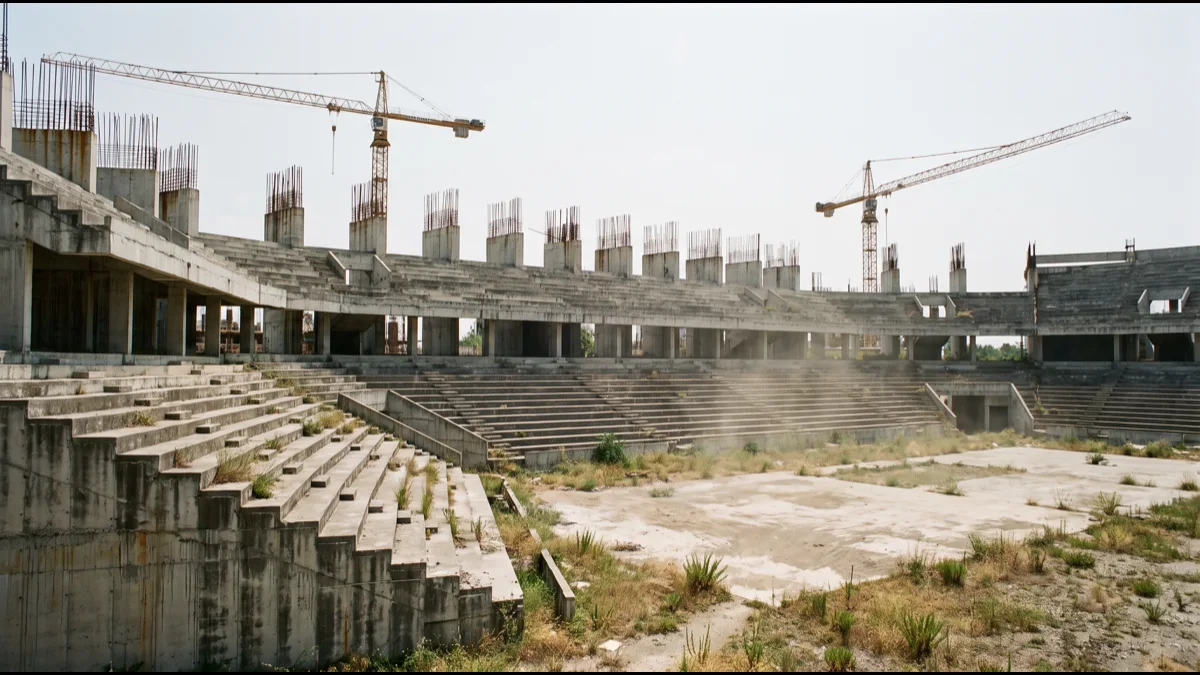
Every city that has hosted the Olympics since the 1960s has exceeded its initial budget by a large margin. That is the finding of an Oxford University study, and it has no modern exceptions.
Not most cities. Not the poorly run ones. All of them.
| Games | Overrun on initial budget |
|---|---|
| Rio 2016 | ~352% |
| Tokyo 2020 | ~280% |
| Barcelona 1992 | 266% |
| Paris 2024 | ~25% (total spending under $10bn) |
Paris looks like the outlier, and in one sense it is. In another it is the clearest illustration of the problem.
Paris promised €1bn and spent nearly €6bn
The French government originally promised a €1 billion maximum public contribution to the 2024 Games. The French Court of Auditors subsequently found that organising them cost taxpayers nearly €6 billion.
Total spending across all parties was expected to come in under $10 billion, roughly 25% over the initial budget according to S&P Global Ratings — genuinely disciplined by Olympic standards, and far better than Rio or Tokyo.
Both things are true at once, and the reason is the distinction that runs through this entire subject: the organising committee’s budget and the cost to the public are different numbers. A Games can be well run against its own budget while costing the state six times what was promised, because security, transport and infrastructure sit outside the committee’s books.
LA 2028 has already risen before starting
The LA 2028 organising committee budget stands at $7.145 billion. Its history:
And LA is building no new permanent venues at all — the first Games in 80 years to do so, which makes that increase harder to explain than it looks. See our guide to LA 2028 Olympic venues.
- ~$5.3 billion — 2017 estimate
- $6.88 billion — after the Games were moved to 2028, largely inflation, per an independent budget report to the City Council in 2019
- $7.145 billion — current
That is a rise of roughly 35% before the opening ceremony, driven substantially by the passage of time rather than by any decision.
Two features make LA’s position unusual. It is relying on about $2.5 billion from tickets and hospitality, the mechanism covered in our guide to Olympic tickets. And the city is reported to be near a fiscal emergency, with no margin for a budget miss.
Why LA is building nothing permanent
Los Angeles 1984 is the standard example of an Olympics that turned a profit, and it explains the 2028 strategy directly.
LA28 is building no new permanent structures — the first Summer Games to manage that since London 1948. Athletics returns to the Los Angeles Memorial Coliseum, swimming goes to SoFi Stadium, and softball is staged in Oklahoma City, roughly 1,400 miles away. The venue list looks scattered because the organising principle is use what exists.
That is a direct response to the pattern above. The largest overruns are construction overruns, and a Games that builds nothing permanent removes the single biggest source of them. Whether it works is the question 2028 will answer.
Why the overruns are structural
Four reasons, and none is really about incompetence.
Bids are costed a decade early. Inflation over that horizon cannot be predicted, as LA’s own $5.3 billion to $6.88 billion jump demonstrates.
Cities bid competitively. Competition rewards optimistic numbers, and the optimistic bid wins.
Security escalates. Requirements are set closer to the event, by governments rather than organisers, and are rarely fully costed at bid stage.
The commitment is irreversible. Once a Games is awarded, the host cannot walk away. Cost control loses its strongest lever.
Economists quoted by CNN have gone further, arguing that hosting has become financially untenable — a view supported by the shrinking number of cities willing to bid.
Medal bonuses, by contrast, are a rounding error against these figures — and they come from national committees rather than the IOC, which pays nothing. See our guide to the Olympic medal bonus by country.
The same pattern outside the Olympics
Large sporting construction overruns are not unique to the Games. Barcelona’s Espai Barça rebuild of Camp Nou is financed at around €1.45 billion and reported cost overruns in July 2026, with members asked to approve additional financing — see Camp Nou capacity.
And the scale of individual venue spending now rivals whole Games budgets. SoFi Stadium cost about $5.5 billion, which is close to LA 1984’s entire Olympics in today’s terms and more than most host cities’ original bids, as set out in our ranking of the most expensive stadiums.
How we checked these numbers
The LA 2028 budget of $7.145 billion and its progression from $5.3 billion and $6.88 billion are from Courthouse News and the independent budget report cited to the City Council. LA’s fiscal position and the 1984 profit comparison are from CNBC. The Paris figures — the €1 billion promise, the Court of Auditors’ finding of nearly €6 billion, and total spending under $10 billion at ~25% over budget — are from Insider Sport and NPR. The Oxford study finding on universal overruns, and the Rio, Tokyo and Barcelona percentages, are as reported by CNN and Statista.
Overrun percentages are not measured on a common basis between Games, because what counts as the “initial budget” varies by bid. They indicate scale, not precision. Organising committee budgets and public costs are stated separately throughout, because conflating them is the most common error in this subject.
Review class: event-driven. Recheck on any LA28 budget revision, when Paris’s final audited figures are published, and after the 2028 Games conclude.
Frequently asked questions
How much does it cost to host the Olympics?+
Recent Summer Games have cost well into the billions. Paris 2024 came in under $10 billion in total spending, roughly 25% over its initial budget according to S&P Global Ratings, while the LA 2028 organising committee budget stands at $7.145 billion. Costs to the host government are usually separate from and additional to the organising committee's budget.
Do the Olympics always go over budget?+
Effectively yes. An Oxford University study found that every city hosting the Olympics since the 1960s exceeded its initial budget by a large margin. Rio 2016 overran by around 352%, Tokyo 2020 by about 280% and Barcelona 1992 by 266%. There is no modern example of a Games delivered at its original estimate.
How much did Paris 2024 cost taxpayers?+
The French Court of Auditors found that organising the Games cost taxpayers nearly €6 billion, against an original government promise of a €1 billion maximum public contribution. Total spending across all parties was expected to come in under $10 billion.
What is the LA 2028 Olympics budget?+
$7.145 billion for the organising committee. That figure has risen through the planning cycle — a 2017 estimate was around $5.3 billion, which became $6.88 billion when the Games moved to 2028, largely because of inflation, before reaching its current level.
Has any Olympics made a profit?+
Los Angeles 1984 is the standard example, and it is the reason LA's approach to 2028 attracts attention. It is also part of why LA28 is building no new permanent venues — the first Summer Games to manage that since London 1948.
Why do Olympic budgets overrun so consistently?+
Because bids are costed years ahead against inflation that cannot be predicted, security requirements that escalate, and infrastructure that is often only partly counted at bid stage. Cities also bid competitively, which rewards optimistic numbers, and the commitment is effectively irreversible once awarded.
Who pays when an Olympics overruns?+
Usually the host city, region and national government. The organising committee's budget is funded largely from ticketing, sponsorship and IOC contributions, but security, transport and venue infrastructure typically fall to the public purse — which is where Paris's gap between €1 billion promised and nearly €6 billion spent arose.
Sources
- Courthouse News: new 2028 LA Olympics budget jumps to nearly $7 billion
- CNBC: LA turned a profit on its last Olympics, and has no margin for a budget miss in 2028
- Insider Sport: Paris 2024 spending shows the state bore the brunt of costs
- CNN Business: hosting the Olympics has become financially untenable, economists say
- NPR: why the 2024 Paris Olympics are over budget despite cost-saving efforts
- LAist: the Olympics are a multi-billion dollar business, what that means for LA taxpayers
Related guides
LA 2028 Venues: No New Stadiums, 35% Over Budget
Every LA 2028 venue, sport by sport — and why the first Games since London 1948 to build nothing has still gone from $5.3bn to $7.145bn.

Olympic Tickets: The LA 2028 Draw and What They Cost
LA 2028 tickets start at $28 and reach $5,519. Drop 2 closed on 20 August 2026 — here is how the draw works and when the next sales open.

Super Bowl Ad Cost: The Year Buyers Said No
Disney asked $10m for a 30-second Super Bowl LXI spot. Advertisers refused, it sold at $8–9m, then sold out. The first public pushback on Super Bowl pricing.

How Do Sports Leagues Make Money? The main revenue streams
Sports leagues earn money from media rights, sponsorship, ticket and hospitality arrangements, licensing, events, and league-level commercial partnerships.
How Much Does a Commonwealth Games Cost?
There is no single Commonwealth Games price tag: the host budget, venue programme, transport, security and operating costs are reported differently. A responsible estimate names the edition, currency and whether it is a public budget or a final outturn.

Olympic Medal Bonus: Same Gold, 21x the Money
The IOC pays nothing. Singapore pays about $792,000 for gold, the USA $37,500. Why the smallest nations pay the most — every 2026 figure.